Decide before you drive: open is not the same as sensible
For a winter Atlas leg, drive only when the route's official status, the forecast along the whole corridor, the rental terms and a daylight fallback all line up. If a closure, flood concern, poor visibility, snow or ice concern, or unconfirmed road status breaks any one of those checks, delay, reroute or use a non-driving alternative.
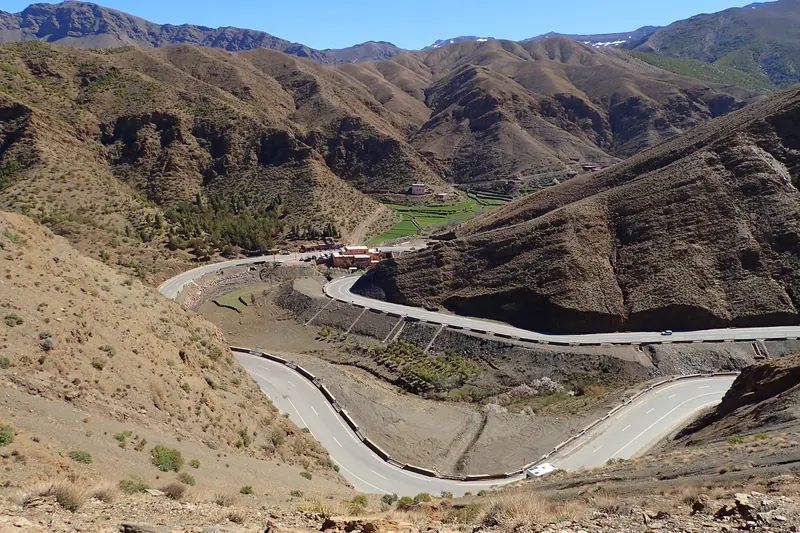
This is not simply a question of booking a 4WD. The U.S. Department of State describes roads through the Atlas as steep, narrow and winding, and says that November to March is the rainy season, when flash flooding can severely affect rural roads. 1 A route may be legally open yet still be the wrong choice for that moment, vehicle or driver.
This guide addresses the seasonal go/no-go decision. For everyday road rules and driving habits, read Driving in Morocco: Rules, Roads and Practical Safety. For a broader self-drive route plan, see Morocco Road Trip: Plan a Practical Self-Drive Route.
Run a four-part check before collecting the car
Forecast the corridor, not just the departure city
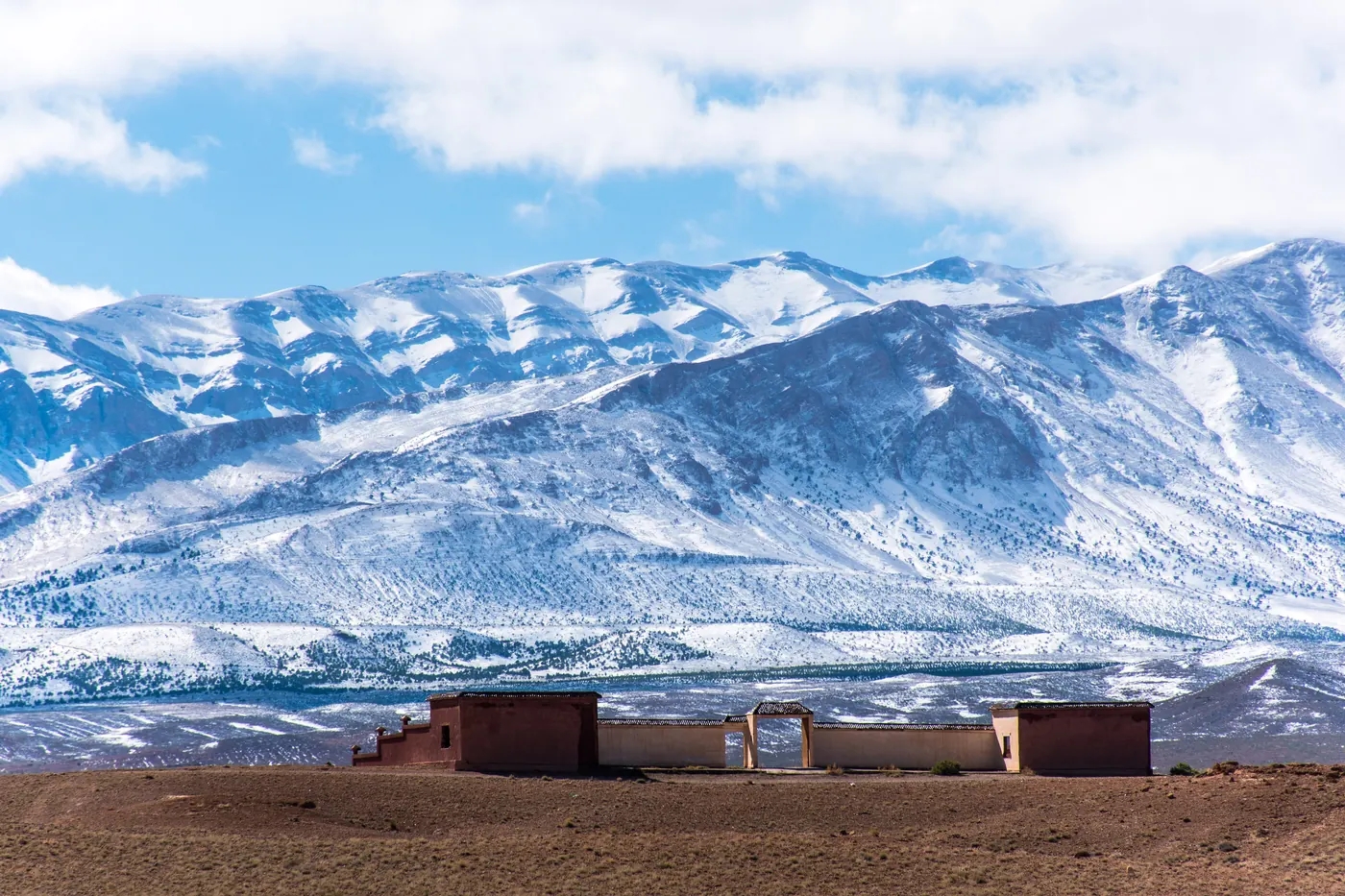
Check the forecast for the departure point, the highest or most exposed part of the intended road, and the overnight destination. A mild city forecast is not evidence that a mountain segment will have good visibility or dry pavement. Read any weather alert as a reason to simplify the day rather than as a challenge to out-drive.
Verify road status near departure
Use the Moroccan Ministry of Equipment and Water's road-service information for national-road conditions and possible diversions. The ministry says its winter-road service reports disruption from snow, floods, rockfalls and landslides, and describes a 24/7 road-information centre, periodic bulletins and the Maroute road-status app. 3
Use Autoroutes du Maroc's ADM Trafic only for the autoroute network: it reports traffic, incidents and works on that network, not a blanket status for ordinary mountain roads. 4 If the road you need is outside that network, do not treat an uneventful motorway report as confirmation for the Atlas leg.
Check the vehicle and handover plan
At collection, record existing damage, ask how to contact roadside assistance, and confirm the exact return arrangement if a closure forces an extra night. Check tyre condition, lights, wipers, washer fluid, fuel level and the spare or repair equipment actually supplied. Do not assume snow chains, winter tyres, recovery from a remote road, or permission to use every unpaved detour are included; obtain the supplier's answer for the intended route in writing.
Make sure the trip still works without the crossing
Before setting off, save the contact details for your next accommodation and rental supplier, download the relevant maps for offline use, and decide where you can stay if the road does not remain viable. A planned overnight near the route is useful only if you are willing to use it. Do not make a non-refundable activity, airport return or distant check-in the reason to continue into worsening conditions.
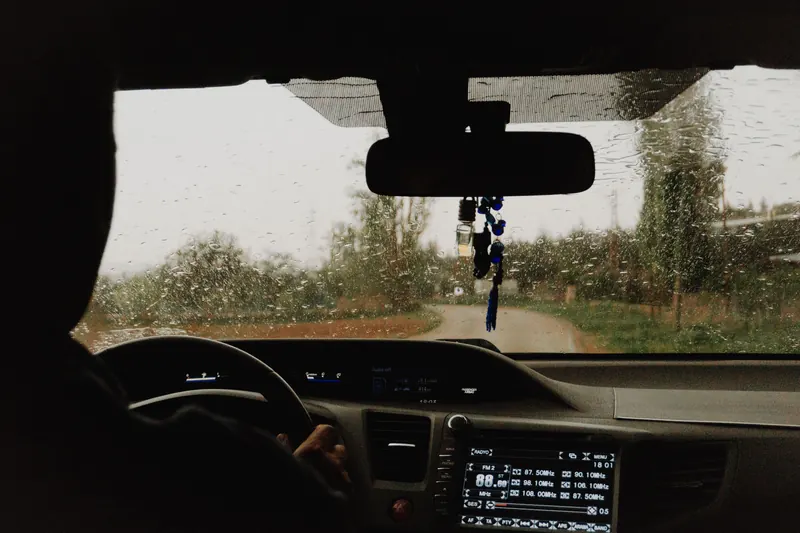
Use clear stop, turn-back and continue rules
No scenic stop, accommodation booking or map arrival time outweighs a closure or an unsafe road. Use this decision table before the road becomes remote.
| What you find | Safer decision | What it changes |
|---|---|---|
| An official closure, barrier or instruction from authorities | Do not drive around it. Return, wait or take the stated diversion. | A closure overrides a route plan; the Ministry's service exists to report closures and possible diversions. 3 |
| Water across the carriageway, moving debris or a flooded approach | Stop before the water and change the plan. | UK and U.S. guidance warns that winter rain and flash flooding can make mountain and rural travel dangerous. 1 2 |
| Snow, ice, dense fog or rain that leaves you unable to judge the road ahead | Pause in a safe legal place and wait for better conditions or turn back. | An "open" status does not restore visibility, traction or a safe stopping distance. |
| A route reported open, no relevant warning, usable daylight and a workable fallback | Consider the drive, keeping speed and plans conservative. | It is a conditional decision, not a guarantee that conditions will stay the same. |
If conditions deteriorate while you are driving, the aim is to reach a safe, legal place to stop before the problem becomes a recovery case. Do not stop on a blind bend or attempt a U-turn where sightlines are poor. Call the rental provider's assistance line after you are safely stopped and follow the instructions of authorities on the road.
Build a fallback ladder before leaving the city
A weather-flexible itinerary is more useful than a vehicle upgrade. Put these choices in order before the departure morning:
- Delay the mountain leg. Keep the city or a lower, easier road day and cross when the status and forecast support it.
- Stay on the same side of the mountains. Use a booked or flexible overnight rather than forcing a one-way itinerary through a doubtful pass.
- Separate the destination from the crossing. Rework the route around places reachable without the affected mountain section, then restore the original plan only if conditions improve.
- Use a transfer or public transport only when it truly replaces the affected leg. A professional driver can reduce the task of driving, but cannot make a closed or unsafe road usable. Confirm the provider's cancellation, route and passenger-cover terms directly.
If the Marrakech–Ouarzazate crossing is central to your trip, the route-specific planning guide Driving the High Atlas from Marrakech to Ouarzazate can help you design the dry-weather route; keep the winter decision gate in this article separate from its scenery and stop planning.
Confirm driver documents, supplier policy and cover
Visitor driving rules are not rental approval
For visitors, licence rules depend on nationality and residence status; the rental desk can also impose its own contract conditions. U.S. State Department guidance says foreign licences are valid in Morocco for up to one year and that foreign residents need a Moroccan licence after that point. 1 For UK licence holders, the FCDO currently says to carry the 1968 International Driving Permit with the UK licence, and says a Moroccan licence is needed after a stay of more than one year. 2
Those statements are not a universal rental eligibility rule. Ask the supplier, before payment, to confirm the named driver's accepted licence, any translation or permit requirement, minimum age, driving-history requirement, payment-card requirement and any young-driver charge. The FCDO notes that hire companies often set stricter requirements, including a higher minimum age and a minimum period of driving experience. 2
A damage waiver is not a weather clearance
Keep three things separate: compulsory or optional insurance cover, a rental agreement's collision or damage waiver, and any card or travel-policy benefit. A waiver can change what the renter owes under that agreement; it does not prove that every weather-related loss, recovery cost or excluded type of damage is insured.
Request the agreement and ask the supplier to identify the excess, the authorized drivers, the permitted roads and surfaces, accident-reporting steps, roadside-assistance limits, and any exclusions relevant to tyres, glass, underside, water damage or recovery. Only rely on an item if it is actually stated in the booking terms. For a fuller pre-booking checklist, see Renting a Car in Morocco: Insurance, Pick-Up and Driving Tips and the related guide to rental insurance, deposits and card holds.
Put this departure card in your phone
Drive the winter Atlas leg only if you can say yes to all of these:
- I checked the official status for the actual road, not just my navigation app.
- I checked the weather for the exposed part of the route and have no relevant alert or unresolved concern.
- I have enough daylight to stop rather than continuing after dark.
- The named driver and vehicle are permitted by the supplier's written terms.
- I know whom to call for assistance and where I can sleep if the crossing is abandoned.
- I am willing to turn back without trying an unknown detour.
One "no" is enough to delay or redesign the day. If you would rather remove the driving task altogether, compare the trade-offs in Morocco Self-Drive vs Private Driver. If you need help coordinating independent rental, transfer and accommodation options around a weather-flexible plan, Maroc Mobility's Personal Travel Assistant can help arrange contacts; road access, insurance and supplier terms remain the responsibility of the relevant authorities and providers.