Separate the five moving parts
A Morocco rental quote becomes comparable only when you split it into separate questions. Do this before paying an aggregator or supplier; the booking voucher may not settle the counter terms. For the wider booking and collection process, see our Morocco car-rental guide.
| Term to identify | What to get in writing | Why it is separate |
|---|---|---|
| Rental price | Total payable rental charge, currency and mandatory items | This is the price for use of the car, not the amount your card must have available. |
| Card hold or deposit | Amount, currency, card type, whether it is an authorization or a charge, and release process | It is the counter's security mechanism. It can restrict spending even if it is not a final charge. |
| Excess | Damage and theft amount separately, plus the circumstances that trigger it | It is the contractual amount of exposure after the relevant protection applies. It is not automatically the same as the hold. |
| Damage waiver or protection package | Exact name, price, revised excess and exclusions | A waiver can change liability for defined vehicle loss or damage. It is not a blanket statement that every cost disappears. |
| Liability and personal cover | What the rate includes for third parties and whether personal accident cover is offered | These answer different risks from damage to the rented car. |
Moroccan regulation requires motor-vehicle civil-liability insurance for liability arising from vehicle damage. The regulator also describes vehicle-damage cover as optional cover for an additional premium. That legal baseline is not a promise that a rental's CDW, theft protection, glass cover or personal accident cover has a particular scope. 1
At the rental counter, terms such as CDW usually describe a contractual limit on the renter's damage liability. For example, Budget's current Marrakech terms say CDW reduces damage liability up to the stated excess; its personal accident insurance is a separate product. Read the actual definitions on your quote rather than treating all of these labels as interchangeable. 2
What no deposit and zero excess do not promise
No deposit is a claim about the supplier's upfront security requirement. Zero excess is a claim about the remaining amount of liability for a specified covered event. They can move together, but neither label tells you everything else that matters.
Before accepting either label, ask the supplier to reply to these questions for your dates, vehicle group and pickup branch:
- Is the card requirement a pre-authorization, a charge, a refundable cash amount, or something else?
- What are the separate excesses for collision and theft?
- Does the quoted option change the hold, the excess, or both?
- Which items or circumstances remain outside that option, including glass, tyres, keys, interior, roof, underbody, fuel, late return, prohibited use and administration costs?
- Does the same answer apply to the lead driver's physical card and to every additional driver?
Do not infer the answer from the word insurance on a comparison site. Avis Morocco, for example, calls CDW and theft protection cover that limits liability to a non-waivable excess, while its Super products are described as removing that excess for damage or theft. The same terms separately set card-hold rules. That is why the coverage line and the payment line should be read side by side. 4
How a card hold affects your available credit
An authorization hold is not the same thing as a completed charge, but it can still make part of your card balance unavailable. Visa explains that a successful authorization reduces the funds available to the cardholder for other purchases; it also says merchants should tell the cardholder the estimated amount and process reversals promptly when appropriate. 3
Ask the rental company when it will initiate the release after the return check, then ask your card issuer how that type of authorization appears and clears on your account. The supplier controls its release action; the issuer and card network process the effect on your available balance. Do not plan onward hotel, fuel or emergency spending around a release date copied from another rental or another country.
An illustrative capacity check
This is not a Morocco-wide deposit estimate. Suppose your card has the equivalent of 20,000 MAD of usable room, the quoted hold is 12,500 MAD, and you already have 5,000 MAD of other open authorizations. The remaining room before new spending is 2,500 MAD: 20,000 minus 12,500 minus 5,000. Currency conversion, your issuer's limits and pending transactions can change the real result, so build a buffer rather than aiming for a precise minimum.
A second issue is card eligibility. The lead driver should ask whether the exact physical card will be accepted for the hold, not merely whether it paid for an online reservation. Budget's Marrakech terms accept credit cards for the deposit and say its listed debit cards can pay rental charges only; Avis Morocco accepts specified credit or debit cards but excludes prepaid debit and Maestro cards. These are supplier examples, not rules for every Morocco rental. 2 4
Ask for a counter-ready answer before paying
Nationality, residence, age, licence history, card issuer and vehicle group can change the terms. There is no safe generic answer based on a passport alone. Send the supplier a short factual message with the pickup branch, dates, vehicle group, lead driver's age, country of residence, licence issuing country and alphabet, years held, card network and whether the card is credit, debit or prepaid. Ask it to confirm the conditions in writing.
The contrast between two current policies shows why. Budget Marrakech lists age 21 for some groups and 25 for others, a one-year licence requirement, passport/photo ID requirements, and an international driving licence for licences issued outside the European Community. Avis Morocco lists a minimum age of 23, a two-year licence history, and an international licence where the original licence uses a non-Roman alphabet. Those are supplier terms, not Morocco-wide age or licence laws. 2 4
Use this checklist in the message or a saved email thread:
- State the exact car group, dates and collection branch—not just the city.
- Ask for the total hold or deposit in MAD and whether it is an authorization or a completed charge.
- Ask for collision and theft excess amounts, the waiver name, daily price and exclusions.
- Ask whether the hold changes if you add the waiver, and what remains chargeable at return.
- Ask whether your named lead driver, additional drivers, licence and physical card meet the branch requirements.
- Ask what proof of return and release action the branch can provide, especially for an out-of-hours return.
A card benefit is not a substitute for this exchange. One Mastercard product's terms, for instance, require the eligible cardholder to pay the full rental and security deposit with that card and decline the rental company's CDW or LDW; Mastercard also says benefits vary by issuer. Check the benefit guide for your exact card, residence and rental before relying on it, and do not assume it removes the supplier's own hold. 5
Use two live policies as a comparison test, not a price guide
Current published terms can reveal the questions a booking page leaves unanswered, but they are not a market price list. Budget's Marrakech airport terms currently list security deposits from 11,500 MAD to 34,000 MAD across the car groups shown, and say the amount varies with protection and ancillary equipment. Avis Morocco currently lists a 15,500–30,000 MAD theft-excess hold without its specified protection package and a 2,000 MAD hold with that package. These are dated policy examples from two suppliers; they are not a prediction of your quote or a standard amount for Morocco. 2 4
Use the figures only as a stress test: can your card comfortably absorb the written amount, and have you compared the remaining excess and exclusions? If the answer is no, seek a quote with clearer terms, a lower-risk vehicle group, or a different transport plan. A smaller rental-car class may change the financial exposure, but only the supplier's written terms can confirm it.
Before pickup and at return: preserve evidence
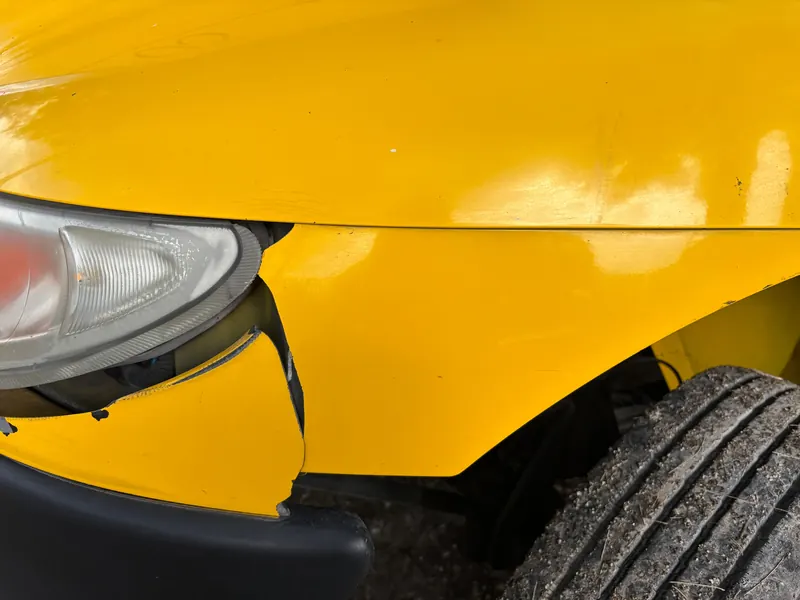
At pickup, save the quote and terms, photograph the condition report, ask whether the card entry is an authorization or a charge, and obtain the amount and currency shown at the terminal. Match the written excess and chosen protection to the agreement before you leave. Keep photographs of the vehicle condition, fuel and mileage; a generic damaged-car image cannot show what happened to your rental, but your own dated record can.
At return, inspect with a staff member if possible. Photograph the same areas, fuel and mileage, request a return condition record or final receipt, and ask for written confirmation of any card-hold release or reversal that the branch initiates. If a hold remains longer than the supplier said it would, first ask the supplier for the return and release records, then provide those records to your card issuer.
Choose another plan when the terms do not fit
Walk away from a quote that will not state the hold, excess, card rule and exclusions in a form you can keep. You may be better off changing rental class, comparing another independent supplier, renting only for the rural part of the route, or choosing a non-driving leg. For an earlier travel-style decision, compare self-drive and a private driver rather than forcing a card commitment that leaves no buffer.
If you would like trip-planning support while comparing independent providers, see Maroc Mobility's Personal Travel Assistant. Rental companies remain responsible for their own contracts, vehicles, deposits and coverage terms.