Make the choice in this order
Start with the people and bags that will be in the car on its fullest day. Next, choose a transmission that every named driver can legally and confidently use. Then compare the access road to your accommodation with the supplier’s permitted-road terms. That sequence is more reliable than choosing an SUV because the itinerary includes the Atlas or the word “desert.”
For a wider booking and handover checklist, read Renting a Car in Morocco: Insurance, Pick-Up and Driving Tips. This guide stays focused on the earlier decision: which vehicle category is a credible fit for the booking.
Match the car class to the trip
Use the table as a starting point, not a fleet promise. Rental categories, boot shapes and exact models vary. A supplier may advertise a named model as “or similar,” and its Morocco listings can pair the same broad class with different transmissions and bag counts.4
| Trip pattern | Start by comparing | Upgrade only when the trip requires it |
|---|---|---|
| City stays with short paved day trips, one or two people travelling light | Mini or economy | Your actual bags do not fit without using passenger space |
| Two adults with checked bags on paved intercity roads | Economy or compact | The quote does not show a boot capacity that matches your bags |
| Three or four adults with their own larger cases | Intermediate or standard | You need more boot room, not simply more seats |
| Five or more travellers | A people carrier or a larger vehicle with a documented luggage layout | The seating plan leaves no practical place for bags |
| A rural stay with a rough final approach | A vehicle with suitable clearance only after written confirmation | The supplier confirms the approach and surface are permitted |
A small car can be the sensible choice when most driving is on paved roads and you expect to park in busy towns. A larger car may be the better fit when the bags are the constraint. For route-level questions such as city access, mountain weather and daylight planning, use the Morocco road-trip guide alongside this vehicle decision.
Reserve a gearbox, not a vague category
If any named driver needs an automatic, select an automatic-specific result and ask the pickup branch to confirm it in writing. Do not assume that a compact, SUV or “family” label includes one. Current Morocco listings from one provider show separate manual and automatic versions within the same classes, which is useful evidence that transmission must be a booking field rather than an assumption.4
Check every driver’s licence entitlement before naming them on the rental agreement. A driver whose licence is restricted to automatic vehicles should not be added to a manual booking. If the confirmed automatic option does not fit the budget or availability, choose a smaller itinerary or another transport arrangement instead of hoping for a counter upgrade.
Test luggage capacity before you book
Do a five-minute physical check before comparing quotes:
- List the number of travellers who will ride together on the longest transfer day.
- Count actual bags by type: cabin bag, medium case, large case, stroller, hiking pack or folded wheelchair.
- Compare that list with the quote’s stated bag count and, where available, boot dimensions or vehicle model.
- Keep the rear window and cabin clear; do not plan to hold luggage on laps or stack it where it affects visibility.
- If the quote only says “5 passengers,” ask what bag size its luggage count assumes.
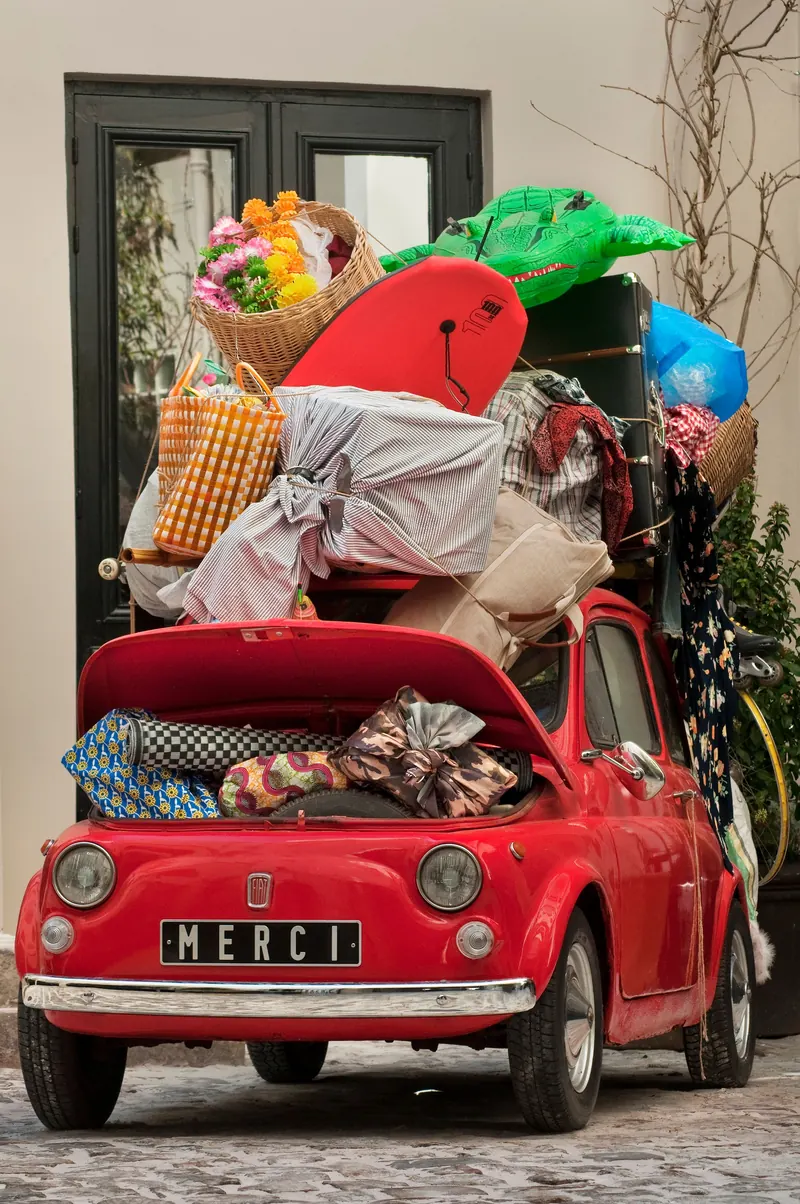
A five-seat label is not a five-person-plus-five-suitcase guarantee. For example, the current provider page used above lists five-person Moroccan cars with different bag allowances by class, including two bags for a Compact and three for an Intermediate.4 Those figures are examples from that provider, not a universal packing rule.
Clearance is not permission to leave paved roads
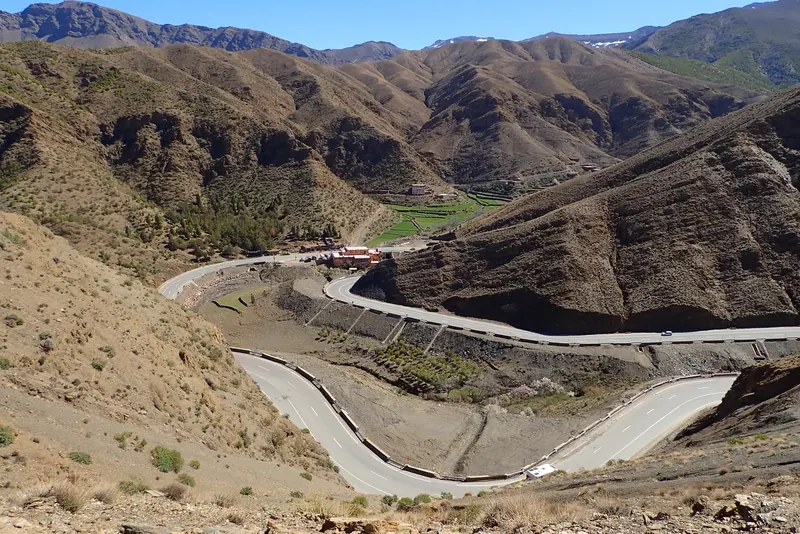
Ground clearance can help with a rough, permitted approach road. It does not by itself mean four-wheel drive, and neither feature grants permission to use tracks, sand, water crossings or off-road routes. Ask the supplier to identify the permitted surface and any excluded areas for the exact class. Put the answer in the booking record.
This matters even with a taller vehicle. In poor weather, official UK travel advice warns that secondary and mountain roads can be especially hazardous.1 A vehicle choice cannot remove that hazard. For day-of-driving preparation, see Driving in Morocco: Rules, Roads and Practical Safety.
Clear eligibility and coverage before choosing
There are three separate checks:
- Visitor driving rules: They depend on the licence country and length of stay. For example, UK advice says a traveller driving in Morocco needs both a 1968 International Driving Permit and their UK licence, while a stay longer than one year requires a Moroccan licence.1
- Supplier acceptance: A rental company can set its own minimum age, licence-history, document and class conditions. Enterprise currently says its Morocco renters must be at least 21 and have held a valid licence for at least one year, while also noting that other companies may require an older driver.3 That is a supplier example, not a national rule.
- Coverage and waiver terms: Vehicle size does not answer the financial-risk question. A damage waiver is a contract term; it does not by itself show what a separate travel or card policy covers. The U.S. Department of State advises travellers to confirm destination requirements and review rental-company coverage carefully.2 Ask what excess, waiver and exclusions apply to the exact class before choosing it.
A US licence holder should not infer their position from the UK example. The U.S. Department of State says some countries accept a US licence and others require an International Driving Permit; confirm the Morocco position for your circumstances and the branch’s acceptance policy before paying.2 The US-licence rental requirements guide and the insurance, deposit and card-hold guide cover those separate checks in more depth.
Send this confirmation request before paying
Send the pickup branch or supplier this short list and retain the reply with the reservation:
- Is my booked class automatic or manual, and is that gearbox confirmed for pickup?
- Does the rate reserve a specific model or a class “or similar”? What are the stated passenger and bag capacities?
- May every named driver use their licence for this booking, given their nationality, residence status, age and licence issue date? Is an IDP or translation required by this branch?
- Is the road to my accommodation permitted if part of it is unpaved? Are tracks, sand, water crossings, border crossings or other areas excluded?
- What excess, damage waiver, deposit and road-use exclusions apply to this exact vehicle class?
- Can you confirm the child-seat, roof-rack or accessibility equipment arrangement if I need one?
A reply that avoids the gearbox, bag space or road-use question is not confirmation. Consider changing class, changing supplier or changing the route while cancellation terms still allow it.
Use a car only where it improves the plan
The right answer can be no rental at all for part of the trip. If the journey is mainly between major cities or a stay inside a medina, compare rail, a driver or a shorter local rental with the work of parking, luggage transfer and returning the car. A car earns its place when it solves a genuine route or access problem, not simply because it seems more flexible.
If you would like help turning a route and supplier terms into a practical shortlist of questions, see Maroc Mobility’s Personal Travel Assistant. It can help you arrange independent-provider services; the provider’s own confirmation and contract remain controlling.