Is driving in Morocco a good fit for your trip?
Driving in Morocco can make sense when you want to reach smaller towns, rural stays or trailheads that are not convenient by train. It is not automatically the easiest way to travel. The main cities are connected by modern motorways, while secondary routes can be narrow, uneven or steep. In cities, dense traffic and unfamiliar driving habits may be more stressful than the distance suggests. 1
A useful rule of thumb: choose a car for flexibility between destinations, not because every journey will be faster. For a first visit focused on Casablanca, Rabat, Tangier, Fez or Marrakech, compare driving with trains and other intercity transport before committing. Consider a driver or public transport if you are uncomfortable with dense urban traffic, mountain hairpins or driving on the opposite side of what you know.
Documents and rules to confirm before setting out
The U.S. State Department says foreign driver’s licences are valid in Morocco for up to one year. That does not settle every rental-company or insurance requirement. Ask the specific provider whether it requires an International Driving Permit (IDP), and which format it accepts; carry your valid U.S. licence as well as the permit if requested. Keep your passport, rental agreement, registration and insurance documents accessible in the vehicle. 1 3
Do not assume another country’s IDP instructions apply to U.S. visitors. For example, the UK government’s Morocco advice specifies a 1968 IDP together with a UK licence for UK drivers. It is not a blanket rule for Americans. Rental firms can also set their own minimum age, driving-experience and documentation conditions. Confirm these in writing before picking up a vehicle. 3
Drive on the right and follow posted signs and directions from police. Speed limits can change at town edges and on different road types. Do not rely on a memorized generic limit: slow down for settlements, roadworks, weather, poor visibility and traffic even when the posted maximum permits more. Autoroutes du Maroc (ADM), the national motorway operator, says not to exceed 120 km/h on motorways and advises drivers to obey signs, use indicators and avoid phone use at the wheel. 4
Wear seat belts, keep your phone out of your hands, and never drive after drinking. Keep a safe gap and resist pressure from a vehicle behind you to pass where visibility is limited. A horn or flashing lights may communicate locally, but neither makes an unsafe maneuver safe. At checkpoints, remain calm, stop when directed and have your identification and vehicle papers ready; Canadian travel advice notes checkpoints are frequent. 2
What the roads are like: motorways, towns and mountains
Motorways are generally the simplest long-distance option. The U.S. State Department describes modern freeway links among Tangier, Rabat, Fez, Casablanca and Marrakesh. Use the operator’s current traffic information before departure, and watch for trucks, merging traffic and vehicles that may stop unexpectedly. ADM specifically advises checking traffic information, inspecting the vehicle and avoiding fatigue; it warns that the emergency lane is only for a genuine emergency. 1 4
National roads may pass directly through towns and villages. Canada’s travel advice says these roads are generally in good condition but can be narrow and heavily congested. Expect pedestrians, scooters and animals along the road, and reduce speed as roadside activity increases. Traffic lights can be hard to see or may not work, according to the U.S. advisory, so approach junctions attentively rather than assuming every driver has seen the same signal. 1 2
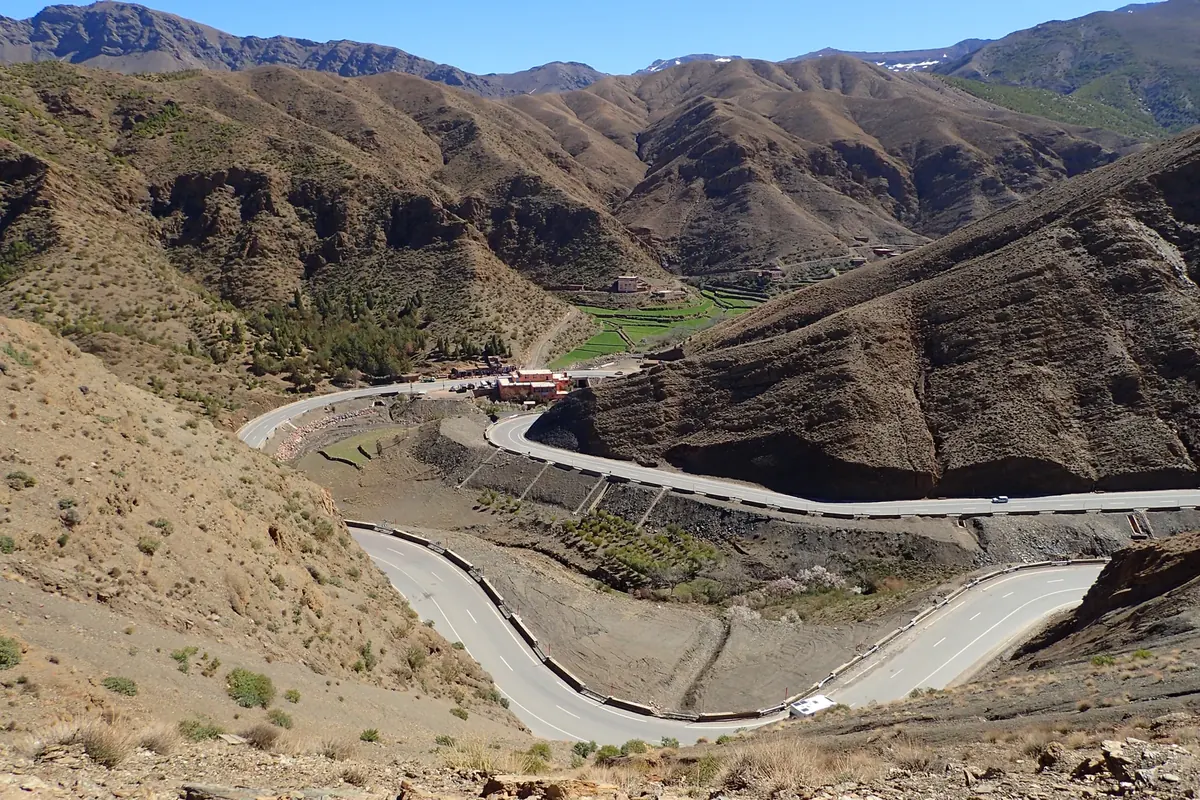
Mountain drives in the Atlas and Rif call for more time and concentration. Roads can be steep, winding and narrow, with limited room to pass. On a route such as the N9 over the Tizi n’Tichka pass, do not use a map’s estimated driving time as a promise: curves, slow vehicles, stops and weather can make a short distance take much longer. A travel writer’s account of the pass describes tight turns and difficult weather, an illustration of why conditions matter more than a neat itinerary. 1 5
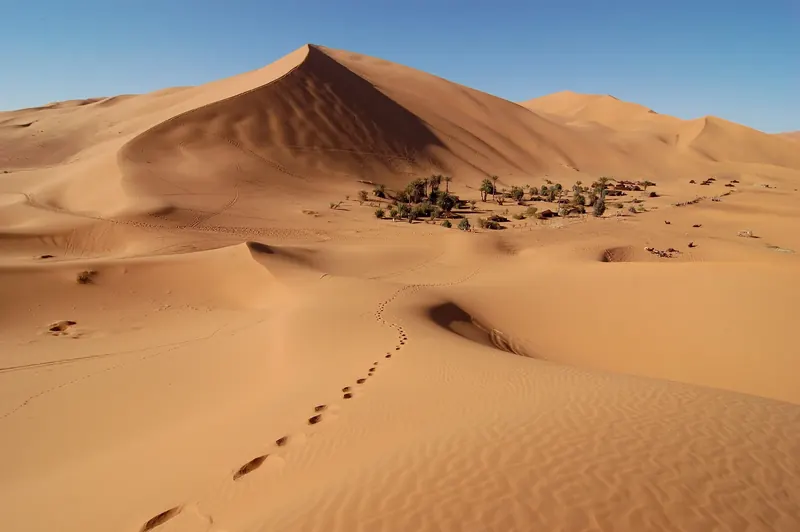
For mountain or desert travel, check the forecast and route status locally before leaving. During the rainy season, roughly November through March, flash floods can affect roads; High Atlas valleys are among the areas Canadian guidance flags. Snow, fog or heavy rain can make a route unsuitable even if it is normally open. Do not drive through floodwater or around a barrier. Wait, turn back or seek local advice rather than trying to judge depth from the driver’s seat. 1 2
Avoid night driving, especially on unfamiliar rural routes. The U.S. State Department warns of poor lighting, while Canada recommends avoiding driving at night. After dark, unlit vehicles, pedestrians, animals and unexpected road edges are harder to spot. Plan to reach your accommodation before nightfall, and add a buffer instead of trying to recover time by speeding. 1 2
Practical habits that lower stress
Before you leave, walk around the vehicle and check the tires, lights, mirrors, fuel level and any visible damage. Photograph existing damage with the rental representative present and make sure the paperwork records it. Set navigation before moving, download an offline map, and identify a safe place to stop if you need to reroute. Take water and a charged phone, particularly on remote legs. For off-road travel in mountains or desert, Canadian guidance specifically recommends a four-wheel-drive vehicle, appropriate supplies and potable water; do not assume an ordinary rental car is suitable. 2 4
In a city, allow time for traffic, parking and confusing turns. Do not rush through a narrow street because another vehicle is waiting behind you. If the route leads into a pedestrian-heavy old quarter, park outside it and walk the final stretch rather than trying to force a car through crowded lanes. On country roads, slow down near villages, schools, markets and animals. Keep an eye out for vehicles stopped on the shoulder and oncoming traffic using the center line to pass.
Make rest stops part of the plan. Long stretches, heat and mountain concentration can be tiring. ADM advises drivers not to challenge sleepiness on motorways. If you feel tired, stop in a designated rest area or another safe, appropriate place; do not stop in a live lane or use the motorway shoulder casually. Check current ADM information for traffic, works and incidents rather than trusting an old route description. 4
What to do after a collision or traffic stop
If you are involved in a collision, stop and do not leave. Check for injuries and call emergency services when needed. The U.S. State Department lists police at 190 (or 19 from a landline) and advises parties to remain at the scene. For a collision with casualties, Canadian guidance says not to move vehicles before police arrive. The U.S. advice further says not to move the vehicle until police or the insurance investigator has documented what is needed. Follow the authorities’ and insurer’s instructions. 1 2
For a minor property-damage incident, a constat amiable (joint accident report) can record the parties’ details and accounts. Canada notes the form is available at newsstands; UK advice says blank forms may be available through insurers and tobacconists. Ask your rental company and insurer how they want a claim reported, take photographs if safe, and do not sign a statement you do not understand. 2 3
If police stop you, pull over where directed, keep a courteous tone and present requested documents. U.S. State Department guidance says that if stopped for speeding, you may request video documenting the violation; if paying a fine on the spot, obtain a receipt. Avoid arguing roadside or offering unofficial payments. 1
A realistic example: Marrakech to the Atlas
Suppose you plan to leave Marrakech for a mountain guesthouse. The route may look short on a map, but town traffic, curves, a slow truck or changing weather can extend the journey. Set out early enough to arrive in daylight, check conditions shortly before departure, and schedule a genuine rest stop. If rain or fog makes the pass uncomfortable, pause in a safe town and reassess rather than treating a reservation time as a reason to continue. If the drive itself is not part of what you want from the trip, compare a professional driver or public transport for that leg.
The important distinction is not that every Moroccan road is dangerous or that every drive requires an expert. It is that the experience varies sharply by route and conditions. A relaxed motorway trip between major cities is different from a night drive through a storm on a narrow mountain road. Plan for the more demanding segment, not just the easiest one.
For trip-specific help coordinating logistics, see Maroc Mobility’s travel assistance; any transport provider or vehicle rental is separate and must confirm its own service and charges.