The realistic answer: make it a multi-day trip
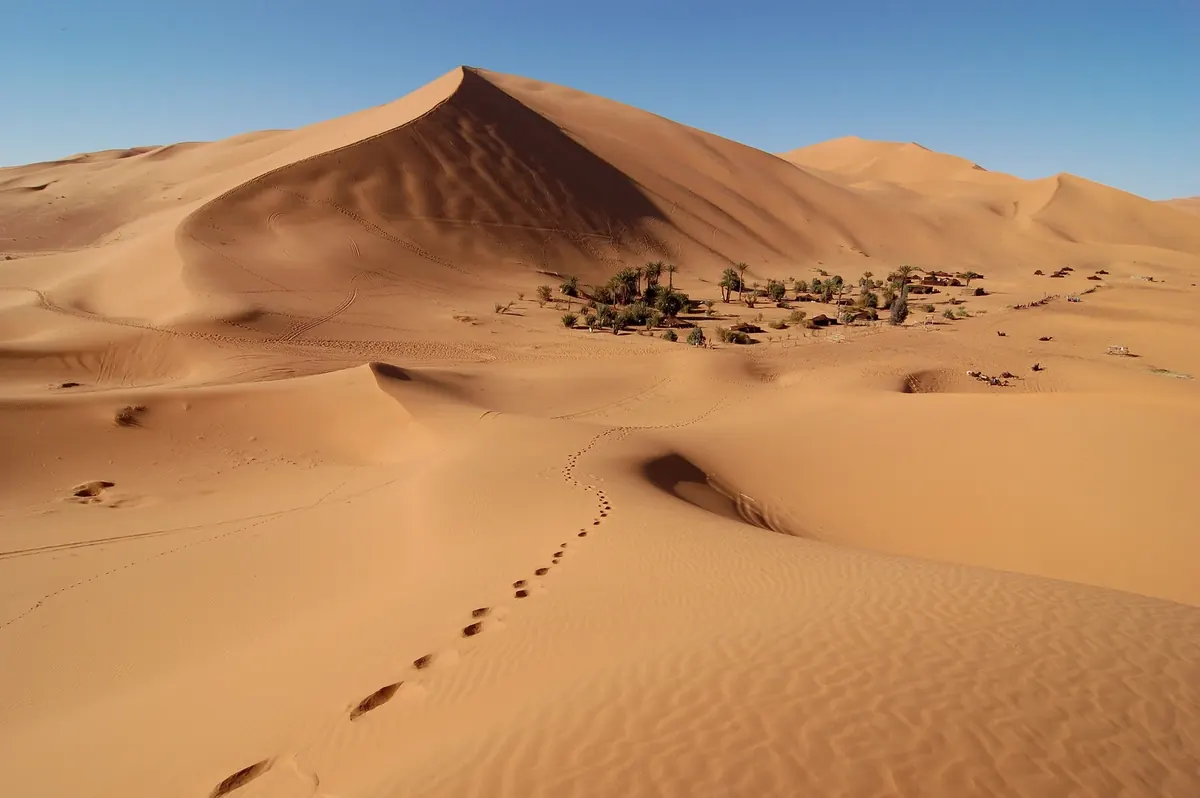
Marrakech to Merzouga is a long overland crossing into southeastern Morocco. Merzouga sits beside Erg Chebbi, a field of Saharan dunes; the dunes are not on Marrakech’s doorstep. The Moroccan National Tourist Office describes this region as a meeting of mountain country, palm groves, tracks and desert dunes, with Merzouga serving as a gateway to the Sahara. 1
For most travelers, the useful choice is not simply bus versus car. It is whether you want someone else to coordinate a fast-moving itinerary, whether you want control over overnight stops, and how many days you can give the round trip. An organized three-day tour can fit a short visit, but it compresses the route: expect a lot of sitting in a vehicle and selected short stops, rather than leisurely exploration. A self-drive trip is more flexible, but it works best with more time and confident driving on unfamiliar roads. Coach travel can reduce driving responsibilities, though it may require separate arrangements at the Merzouga end.
Do not plan Marrakech–Merzouga as a day trip or assume a headline “three days” means three full days on the dunes. The outbound and return legs consume substantial time. If the Sahara experience itself matters most, budget at least one full night near the dunes and consider adding a second night in the area.
Choose the transport that fits your trip
Organized tour: easiest coordination, least control
A shared or private Marrakech-to-Merzouga tour generally bundles transport with a set route through the High Atlas and southern Morocco, overnight lodging and some form of desert-camp transfer. Route stops often include Aït Benhaddou, Ouarzazate or the valleys around Dadès and Tinghir, but what is actually included differs by operator. UNESCO describes Aït Benhaddou as a traditional pre-Saharan ksar: a cluster of earthen buildings inside defensive walls. It is a meaningful cultural stop, not simply a generic photo pullout. 2
Shared tours may be easier on a solo traveler’s budget and let you leave the driving to someone else, but you share the pace, stops and vehicle with the group. Private tours offer more control over breaks and overnight choices, usually at a higher total cost. Neither label guarantees a small group, a particular vehicle, a licensed guide at every site or a camp deep among the dunes. Confirm the details rather than infer them from glossy photos.
A “3-day Marrakech to Merzouga” product is best understood as a rapid loop with one desert night, not a relaxed desert holiday. Consider a four- or five-day arrangement if you want time to explore the ksar, spend an unhurried night on the route, or stay an extra night by Erg Chebbi. Use the Morocco travel-package comparison guide to assess inclusions, and ask for the day-by-day itinerary and approximate driving blocks before paying.
Public coach: independent and potentially direct, but verify every leg
Supratours is an ONCF subsidiary that operates coach continuations to places not served by rail, and its official site provides a route-and-date timetable search. 3 CTM also offers a broad intercity coach network and online seat selection, but its general network page does not establish a current Marrakech–Merzouga departure. 4 Do not rely on third-party schedules, old blog fares or the phrase “bus to the desert” as proof that a direct bus runs on your travel date. Search the official operator for your exact date and confirm the boarding and arrival stations.
Before booking, check whether the service is direct, where it stops, the scheduled arrival time, baggage terms and whether you can reach your riad or camp at that hour. Merzouga is a small village, not an interchange with a guaranteed onward shuttle. If you arrive by coach, arrange the last-mile pickup with your accommodation in advance, particularly if the bus arrives after dark. If a direct service is unavailable or inconvenient, compare travel via Errachidia or another regional stop—but only after checking the actual connection and onward transfer.
Coach travel suits travelers who are comfortable carrying their own luggage, accepting fixed departure times and arranging local transfers. It does not automatically include a dune excursion or desert-camp transfer. Budget time for both outbound and return coach journeys; do not lock a same-day international flight or other nonrefundable connection immediately after a long overland return.
Self-drive: flexible, but not a one-day push
Driving lets you decide how long to pause at a viewpoint or heritage site, and lets you choose your own overnight bases. The trade-off is that this is a demanding route across varied terrain. You must manage navigation, fatigue, fuel and parking as well as city departure and arrival. Public travel guidance warns that poor lighting can make night driving hazardous and that secondary and mountain roads can be especially difficult in poor weather. 5
A practical outline is to break the outbound drive with an overnight near Ouarzazate or in the Dadès/Tinghir area, then continue toward Merzouga the next day. On the return, stop again rather than trying to reverse the full route in one exhausting push. These are planning options, not promises of fixed driving times: traffic, weather, road works, photo breaks and mountain conditions change the day. Check a current map close to departure and make an honest daylight plan.
Keep the first and last days light. Leave Marrakech after breakfast rather than in the dark, and avoid scheduling a late arrival at a remote camp. Do not assume a standard rental car can be driven into soft sand; park where your accommodation or tour operator directs and use the arranged local transfer for dune access. Review your rental agreement for permitted roads, insurance exclusions and breakdown procedures. For broader preparation, see the Morocco driving guide and car-rental guide.
What the journey can include—and what needs separate planning
A classic overland route crosses the High Atlas toward Aït Benhaddou and Ouarzazate, then continues through southern valleys toward the desert. The scenery changes along the way, so route stops can be a worthwhile part of the trip rather than dead time. Yet an operator’s itinerary may allow only a short photo or meal break at each place. If you want to walk through Aït Benhaddou, understand what the visit includes, and have time for lunch or a slower drive, ask how long the stop actually lasts. The UNESCO site is a historic earthen settlement; UNESCO’s heritage description notes the vulnerability of these buildings and the ongoing need for maintenance, so treat it as a living heritage place rather than a film set. 2
At Merzouga, establish exactly where the vehicle stops and how you reach your overnight camp. Camps may be reached by 4x4 or, where offered, by camel caravan; packages differ. Ask whether a camel ride is optional, what the alternative transfer costs, whether you keep your main luggage at the hotel, and what is available at the camp (private bathroom, electricity, heating or cooling, and bedding). The fact that a listing calls itself “luxury” is not a substitute for checking those details. If traveling with children, an older adult, mobility limitations or a back concern, ask about walking on loose sand, mounting a camel, toilet access and transfer duration before booking.
Desert nights can feel cold even after warm days, and conditions vary by season. Bring a warm layer, sun protection, closed shoes for sand and a small overnight bag if the main suitcase stays in a vehicle or hotel. Confirm drinking water, meals and any dietary needs directly with the provider. If you need a reliable way to contact your driver, download offline maps and share your expected route and check-in plan with someone at home. The U.S. State Department advises travelers to stay aware in remote areas and use guarded campgrounds rather than camping in isolated areas. 6
How to compare a tour or transfer before booking
Ask for a written answer to these points: Is the quoted trip shared or private, and how many passengers are expected? Which stops and nights are included, and how much time is planned at each? Is the price per person or per vehicle? Does the rate cover accommodation, meals, camp transfer and any local guide or entrance fees, or are some paid separately? What is the luggage limit? What happens if weather, road closure or delay changes the route? Where does the return trip end in Marrakech?
Also clarify the experience you actually want. If your priority is a quick camel ride and sunset among Erg Chebbi’s dunes, an itinerary with one camp night may be enough. If your priority is quiet, hiking, photography or less time in the vehicle, a longer self-drive or private itinerary with an extra night is a better match. Merzouga and Erg Chebbi are real places, but “Sahara tour” can refer to very different destinations and transfer arrangements; verify the map location rather than assuming all desert camps are near the same dunes.
A personal travel assistant can help coordinate itinerary questions and independent providers; the service is $20 per inclusive Morocco calendar day, while providers separately confirm and charge for transport, lodging and activities. It is optional: travelers can make the same checks directly with operators. See /services.
A simple decision guide
Choose a shared tour if you have limited days, want transport and desert logistics bundled, and can accept a fixed pace. Choose a private tour if door-to-door coordination and a more adjustable schedule matter more than the cost. Choose the coach if you prefer scheduled public transport and are comfortable organizing local connections independently. Self-drive if you value control and have enough days to break the journey, are comfortable with mountain-road conditions and can avoid night driving.
For a short trip, avoid trying to add Merzouga as a side trip to a Marrakech stay with no spare nights. For a week or more, build the journey as a route with stops instead of treating the drive as empty space between two endpoints. In all cases, check the current official bus timetable or your provider’s written itinerary close to departure.