Start with the kind of Marrakech day you want
The best things to do in Marrakech are not all one type of attraction. The old medina is a living historic district of lanes, souks, monuments and public squares; beyond it are planned avenues, gardens and museums. UNESCO describes the medina as a historic urban landscape founded by the Almoravids in 1070–72, with monuments from several later eras and Jemaa el-Fna as a distinctive open-air performance space.1
For a first visit, choose a theme rather than chasing a long checklist. Architecture lovers can spend a day among palace courtyards, a madrasa and tombs. Visitors drawn to gardens and modern art can set aside a half-day for Majorelle and nearby museums. If your time is short, make the medina itself the main event and reserve the square for evening. Marrakech is busy and the medina’s turns can make short distances feel longer; build pauses and wayfinding into the plan. For arrival, neighborhoods and getting around, see the Marrakech first-visit guide.
Explore Jemaa el-Fna at two different times
Jemaa el-Fna is not simply a monument to photograph and leave. Its role as a public gathering place is part of what makes the medina memorable. Go in daylight to get your bearings and notice the square’s relationship to the surrounding lanes; return later if you want to see the evening atmosphere develop. UNESCO characterizes it as an open-air theatre, while Morocco’s tourism office includes the square among the city’s signature experiences.1 2
The square is lively and commercial. If you stop for a performance, food or a photo, establish the price or expectation first and ask before taking close-up photographs of people. Be comfortable moving on from unsolicited offers. This is a useful place to pause, but not a reason to book a rigidly timed evening around a specific act: activity varies. If food is your priority, use the separate Marrakech restaurant guide to choose a meal instead of assuming every stall suits every traveler.
Choose a small set of historic interiors
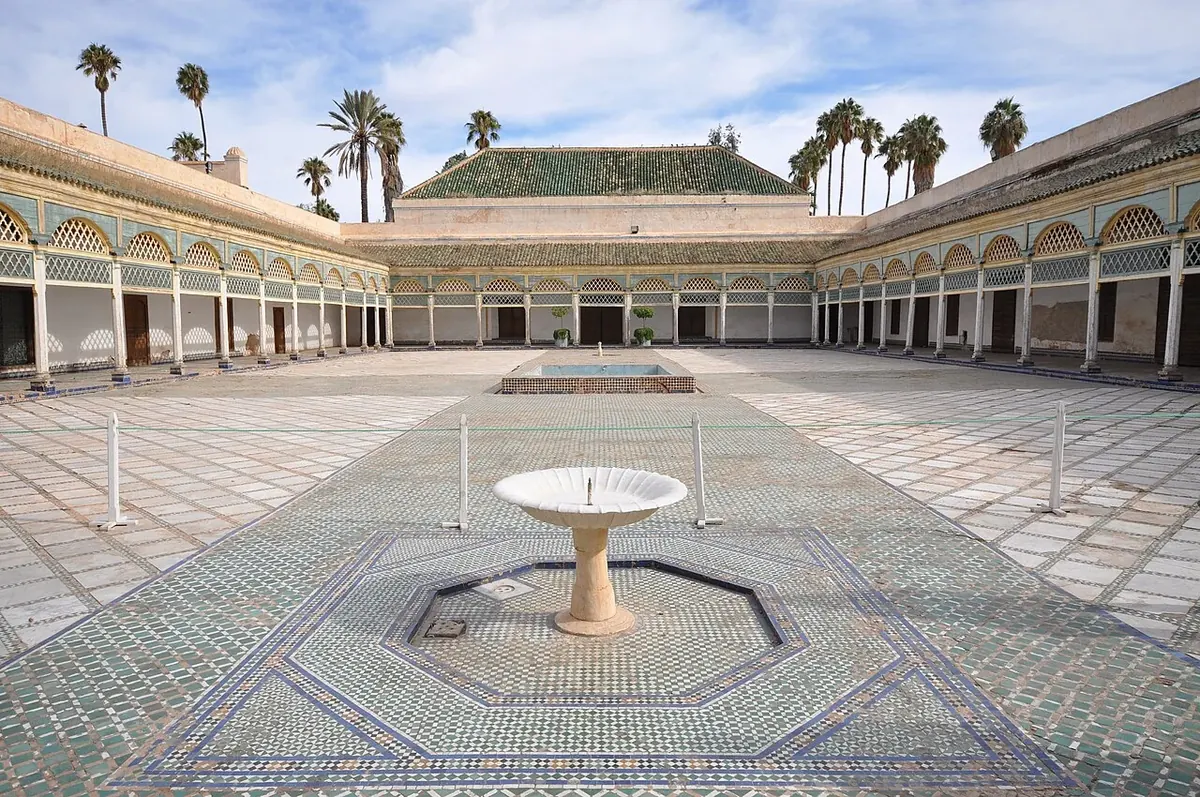
Bahia Palace is a strong pick for visitors interested in decorative domestic architecture and courtyards. The late-19th-century palace is one of the later architectural landmarks UNESCO identifies within the medina.1 Think in terms of looking closely at spaces and ornament, not expecting every room to be furnished like a museum. Confirm current visitor access through a reliable local or official channel before setting out; unofficial sites that present themselves as ticket offices can be hard to distinguish from venue sources.
Ben Youssef Madrasa offers a different experience: a former center of learning where the architecture itself is the attraction. Its official site says it was built in 1564–65 and highlights carved wood, zellige tile, sculpted plaster and calligraphy.3 The central courtyard makes an easy visual focal point, but take time to notice how the smaller details repeat across the building. The site has published hours and prices, yet also says its online ticketing is under maintenance and tickets are available at the entrance; those operational details can change, so check before travel rather than relying on an old screenshot.3
El Badi Palace is better for travelers who want scale, open-air ruins and a sense of a former royal complex than finely finished interiors. The National Tourism Office and UNESCO both identify it among Marrakech’s notable sights.1 2 Treat it as a separate stop from Bahia rather than assuming the two palaces are interchangeable: one emphasizes decorated rooms and courtyards, while the other is experienced through a more expansive historic site.
Saadian Tombs are another compact heritage visit often paired with the southern medina, and UNESCO lists them among the medina’s later architectural treasures.1 Pair them with one nearby palace rather than adding several far-flung stops. For any monument, check whether access is open on your date and whether a ticket, timed entry or queue is involved. Do not build a day around a specific posted hour or price without reconfirming it.
Decide whether Majorelle is worth the cross-city trip
Jardin Majorelle is a garden visit rather than another medina monument. Add it if botanical design, color and a quieter pace appeal to you; visitors can also consider the Pierre Bergé Museum of Berber Arts and the Musée Yves Saint Laurent Marrakech, but the venues and admissions are not interchangeable. The garden’s own site says its official ticket website is the only authorized online seller for tickets to the garden and named museums, and warns that tickets sold on unauthorized websites will not provide access.4 Use that official link directly and check what your chosen admission includes.
This is a poor add-on to a tightly scheduled medina morning if you have not allowed for the journey between areas, entry arrangements and time inside. If gardens are not a priority, use the time for a slower medina visit or choose the Menara basin, which the tourism office also highlights.2 The Jardin Majorelle website indicates accessibility for disabled visitors, but travelers with specific mobility needs should contact the venue to confirm the route and current arrangements.4 Its page contains inconsistent repeated opening-hour text, so verify current hours and last entry directly before visiting.
Add a museum, a souk or a slow walk—not all three
A museum can give context to the architecture and craft you see in the streets. Pick one whose collection genuinely interests you and check its current exhibitions, closure days and entry terms. If you would rather stay outdoors, wander a manageable section of souks and pay attention to the craft neighborhoods rather than trying to cover every lane. The medina is a living place of homes, workshops and trade, not a theme park; UNESCO’s description explicitly recognizes its continuing artisanal activities and traditional trades.1
Shopping deserves its own pace. Decide whether browsing is the point or whether you are looking for a particular item; compare quality and materials before negotiating. Our Marrakech souks guide covers browsing and bargaining in more depth. Families or anyone who needs a quieter break can trade one interior attraction for a garden, shaded café stop or return to the accommodation. Avoid promising children a fixed attraction sequence when heat, crowds and walking pace can change the day.
Practical itineraries that do not overreach
One day: Start with one medina monument, continue on foot to a second nearby sight if energy and queues allow, then leave the afternoon flexible for lanes, lunch and rest. Return to Jemaa el-Fna around evening. Do not attempt Majorelle, multiple palace interiors, the souks and a day trip on the same day.
Two days: Give the medina one full day, choosing two or three paid sights around your interests. Put Majorelle and any nearby museum on the other day, with time for the journey and a relaxed meal. If you prefer an even slower trip, skip a second museum and make room for a hammam or a long café break.
Three or more days: Add a day trip only if leaving the city is itself a priority. The right choice depends on landscape and travel time; compare options in the Marrakech day-trips guide. Another option is simply to revisit the old town at different times, rather than treating every free hour as an excursion.
Before departure, confirm venue status, ticket source, opening and last-entry rules, payment method and any access restrictions on each attraction’s own current page. Keep a saved map pin for your accommodation and meeting point. If you want help coordinating independent providers or navigating plans during purchased dates, Maroc Mobility offers one Personal Travel Assistant for $20 per inclusive Morocco calendar day with WhatsApp and call assistance; third-party hotels, transport, meals and experiences are arranged and charged separately. Details are available at /services.