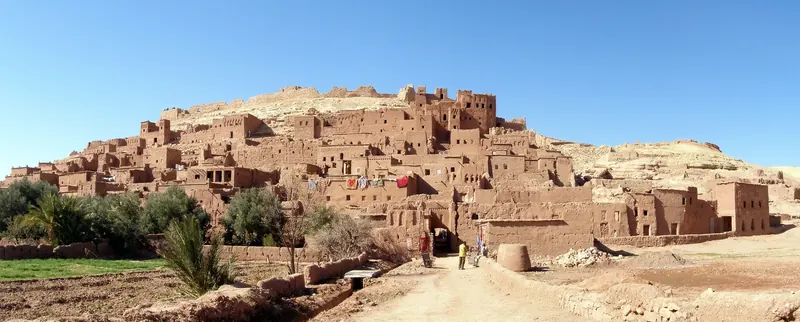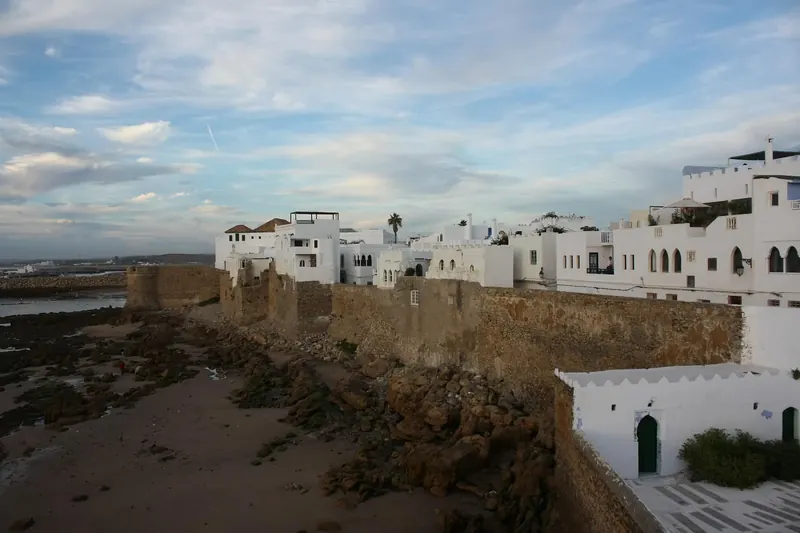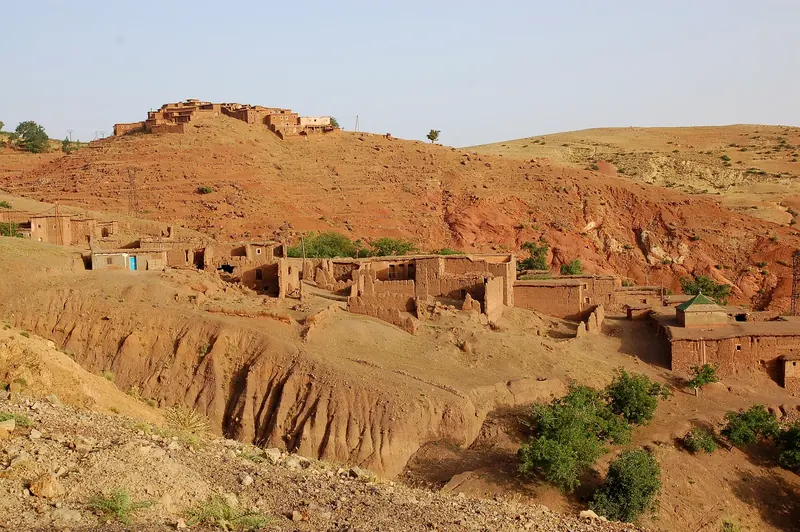
Orient yourself before you try to see everything
Marrakech works best when you treat it as several adjoining places rather than one compact checklist. On a first visit, use Jemaa el-Fna and the nearby Koutoubia area as the central reference point, then think in three broad zones: the historic Medina inside the ramparts, the newer city around Guéliz, and the corridor around Hivernage and Avenue Mohammed VI.
The Medina is not a museum district with a simple street grid. UNESCO describes it as a living historic town of lanes, houses, souks, fondouks and working crafts; that is exactly why a map pin may be more useful than a street address alone. 1 Save the location of your arrival point, accommodation entrance and a recognizable gate or square before you land. If someone is meeting you, ask for the nearest vehicle-accessible point, not just a property name.
The useful question is not “Which neighborhood is best?” in the abstract. It is: Where will I begin and end most days, and how much navigation do I want on the first evening? For a lodging comparison, use the separate Marrakech accommodation guide, rather than treating this orientation guide as a hotel shortlist.
The Medina: historic, walk-first and deliberately disorienting
Choose the Medina for proximity to the old city’s lanes, markets, monuments and the energy around Jemaa el-Fna. It rewards a slow, on-foot approach. Its character comes with trade-offs: routes curve, landmarks can disappear around a corner, and a car cannot necessarily reach an entrance. Do not plan to “cover the Medina” in one pass. Pick one anchor—Jemaa el-Fna, a gate, Koutoubia or your agreed drop-off—and make a small loop back to it.
Guéliz: the modern grid and a practical transport reference
Guéliz is the newer, more open-faced side of Marrakech. The local tourism office calls it the city’s modern, progressive district and notes that the bus and train station are here. 2 It is a useful mental counterpoint to the Medina: wider avenues, more conventional blocks and a straightforward place to orient yourself before or after an onward rail journey.
That does not make Guéliz “better” than the old city. It is simply less maze-like. If your plans combine the Medina with a train departure, a late arrival or time-sensitive errands, use Guéliz as a transport landmark and allow extra time between districts rather than assuming a direct, fast crossing.
Hivernage and the Avenue Mohammed VI side
Hivernage sits alongside the newer city and is associated with Avenue Mohammed VI, gardens, larger visitor infrastructure and evening venues. 3 It is a useful map reference between the airport, Guéliz and the old city, but it is an area rather than an address: confirm an exact meeting point.
Arriving through Marrakech Menara Airport without the first-hour scramble
Before your flight, decide how you will get from the airport to one confirmed landmark. Keep the accommodation’s full address, phone number and preferred drop-off point accessible offline. For a Medina arrival, ask whether the final approach is by vehicle, on foot, or with someone meeting you at a gate.
Marrakech’s official tourism guidance lists airport-city taxis and the city bus among the options, alongside walking, car, bike and scooter for movement in town. 4 Choose by the conditions of your arrival, not by an abstract “best” option:
- A pre-arranged transfer is often the clearest choice when you land late, have bulky luggage, are traveling with children, or need a precise Medina handoff. Confirm the driver’s name, pickup instructions, vehicle description and the final meeting point before departure.
- A registered airport taxi can suit a simple arrival. Use the official pickup process, give the complete destination, and ask about the fare or meter before the ride begins. The U.S. Department of State specifically advises travelers in Morocco to use registered taxis or ride-sharing services rather than unmarked vehicles. 5
- The bus can make sense for a light-luggage arrival during operating hours, but verify the current route, last service and walking distance at the other end on the day. Do not build a tight connection around a timetable copied from an old blog post.
Entry rules, airline requirements and airport procedures can change. Check them with the relevant official Moroccan and airline sources before travel rather than relying on a generic city guide.
Getting around Marrakech: match the mode to the district
Walk for the Medina, but navigate by anchors
Walking is the default way to understand the old city. Start from a known landmark and make a short loop back before you are tired or navigating after dark. A route screenshot can be more useful than a pin when data is weak. Watch for scooters, carts and uneven surfaces in narrow shared lanes.
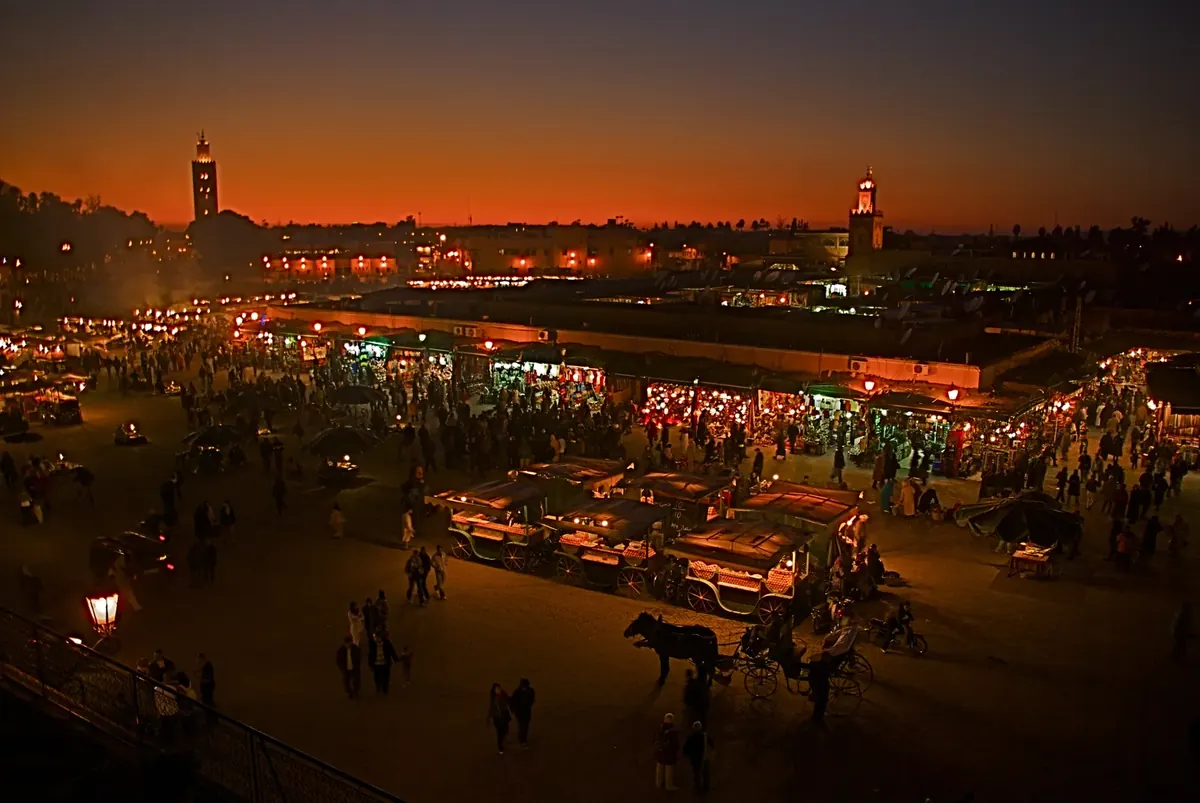
Jemaa el-Fna is a powerful orientation point, but it gets crowded and changes character from day to evening. Agree on a fixed exterior landmark if your group separates. Avoid accepting a “shortcut” from someone who approaches you unexpectedly; if you need directions, use a map, your host or an established business as your first reference.
Use taxis for district-to-district hops
Taxis are practical when heat, luggage, distance or an evening return makes walking unattractive. The national tourism office notes that Marrakech city taxis are orange. 6 Use a marked vehicle, say the destination before getting in, and settle the basis of the fare before departure if the meter will not be used. Keep a small amount of local cash available for ordinary transport, but do not display a large wallet while negotiating.
Take the bus when the route is clear, not as a first-night test
The local tourism authority identifies ALSA’s urban and electric buses as part of the city network. 4 Buses can be a good value on a route you have checked live, especially on broader avenues. For a first visitor, however, they work best after you know both the stop and the final walking segment. Check current route information directly, and leave a margin if you are headed to a train, a timed booking or the airport.
Do not rent a car for the old city alone
A car may be sensible beyond Marrakech, but it adds parking, traffic and navigation decisions inside the city. For a Medina, Guéliz and Hivernage stay, walking plus occasional marked taxis is usually simpler. If a car is part of a wider itinerary, confirm collection, parking and return arrangements before arrival.
Leaving Marrakech: make the connection part of the plan
For onward travel, distinguish between rail-served cities and destinations that require a coach, road transfer or a combination. Morocco’s national tourism office says the ONCF rail network connects Marrakech with major cities and notes exceptions including Agadir; it directs travelers to ONCF for ticketing. 6 Check the operator’s live journey planner for the exact date, station, permitted luggage and any service changes before you commit to a same-day flight or tour.
Guéliz is the useful rail reference because the local tourism office places the train and bus station in that district. 2 Build in time from your actual door—especially from the Medina—and keep the station name and departure time available offline. For non-rail routes, compare pickup point and arrival location, not only departure times.
If you want help coordinating a late arrival, a Medina meeting point or an onward connection, a Personal Travel Assistant can help organize the request; transport providers confirm availability and charge separately.
A calm first 24 hours in Marrakech
Keep arrival day simple: reach one confirmed landmark, make sure you can find your door again, walk one nearby zone in daylight, and confirm the next day’s first departure before the evening gets busy.
Keep dining decisions separate from orientation. Once you know which side of the city you will be in, use the dedicated Marrakech restaurant guide for where to eat rather than chasing a cross-city recommendation on your first night.
For personal security, use the same deliberate habits you would use in any busy city: keep bags closed and in sight, minimize visible valuables, stay alert in crowds, and avoid unfamiliar poorly lit routes alone at night. The current U.S. advisory, issued September 4, 2026, lists Morocco at Level 2 (“Exercise increased caution”) and highlights petty crime in tourist areas and crowded markets. Review the live advisory before departure because its level and language can change. 5
Frequently asked questions
Is Marrakech easy to navigate on a first visit?
Yes, if you navigate by districts and landmarks rather than expecting the Medina to behave like a grid. Save your entrance, a nearby gate or square, and your airport or taxi drop-off point. Start with short walking loops and expand once you recognize the area.
Should I base myself in the Medina or Guéliz?
That is an accommodation decision, but the orientation trade-off is clear: the Medina gives immediate access to historic lanes and souks, while Guéliz offers a more open, modern street pattern and the rail/bus-station reference. Compare actual stays in the separate accommodation guide before booking.
Can I take a taxi from Marrakech Menara Airport to the Medina?
Yes, but confirm the property’s appropriate vehicle drop-off point first. A taxi may reach a gate or nearby street rather than the exact door because the final approach can be on foot. Use the official airport process or a pre-arranged, clearly identified pickup.
Is a car necessary in Marrakech?
Not for core city exploration. The Medina is best on foot, while marked taxis and buses can cover longer urban hops. A car makes more sense when it serves a wider itinerary beyond the city and you have a parking plan.
What is the best way to travel onward from Marrakech?
Use ONCF’s current planner for rail-served cities, and evaluate coaches or road transfers for places outside the rail network. Confirm the live schedule, departure point and luggage conditions directly with the operator; do not rely on an undated timetable.