What makes Aït Benhaddou worth visiting
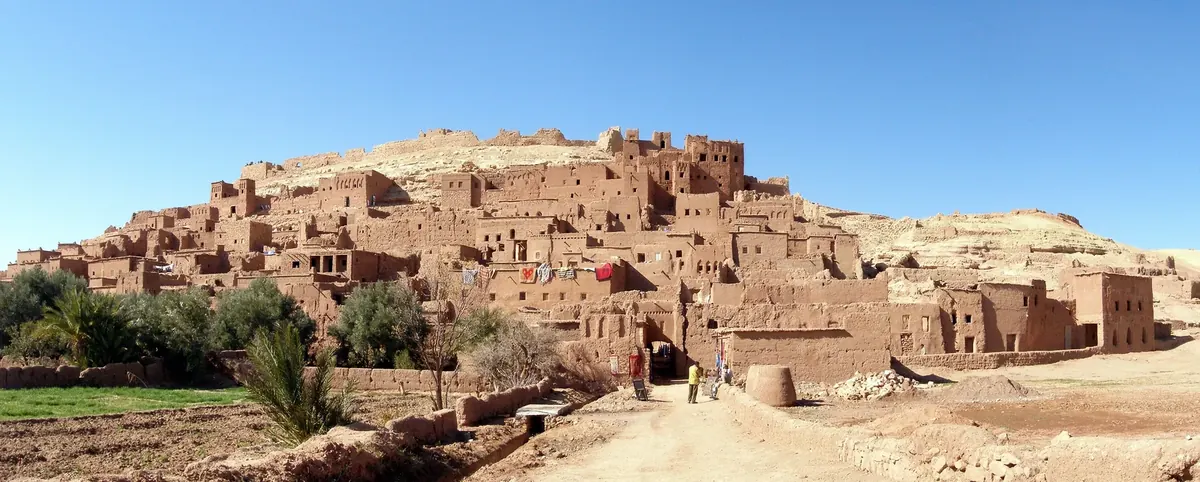
Aït Benhaddou (also written Ait Ben Haddou) is a fortified earthen settlement, or ksar, in Ouarzazate Province on the southern side of the High Atlas. UNESCO describes the ksar as a compact group of homes behind defensive walls reinforced by corner towers. It includes community spaces as well as dwellings, and demonstrates the earthen construction traditions of southern Morocco. Its World Heritage value is not simply that it looks cinematic: it is an unusually complete example of pre-Saharan earthen architecture and a settlement type made vulnerable by social and economic change. 1
That distinction changes how to plan your visit. The best experience is not a checklist of film locations or a dash to the highest viewpoint. Notice how tightly the homes are clustered, how towers and decorated upper walls shape the skyline, and how the hill, river corridor and surrounding settlement form one landscape. Treat it as a heritage place where people live and work, rather than an abandoned movie set.
UNESCO notes that the ksar’s earthen structures are vulnerable when they are not maintained and repaired. Avoid climbing on walls, touching or removing material, or entering spaces that are closed or appear to be private. The fabric is not equivalent to stone ruins: weather and inappropriate interventions can damage earth construction. 1
Decide how much time to give it
A few hours can work if you are already travelling through the Ouarzazate region and mainly want to walk through the ksar. Allow for the transfer in each direction, a slower crossing and time to climb the steep lanes. A 20-minute roadside stop, sometimes built into a larger tour, gives little opportunity to understand the place.
An overnight stay nearby is the better choice if you want a relaxed visit, prefer quieter edges of the day, or are continuing toward the Sahara. You avoid forcing the visit into the same day as the long mountain drive and can decide whether to add another regional stop. Lodging is available in the surrounding village and in Ouarzazate, but check exact location, transfers, meals and current availability directly; do not assume a property is within the old ksar.
From Marrakech, a day excursion can be workable when a driver or tour handles the return and you accept a long road day with limited time on site. Independent public-transport planning is less tidy: coaches connect Marrakech and Ouarzazate, but onward travel to the ksar requires a separate local arrangement. Published journey estimates vary by vehicle, stops and mountain-road conditions, so check the itinerary for your date rather than treating a quoted drive time as a promise. 2 3
If the ksar is one part of a multi-day southern Morocco itinerary, make it a stop along the route instead of turning around for a rushed out-and-back trip. See our first-time Morocco itinerary for wider route trade-offs and the Morocco road-trip guide if driving yourself.
Getting there: Ouarzazate or Marrakech
From Ouarzazate
Ouarzazate is the sensible independent base. Aït Benhaddou is about 30 kilometres west by road according to independent visitor guides. 2 3 Arrange a taxi, private driver or other confirmed transfer for the outbound and return legs. Agree the pickup point and whether the driver will wait before setting out; a one-way drop with no return plan can leave you negotiating transport at the end of the visit. Do not rely on an infrequent passing vehicle or assume a convenient public bus connection to the entrance.
If you are using a shared grand taxi, confirm whether it is departing only when full, how the fare is calculated, and where you will be dropped. A private transfer costs more but makes it easier to choose your own departure and stay time. Current fares and local arrangements can change, so ask before boarding rather than relying on old online prices.
From Marrakech
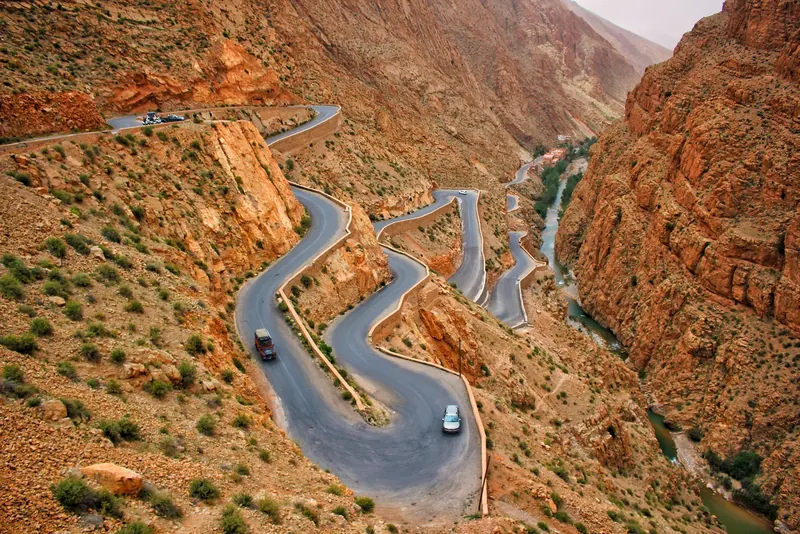
Marrakech and Aït Benhaddou are separated by the High Atlas road. The journey crosses the Tizi n’Tichka area; road time depends on traffic, weather, stops and road conditions. Independent guides place Marrakech–Ouarzazate coach travel at roughly four-and-a-half to five hours in one direction, before the onward transfer to the ksar. 3 A same-day return therefore means a very early start and many hours in a vehicle.
A guided day trip buys logistical simplicity, but compare how much time it actually includes at the ksar and whether it adds other stops. If the itinerary gives only a short visit, decide whether that is enough for you before paying. A more comfortable plan is to overnight in Ouarzazate or Aït Benhaddou, or include the ksar on a multi-day journey. Drivers and vehicle services should be booked separately with their own providers; our Personal Travel Assistant service is planning and in-trip help, not a transport operator.
For self-drivers, use a route map but do not plan the day by map distance alone. The mountain crossing is winding and slower than a motorway, and daylight, weather and fatigue matter. If you are unfamiliar with Moroccan driving, review our practical driving guide and avoid stacking the ksar visit onto an already demanding drive.
How to explore the ksar
Start by orienting yourself from the modern settlement and identifying the accessible crossing into the old ksar. The riverbed or water level and crossing conditions can vary; use the established route available that day rather than assuming a low-water crossing is safe. Do not wade across if water is flowing or the footing is uncertain. Ask locally about the usable approach and any temporary closure.
Once inside, take the lanes at an unhurried pace. The route is irregular, narrow and often steep, with steps and uneven ground. Look back occasionally: close views reveal construction details, while the higher lanes open up views over the surrounding valley and the newer settlement. If a path leads to an upper viewpoint, turn around when it is closed, unstable or beyond your comfort level. You do not need to reach the highest point to appreciate the site.
Some individual houses, exhibition spaces or other interiors may be opened by local operators and may request payment. These are distinct from simply walking through the settlement; availability, terms and access can change. Ask what a charge covers and whether photography is permitted before entering. Do not assume that a person at a gateway represents an official ticket requirement for the entire UNESCO property.
Allow time on the approach or from across the valley to see the whole mass of the ksar against the landscape. This broad view explains why the tightly grouped homes and towers make sense as a settlement, while a close-up photo alone does not. If you are interested in photography, give other visitors room and ask permission before photographing people, particularly children.
Timing, comfort and respectful visits
The lanes offer limited shade, and the climb can feel strenuous in hot weather. Bring drinking water, sun protection and shoes with grip; take breaks rather than pushing to the top. In cooler months, a layer can be useful early and late in the day. Weather in the Atlas foothills can differ from Marrakech, so check the forecast for the actual destination.
Families should keep children close on the steps and around edges, and agree on a meeting point if the group separates. The route is not a smooth, step-free attraction, so visitors with limited mobility may find the lanes and ascent difficult. A ground-level view and time in the accessible surroundings can still make a worthwhile visit; ask your driver to identify the easiest drop-off and verify any step-free route before setting out.
Keep the village’s ordinary life in view. Do not block doorways, enter homes without invitation or treat residents as part of a display. If someone offers a tour, a shop visit or help finding a route, clarify in advance whether a fee is expected and feel free to decline politely. If you want an explanation of the architecture and local context, arrange a guide through a clearly identified provider and confirm duration and price beforehand.
A practical sample plan
For an overnight-based visit from Ouarzazate, agree a morning or afternoon pickup, keep the return time explicit, and leave a flexible block for the walk rather than booking another timed activity immediately afterward. At the ksar, first take in the view from outside, cross by the route in use, walk the lower lanes, and then decide whether the climb and any open interiors suit your group. Pause for a meal or rest nearby if you have confirmed the venue and service in advance.
For a Marrakech excursion, check the full schedule before booking: departure time, planned time at the ksar, other stops, meals, and the expected return. If your priorities are architecture and an unrushed climb, choose a plan with a substantial site stop—or stay overnight instead. Confirm what is included; transport does not necessarily include entry to individual interiors or a local guide.
Before leaving, confirm the return ride, carry some cash for small purchases where appropriate, and check whether your next lodging or meal needs advance notice. Entry arrangements and local services can change; verify them on arrival rather than budgeting around old visitor posts.
Common mistakes to avoid
- Treating Aït Benhaddou as a quick roadside photo when the lanes and setting are the main experience.
- Underestimating the Marrakech mountain road and assuming a same-day independent return is effortless.
- Assuming the whole ksar has one fixed museum-style admission fee, or that every house and exhibit is open.
- Crossing water or climbing walls because an old online description says it is possible. Conditions and access can change.
- Booking transport without confirming return pickup and the time available at the site.
- Calling the entire place a “kasbah.” The UNESCO property is a ksar—a fortified settlement—though individual structures and local tourism descriptions may use kasbah terminology.