Where the Dades Gorge fits into a Morocco road trip
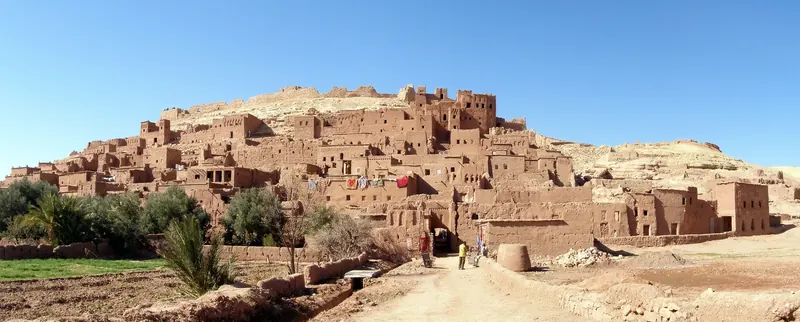
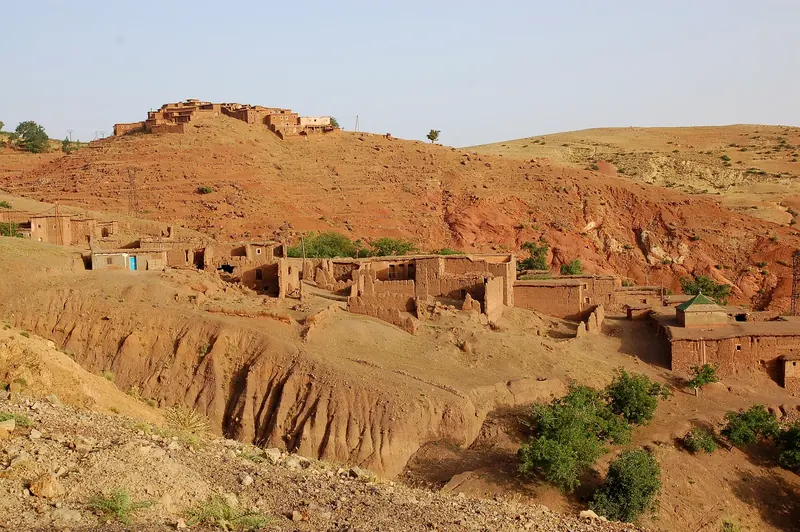
The Dades Gorge lies inland in Morocco’s southern High Atlas region. Boumalne Dadès is the usual gateway town; from there, the road follows the valley upstream toward the better-known gorge scenery. The wider landscape combines dry mountain slopes, river-side cultivation, villages and historic kasbahs. UNESCO’s M’Goun geopark description gives useful context for the region’s varied geology and long-established communities, although it is not a visitor map for the gorge itself. 1
For many visitors, Dades is a connecting stop between Ouarzazate and the Sahara-side itinerary, rather than a destination to squeeze into a city day trip. Independent route accounts put Marrakech-to-Boumalne driving at several hours before you even start exploring the gorge; actual road pace and stops vary. 2 If you are arriving from Marrakech, Aït Benhaddou or Ouarzazate, avoid promising yourself a long gorge exploration followed by a late onward drive. Check the route you intend to drive on a current map, then leave slack for breaks and daylight.
The best scenic stops, in order
1. Boumalne Dadès and the valley approach
Use Boumalne as the practical resupply and orientation point. The gorge is not a single fenced attraction with one entrance or a ticketed circuit: the experience is the road, changing rock formations and stops along the valley. The route reference commonly identifies the R704 corridor between Boumalne and M’Semrir, while travel guides describe the gorge road as roughly 60–62 km in total. Those figures refer to a road corridor, not a sightseeing loop or a guaranteed drive time. 3 4
2. Monkey Fingers rock formations
The formations commonly called Monkey Fingers make a useful early stop before the famous bends. The nickname is an informal visual description, not a marked monument with a visitor facility. Independent guides describe it as a rock landscape stop in the lower gorge. 2 3 Pull over only where there is a safe, legal space; do not stop abruptly in the carriageway to take a photograph. If you plan a walk among the formations, ask locally about the route and conditions rather than assuming every visible path is an established trail.
3. Switchbacks and the high viewpoint
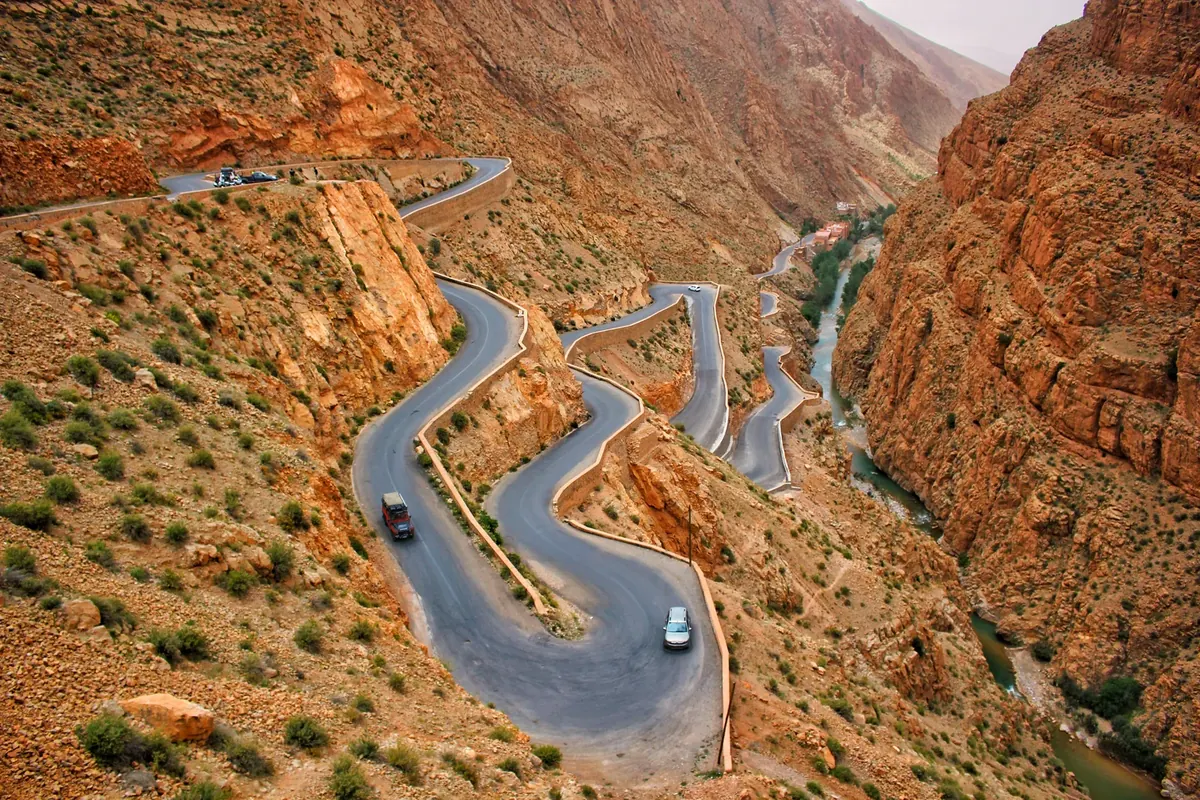
The hairpin ascent is the image most associated with Dades Gorge. For a short visit, drive slowly up the bends, keep your attention on the road rather than the view, and use a safe viewpoint or parking area for photographs. A café/terrace viewpoint is described in recent independent visitor coverage, but opening, parking and services can change; do not build the day around a specific business being open. 3
This is a two-part stop: the drive itself and the panorama looking back toward the bends. If you have a nervous driver, a large vehicle, a passenger prone to motion sickness, or limited mountain-road experience, take the switchbacks at a measured pace and consider turning around before continuing farther. Avoid letting another vehicle pressure you into a speed that feels unsafe. The route is paved according to secondary road references, but rain can make it slippery; check local conditions before departure and avoid assuming that a past report reflects today’s surface. 4
4. Continue into the canyon only if your day allows
The landscape changes again beyond the famous viewpoint. Guides describe a narrower canyon section and continued settlement and services along parts of the road, followed by a quieter upper valley. 2 This can be rewarding if you are sleeping nearby, but it is not essential to “complete” the visit. A sensible turnaround is the point where you have enjoyed the gorge and still have comfortable daylight to return to your lodging or next overnight.
How long to stay: quick stop, overnight or longer
A quick scenic stop works if you are already passing through and mainly want the lower gorge and switchbacks. Allow enough time to stop safely, stretch, take in the view and drive back without rushing. Published travel estimates differ and generally describe moving time, not meal breaks, photography, traffic or weather. Use navigation for your date and treat it as a starting estimate, not a schedule.
One night is the best fit for most travelers. Arrive with enough daylight to see the lower gorge, sleep near the valley, and continue the next day after breakfast. An overnight removes the pressure to fit every stop between two long transfers. It also lets you choose whether the next morning is for a short walk, another viewpoint or simply an early departure.
Two nights or more makes sense if walking, photography or the upper valley is a main purpose. Before booking, ask your accommodation exactly where it is relative to the road and what dinner, breakfast, parking, heating or air conditioning, and late-arrival arrangements are included. This is more useful than selecting on the word “gorge” in a listing: properties are spread along the valley and near Boumalne, and “near” may not mean walkable to a viewpoint. Confirm cancellation terms and current availability directly with the provider. No fixed room rate or vacancy can be assumed.
Driving and transport choices
A rental car or private driver gives the most control over stops. If self-driving, plan the gorge as its own road segment; keep fuel, water and snacks topped up in a larger town, and download an offline map before leaving stronger mobile coverage. On narrow bends, stay in your lane, expect opposing traffic and use designated pullouts rather than stopping where the road narrows. Do not drive the mountain road after dark if you are unfamiliar with it. These are practical precautions, not a claim that a particular route is currently closed or unsafe.
Without a car, independent public transport can get you to a regional hub, but the last leg into the gorge needs separate planning. An independent account describes reaching Boumalne via Ouarzazate and then arranging a local taxi or guide for the gorge. 2 Do not assume that a long-distance coach will drop you at your guesthouse or that a return taxi will be waiting. Ask your lodging to confirm a specific pickup, return plan, and latest departure options before you commit. Check current operator timetables directly for your travel date.
A driver-led multi-day southern Morocco itinerary may include a brief overnight in the lower gorge. That can work as a transit stop, but ask whether the itinerary actually includes the switchbacks and time to stop, or only a dinner-and-sleep break along the route. For a more flexible day, arrange the route and stop duration in advance. If you need help coordinating the broader itinerary, the Personal Travel Assistant service is optional; independent hotels, drivers and activity providers set and charge their own prices.
Extending into the upper valley
Do not treat the upper valley as a casual add-on to the main switchback viewpoint. Independent route reporting describes the road becoming less developed farther upstream, with services growing sparse and some routes extending over a mountain pass. 2 A regular car and a standard lower-gorge visit are not the same plan as a remote through-drive. Before going farther, confirm recent road conditions with a local source, the exact surface and route, whether your vehicle and rental agreement allow it, and where you can refuel or stay. If weather, visibility or road condition is uncertain, turn back rather than relying on an old blog post or map line.
What to pack and what to confirm
Keep the day bag simple: water, sun protection, layers for changing elevation and evening temperatures, sturdy walking shoes, and any personal motion-sickness supplies you ordinarily use. For a walk, confirm the route, expected duration, footing and whether a local guide is appropriate. Ask permission before photographing residents or private homes, and do not climb fragile rock features or enter old kasbahs that are not open to visitors.
Before setting out, confirm: the lodging’s exact location and meal arrangements; the current road and weather picture; a safe turnaround point; mobile/offline navigation; and onward transport if you are not driving. The route is most enjoyable when you decide in advance whether the goal is the classic switchback view or a longer valley exploration, then leave the rest of the day uncommitted.