What you will see at the Saadian Tombs
The Saadian Tombs are a compact royal burial complex in Marrakech’s Kasbah, beside the Kasbah Mosque. The site is part of the UNESCO-listed Medina of Marrakesh, whose later architectural landmarks include the tombs alongside Badiâ Palace and Ben Youssef Madrasa. This is a focused monument visit rather than a sprawling archaeological park: expect decorated burial chambers, a garden courtyard and a close look at Saadian-era craftsmanship. 1
The complex developed in stages. Marrakech’s tourism office dates its earliest funerary rooms to the burial of Prince Mohamed Cheikh in 1557. It identifies the Chamber of the Twelve Columns, the Chamber of the Mihrab and the Three Niches room among the later spaces, and notes the tomb of Sultan Ahmad al-Mansur in the central chamber. 2 The ornament—tilework, carved plaster and cedar, and marble columns—is the reason to come. Give yourself time to look upward and notice the transitions between materials rather than treating it as a quick photo stop.
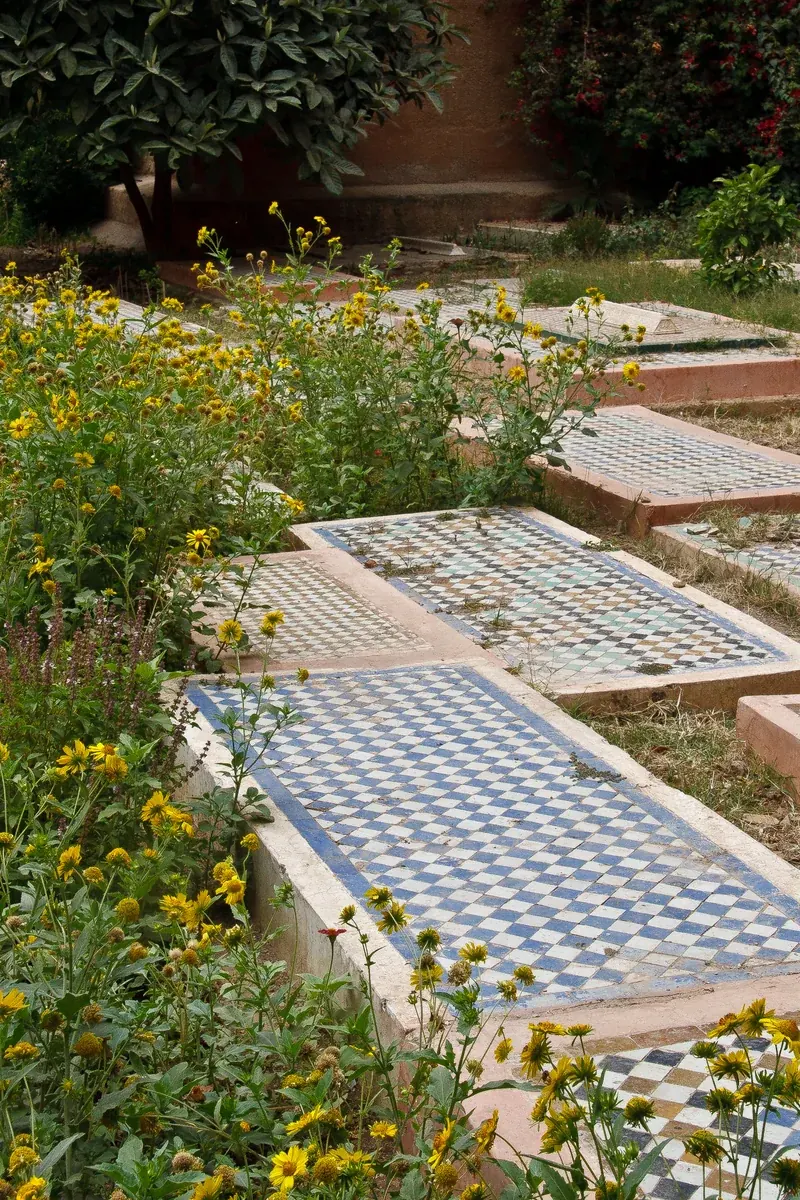
The visitor route brings you through historic rooms and into the courtyard with rows of simpler graves. You generally view delicate chamber interiors from a threshold or designated viewing point rather than walking among the tombs. Follow barriers and staff directions: this is a funerary place and a conserved monument, not a space to touch or climb on.
How to plan a visit
Allow roughly 30–60 minutes on site as a practical planning allowance, not an official duration. A shorter stop works if you only want the main chamber and courtyard; add time if you like architectural detail, need to wait in a line, or are visiting with someone who moves slowly. Published online hours and entry information differ, so verify the current schedule and ticket arrangements directly before setting out. The Marrakech tourism listing gives split morning and afternoon hours, while a separate visitor guide publishes different daily hours; neither should be treated as guaranteed for your date. 2 3
Buy or arrange admission only through the site’s current authorized channel or at the entrance as instructed locally. Do not assume a third-party “skip-the-line” listing is official or that an advance ticket includes a guide. Confirm whether entry, guided interpretation, and any audio guide are separate; keep the confirmation accessible and check whether it names a date or time slot. No fixed ticket price is included here because charges and sales arrangements can change.
The address is on Rue de la Kasbah, close to the Kasbah Mosque. If you are already in the southern medina, walking is often the straightforward choice. From Jemaa el-Fnaa, map the route before leaving and allow extra time for winding lanes; a phone map may not resolve every narrow passage accurately. If using a taxi, agree the destination and understand that a vehicle may leave you at a point from which the last section is on foot. 2 3
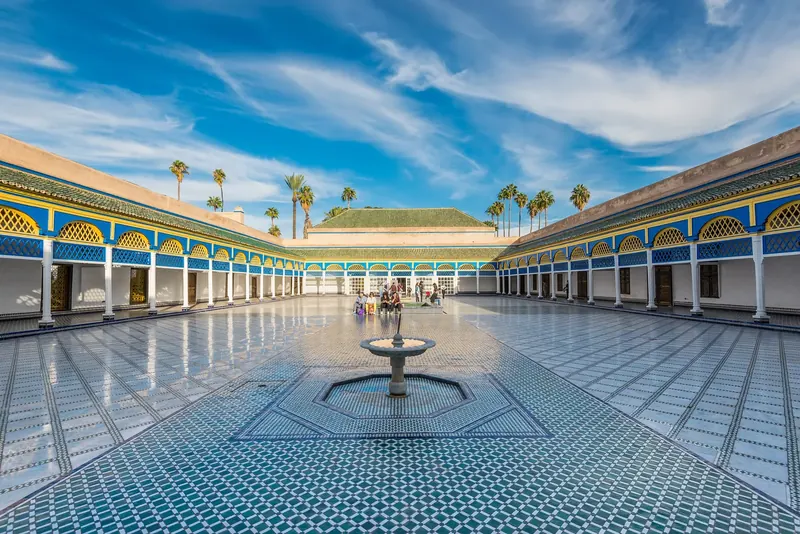
A useful pairing is nearby El Badi Palace, especially if you want a half-day focused on Kasbah history. The palace is larger and mostly open-air ruins, while the tombs are more intimate and decorative; putting the tombs first can make it easier to enjoy the smaller interior before fatigue sets in. The tourism listing identifies El Badi among nearby listings. 2 Leave a buffer between attractions rather than relying on an exact walk time through busy streets. For broader orientation, see our Marrakech first-time visitor guide and Marrakech souks guide.
Tickets, timing and what to bring
Check opening status close to your visit, particularly during religious or national holidays, Ramadan, restoration work, or other schedule changes. Online sources disagree on the daily hours, so a search result alone is not enough. Visit Marrakech lists 8:30–11:45 and 14:30–17:45, while the independent visitor guide lists 9:00–16:45 and warns of Ramadan variation. Treat these as conflicting published information, not a promise; confirm locally or with the site before planning around last entry. 2 3
Go earlier in your available session if avoiding queues matters. The visitor guide describes a narrow entrance passage, so groups can bunch up at the threshold. Midday heat matters less inside than on an outdoor itinerary, but the courtyard is exposed; bring water for the walk there and back, and avoid scheduling it immediately after a long, rushed medina crossing. 3
Wear shoes with a stable sole for uneven historic surfaces. Modest, comfortable clothing is a sensible choice at a mausoleum next to an active mosque, although visitor guidance—not a universal formal rule—suggests shoulders and knees covered. You do not need special equipment. Keep bags small enough for a narrow route, and ask staff before using a tripod or flash; respect any photography restrictions in place that day. 3
Accessibility and expectations
Accessibility is a meaningful limitation, not a minor detail. The visitor guide describes the entrance as narrow and uneven, with steps and no ramp; wheelchair and stroller access may therefore be difficult, even though the courtyard is flatter. Contact the site before visiting if step-free entry is essential, and do not assume that a flat portion of the garden means the full route is accessible. 3
Families with young children may find the visit manageable because it is short, but the confined route and quiet atmosphere call for close supervision. The detailed ornament may appeal more to older children than a simple graves-only description suggests. Avoid touching masonry, climbing barriers or disturbing animals and other visitors.
Choose the tombs if you enjoy Islamic architecture, dynastic history, or small historic interiors and are already exploring the Kasbah. Skip or postpone them if you need a guaranteed step-free route, dislike queues in confined passages, or have little interest in decorative detail. The practical value is in pairing the visit with nearby sights, not trying to turn it into a full-day destination.
If you want help fitting the Kasbah sights around arrival, mobility needs or a wider itinerary, the Personal Travel Assistant is available for 20 USD per inclusive Morocco calendar day; any independently provided transport, tickets or other services are confirmed and charged separately.