The decision in one minute
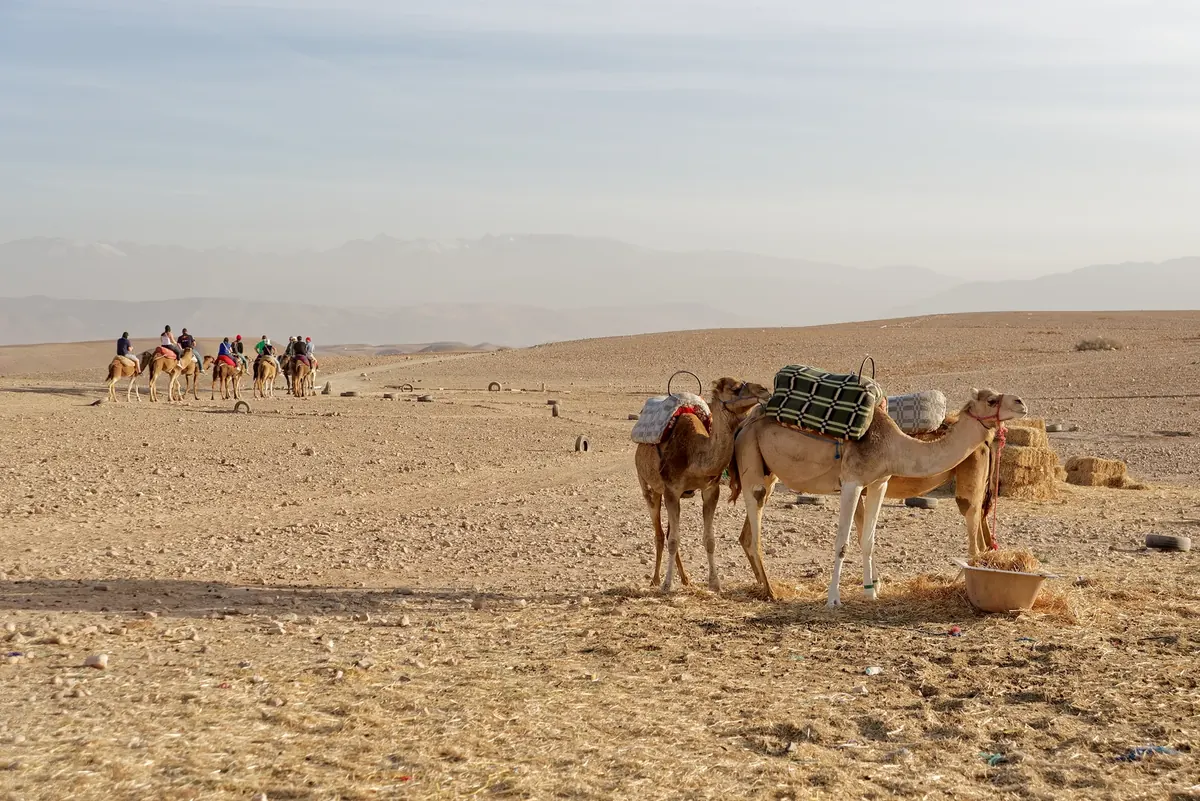
Agafay is best understood as a close-to-Marrakech landscape-and-camp outing, not a substitute for the Saharan dune country. The Marrakech tourism destination site describes it as a rocky desert with hills and wide expanses about 40 km from the city. Independent travel guides likewise distinguish its stony terrain from the high sand dunes of Erg Chebbi and other Sahara destinations. 1 2 3
For most visitors, the choice is less about whether a camp offers activities and more about how much time you want away from Marrakech. A day trip works when the highlight is a few hours outdoors, perhaps timed for late light and dinner, with a return to your own bed. An overnight is a better fit when you want to let the outing breathe: arrive before dusk, have the evening without watching the clock for a city transfer, sleep on site and see the landscape again in morning light. Camps advertise very different accommodation and amenities, so “overnight camp” does not describe one standard level of comfort. 4
If your mental picture is rolling golden dunes, camel trekking across a huge sandy sea, or a multi-night desert route, Agafay will disappoint. Choose a longer Sahara itinerary instead and allow the journey time it needs. If your priority is a short escape from Marrakech and a dramatic rocky horizon, Agafay is the more practical match. 2 3
What a day trip can realistically include
A common format is an afternoon departure, a transfer to a camp or activity area, one or more bookable activities, sunset, dinner, then a return to Marrakech. Depending on the particular offer, the menu could include a camel ride, quad or buggy excursion, a meal, music or simply time at camp. These are options, not a standard package: a listing that uses the word “desert tour” does not by itself tell you what you will do or what is included. The tourism board lists both accommodations and activities in the Agafay area, while individual camp pages describe their own offerings. 1 4
A half-day or evening outing suits travelers with limited time, families or anyone who would rather not pack and move accommodation. It can also work well as a contrast to busy medina days. But it is still a transfer-based excursion. Ask how long the journey is from your actual pickup point, whether the vehicle waits during activities, and what time you should expect to return. Published drive estimates vary by starting point, camp location, traffic and road conditions; use your provider’s pickup plan rather than building a tight connection around a generic “40 minutes” claim. 1 2 4
When comparing day-trip offers, check these details in writing:
- Is round-trip pickup from your accommodation included, or only a central meeting point? Is the final drop-off the same?
- Which meal is included, if any? Is bottled water provided? Are dietary requests acknowledged and confirmed rather than assumed?
- Does the activity have a set duration, and is it shared with a group? Are camel or motor-vehicle rides optional add-ons?
- Is camp access or pool use included, or is the visit only for a meal and activity?
- What happens if you arrive late, weather disrupts an activity, or you decide not to ride?
A dinner-and-show outing is not the same as a quiet nature experience. If calm and landscape are your priorities, choose a camp or itinerary that gives you unstructured time and ask about music, group size and event schedule. If the ride itself matters, check whether the route is a brief photo stop or a longer excursion. Avoid choosing solely by the activity list; the timing and return transfer shape how the evening feels.
When one night is worth it
An overnight makes sense when the camp stay itself is part of the trip, not merely a way to add an extra activity. Staying removes the pressure to leave immediately after dinner and lets you experience the setting at night and again in the morning. Independent guides describe overnight options alongside sunset, sunrise and stargazing; these experiences depend on weather, visibility, season and the specific property, and should not be treated as guaranteed highlights. 2 3
The overnight trade-off is cost and comfort uncertainty. A tented room can range from simple to highly appointed, and terms such as “luxury,” “glamping” or “desert camp” are not standardized categories. One operator advertises tents with electricity, air conditioning, hot water and private outdoor baths, demonstrating that some camps offer substantial amenities; that is a specific property’s claim, not a feature to assume elsewhere. 4 Ask for the precise room type and current facilities you will receive.
Confirm whether the quoted room rate includes dinner and breakfast, taxes or service charges, and transfers from Marrakech. Ask if the bathroom is private or shared, whether heating or cooling is available for your dates, how hot water works, whether there is reliable power and phone signal, and whether the camp has steps or uneven paths between parking, dining and rooms. If you have mobility needs, request photos or a layout and an explicit answer about walking surfaces, vehicle access and bathroom access rather than relying on “accessible” as a vague label.
For a one-night stay, plan the return before leaving Marrakech. Confirm the pickup time and exact location, how the camp handles late arrival, and whether your return is private or shared. If the property arranges a transfer, check if it is included in the stay price or charged separately. A camp’s remote setting makes an assumed taxi or last-minute ride a poor fallback; agree on a specific return plan.
Select a camp by experience, not adjectives
Start with your preferred rhythm. A compact evening visit with dinner and a short ride may be enough for a first desert outing. A slower overnight may suit couples or small groups who value privacy and a relaxed morning. Families should ask about minimum ages and height or weight limits for activities, child bedding, meal timing, bathroom setup and what children can do if they do not participate in rides. These requirements are provider-specific; get them directly from the operator before booking.
Then assess the setting and practicalities. Ask for the camp’s map pin and the name of the actual operating property, not just “Agafay.” The area covers multiple camps and activity providers, so an attraction or photo shown in a listing may not be at your chosen accommodation. Review recent images of the room category you are reserving and ask whether any pool, terrace or activity access is seasonal or requires a separate day pass. The Marrakech tourism destination directory lists multiple camps and activities, underscoring that an Agafay experience is not one centralized attraction with one admission arrangement. 1
Compare the final total, not the headline rate. A low price may cover a transfer and set menu but omit activities; a higher overnight rate may include meals but not private transport. Ask the provider to itemize accommodation, transfer, meals, drinks and every optional activity. Prices, schedules, menus and inclusions change, so avoid relying on older third-party price examples as quotes. Check the cancellation and weather policy, the payment schedule, and what happens if an activity or transfer is unavailable.
Getting there and planning a comfortable visit
For a first visit focused on one camp, a pre-arranged round-trip transfer or a tour that states its transport details can be simpler than navigating independently. If driving yourself, get the exact route and parking instructions from the camp and confirm the road surface for the final approach. Do not assume a camp’s proximity to Marrakech means the drive is city-simple at night. Independent visitor guidance notes that some final access roads may be gravel; road conditions and the correct turn matter more than the distance on a map. 2
Wear closed or secure walking shoes if you will be walking over stony ground, and bring a light layer even when Marrakech feels warm. A hat, sunglasses and sun protection help in exposed daytime conditions; a scarf or other eye and face protection can be useful if wind lifts dust. Pack a warmer layer for after sunset, especially outside the hottest months. For an overnight, bring any essential medicines and charging equipment you rely on, and ask whether the room has the power and facilities you need. Independent guidance recommends planning for both strong sun and colder winter conditions, though actual weather varies by date. 2
If you are considering a camel ride or quad/buggy excursion, decide whether the activity suits your mobility, comfort and risk tolerance before you arrive. Ask the operator what protective equipment is supplied, who leads the ride, how long it lasts, whether there is a passenger option, and what age or health restrictions they enforce. For motorized rides, confirm that the activity is supervised and that protective gear is available; do not infer safety from promotional photos. If you prefer a low-impact visit, ask for a transfer-and-dinner or camp-only option.
Tell the camp about food allergies or dietary requirements in advance and get confirmation of what can actually be provided. If accessibility, quiet, privacy, a child seat or a particular bathroom setup matters, treat it as a booking requirement, not a request to mention on arrival. Carry enough water for the transfer and outdoor time unless the operator confirms provision. Leave the landscape as you found it and follow staff instructions around animals and activity areas.
Three example plans
The short escape: Take a late-afternoon transfer, spend a little time looking over the rocky hills, choose one activity only if it genuinely interests you, have dinner and return to Marrakech. This is the efficient option for travelers keeping their base in the city. Confirm the return time and dinner inclusion before paying.
The restful overnight: Arrive with enough daylight to settle in, leave time for the camp rather than stacking activities, have dinner, stay overnight and enjoy breakfast before returning. This plan suits travelers who want a change of pace more than a checklist. Ask whether both meals and transfers are included and whether the room has the exact bathroom and temperature-control setup you expect.
The dune-focused traveler: Skip Agafay if the essential image is towering sand dunes. Reserve several days for a Sahara route instead; the independent guides distinguish Agafay’s rocky landscape from the longer journey needed to reach major dune areas. 2 3
If you want help coordinating an itinerary, Maroc Mobility’s Personal Travel Assistant is one option at $20 per inclusive Morocco calendar day; the assistant can help with planning, while independent providers confirm and charge separately for transport, lodging, meals and activities.
Common booking mistakes
The most frequent mismatch is assuming “desert” means dunes. Agafay’s stony terrain is its defining distinction. Another is treating a sample itinerary as a promise: a camel ride, dinner, pool, music or transfer may be an add-on or absent from a particular package. Confirm each item on your own reservation.
A third mistake is choosing a camp from broad photographs without checking the booked room category or location pin. Ask for current room images and the camp’s exact map point. Finally, do not book an overnight solely because it sounds more immersive if your priority is a particular activity: a day excursion may deliver that activity with less cost and packing, while the night adds value only if you want time at camp after the day visitors leave.