What Ouarzazate is—and what it is not
Ouarzazate sits south of the High Atlas in a landscape of dry valleys, earthen architecture and long-distance road connections. Morocco’s National Tourist Office groups it with Zagora and Tinghir, reflecting its role as a base and corridor rather than a self-contained resort. 1 The city is often described as a gateway to the desert, but that phrase can mislead: being in Ouarzazate does not put you among the high dunes of the Sahara. If dunes and a desert camp are the priority, plan the additional journey to the specific desert region rather than counting a city stop as the experience.
The strongest visit combines a little time in town with one carefully chosen outing. Film fans may put the studios first; visitors interested in architecture should allow time for Taourirt Kasbah and Aït Benhaddou. Those are different places and experiences, so avoid assuming that a quick drive past Ouarzazate covers both.
The three worthwhile stops
Taourirt Kasbah: architecture in the city
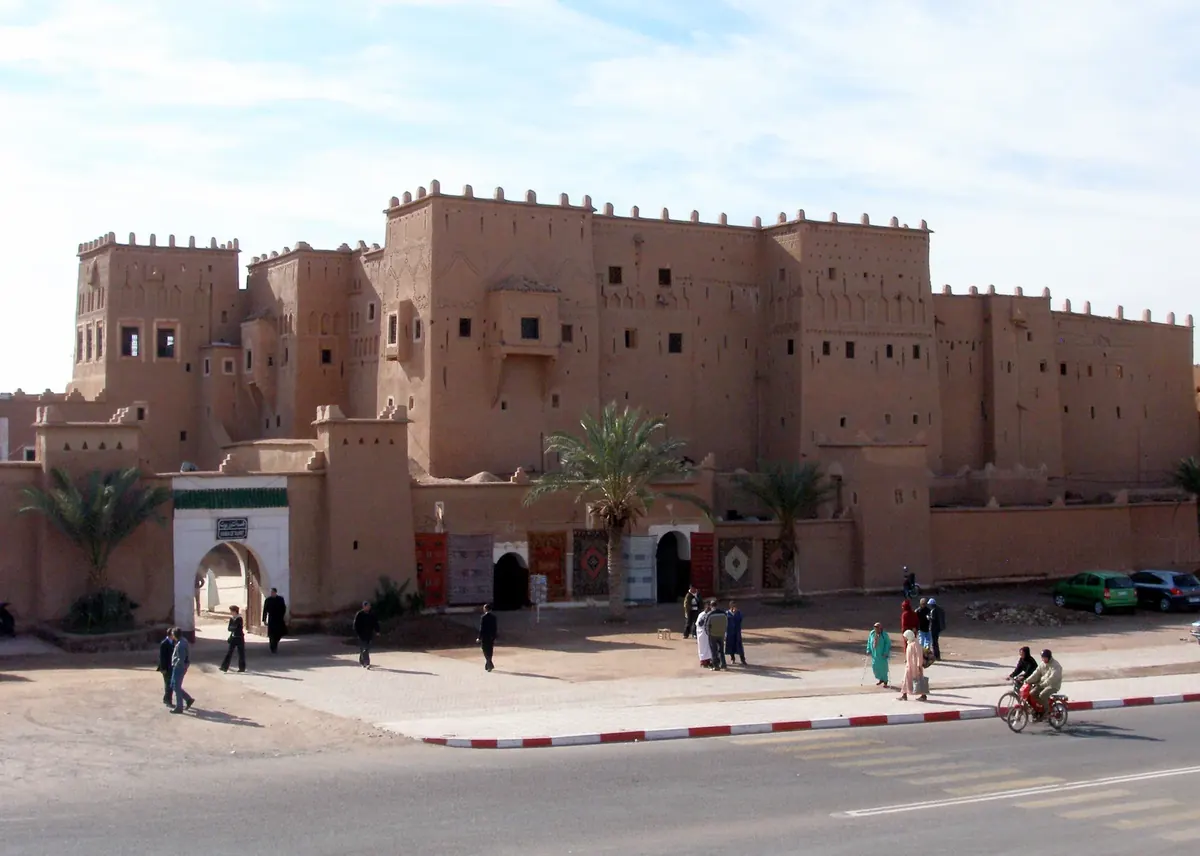
Taourirt is the most convenient historic stop: it is in Ouarzazate, so you can fit it around a meal, an arrival or a departure. Think of it as an earthen kasbah complex and a chance to look closely at local building forms, not as a fully preserved palace with every room necessarily open. Visitor access and restoration work can change. Check what is open on the day instead of building a tight schedule around a particular interior or assuming that a photograph of the exterior represents the visitor route.
A practical visit is to see the exterior and surrounding quarter even if indoor access is limited, then decide whether the available rooms justify the time. Wear shoes suitable for uneven surfaces and steps. If mobility is limited, ask in advance about the currently accessible route; do not assume historic structures have step-free access.
Atlas Studios: a guided look behind the sets
Atlas Studios is an active film-studio attraction, not a film museum with a guaranteed fixed display. The operator describes guided tours through sets and backstage areas, and warns that the route may be modified to avoid interrupting filming. Its visitor page currently lists a per-person ticket price and hours from morning to sunset, but those details are changeable; confirm directly before making plans. The same page says advance reservation is not required, which should not be read as a guarantee that every set will be accessible or that a tour will run in a particular language. 2
A studio tour suits travelers who enjoy seeing how scenery is constructed, including visitors who are not devoted movie buffs. Ask what the tour includes when you arrive, and allow extra time for the group format, walking outdoors and possible changes to the route. Summer heat and glare can make exposed sets tiring; bring water, sun protection and a hat, and follow current site rules. If filming access or a specific set matters to you, contact the operator before traveling rather than relying on a past visitor’s itinerary.
Aït Benhaddou: the separate UNESCO ksar
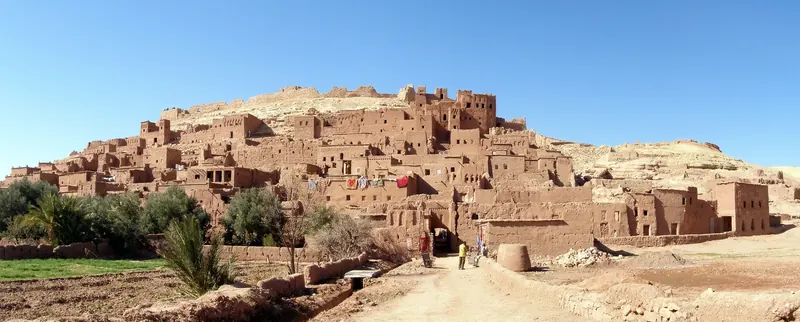
Aït Benhaddou is not a neighborhood of central Ouarzazate. It is a separate settlement and road outing. UNESCO describes the ksar as a group of earthen buildings enclosed by high defensive walls, with corner towers and closely grouped houses; it is in Ouarzazate Province and was inscribed on the World Heritage List in 1987. 3 The designation reflects the architecture and historic settlement form, not a promise that every building is a museum or that the site is untouched by contemporary life.
Plan time to approach, walk through the lanes and look back at the ensemble from outside. The paths can be steep, uneven and exposed, so sturdy shoes, sun cover and a realistic pace matter. Because this is an earthen heritage site, stay on visitor routes, avoid climbing fragile walls and follow local guidance. Ask on arrival whether any sections are closed or whether access arrangements have changed. UNESCO notes the vulnerability of earthen structures and the importance of maintenance, which is another reason to treat the ksar as a living, fragile place rather than a prop. 3
Build an itinerary around the road, not a checklist
One night: arrive with enough daylight to settle in, visit Taourirt if access suits, and keep the evening simple. The next morning, choose either Atlas Studios or Aït Benhaddou before continuing onward. Trying to do both thoroughly while also covering a long transfer can turn the day into a string of rushed stops.
Two nights: use one day for Ouarzazate itself and a studio tour, then reserve a separate half or full day for Aït Benhaddou, depending on your starting point, transport and pace. This is the best fit if you want to photograph the ksar, walk its lanes and still have unhurried time in town.
Marrakech to the south: crossing the High Atlas and visiting the Ouarzazate corridor is a substantial road day, not a casual hop. If the plan includes a studio visit and the ksar, overnight rather than treating the route as a same-day out-and-back excursion. For a broader route, see our Morocco road-trip planning guide and Marrakech day-trip comparison.
Onward to the desert: determine which desert you mean and how many hours of driving you are comfortable with. Zagora and the Draa Valley are one southbound direction; Tinghir and the Todra area lie on another corridor; Merzouga and the Erg Chebbi dunes require a longer onward plan. Avoid promising yourself a sunset camel ride based only on a map pin: agree on the actual pickup point, transfer duration, overnight arrangements and what is included with the provider. The national tourism office presents the Ouarzazate-Zagora-Tinghir area as a wider regional itinerary, not one compact attraction. 1
If your route relies on public transport, verify the actual service for your travel date and whether the final leg to an outlying site is covered. A private driver can make stops and timing more flexible, while a rental car gives independence but places the burden of navigation, parking and road decisions on you. For either option, agree in advance on where the driver will wait, the included driving time and what happens if a visit takes longer. Do not assume a driver’s transfer includes a guided tour or entrance.
Common mistakes to avoid
- Calling the area “the Sahara” too loosely. Ouarzazate is a useful base and passage point, but a dune stay needs additional travel and an overnight plan.
- Confusing the UNESCO ksar with the city kasbah. Taourirt is in Ouarzazate; Aït Benhaddou is a separate outing with different architecture and walking demands. 3
- Treating a studio tour as a fixed movie set route. Atlas Studios says the route may be changed around production activity. Confirm current ticket terms, tour availability and access directly. 2
- Packing several long drives into a single daylight window. Build slack for road stops, weather, site access and fatigue rather than estimating only uninterrupted driving time.
- Assuming all sights work for every mobility level. Historic earthen sites may involve uneven ground, slopes and stairs. Ask each operator about the route that will actually be open.
If coordinating several legs and providers is the difficult part, the Personal Travel Assistant is available for $20 per inclusive Morocco calendar day for 24/7 WhatsApp and call assistance during purchased dates. It is a planning and assistance service, not the supplier of transport, lodging, meals or tours; independent providers confirm availability and charge separately.
Before you set out
Check the Atlas Studios visitor page for current hours, ticket conditions and any filming-related changes. Confirm Taourirt access locally, and ask about the walking surface and available route at Aït Benhaddou. Check weather and road updates for the actual corridor, particularly when a mountain crossing or long onward drive is involved. Keep water and sun protection accessible, and avoid scheduling a demanding outdoor walk at the hottest part of the day when you have flexibility. For broader multi-stop planning, pair this guide with our Morocco first-time itinerary.