Start with one route decision: loop or open jaw
A first Morocco itinerary works best when it has a clear shape. With seven days, make Marrakech, the High Atlas side of the country and the Sahara-edge experience the whole trip. With nine or 10 days, continue north to Fez rather than retracing every mile to Marrakech. Trying to add Chefchaouen, the Atlantic coast and every imperial city to the same short trip turns much of Morocco into a windshield view.
If your air fare allows it, fly into Marrakech and depart from Fez or Casablanca on the longer version. That removes a backtrack and gives you a real two-day stay in Fez. If you must fly round-trip through Marrakech, use the seven-day loop or add enough days for a relaxed return.
The key trade-off is road time. The mountain and rural sections are beautiful but are not places to build a plan around an ambitious arrival or flight connection. The U.S. Department of State notes that Atlas roads can be steep, narrow and winding, and that rural secondary roads may be poorly paved; it also advises extreme caution driving at night.6 Keep the final pre-flight night in your departure city.
The flexible 7–10-day Morocco itinerary
Days 1–2: Marrakech — arrive, orient yourself, then explore
Spend your first two nights in Marrakech. Make the arrival day deliberately light: arrange the airport-to-accommodation transfer in advance, settle in, get local cash in a small amount and walk close to your accommodation. On the full day, choose two or three places rather than trying to cover the whole medina. A guide-led orientation can be useful if you prefer context and confidence in the lanes; leave room for unplanned pauses in a garden, café or craft workshop.
Marrakech is more than a convenient airport. Its medina has been a major political, economic and cultural center for centuries, with monuments, gardens and the Jamaâ el-Fna area all part of its World Heritage listing.1 That density is why it deserves time before the road segment.
Day 3: Cross toward Aït Benhaddou and Ouarzazate
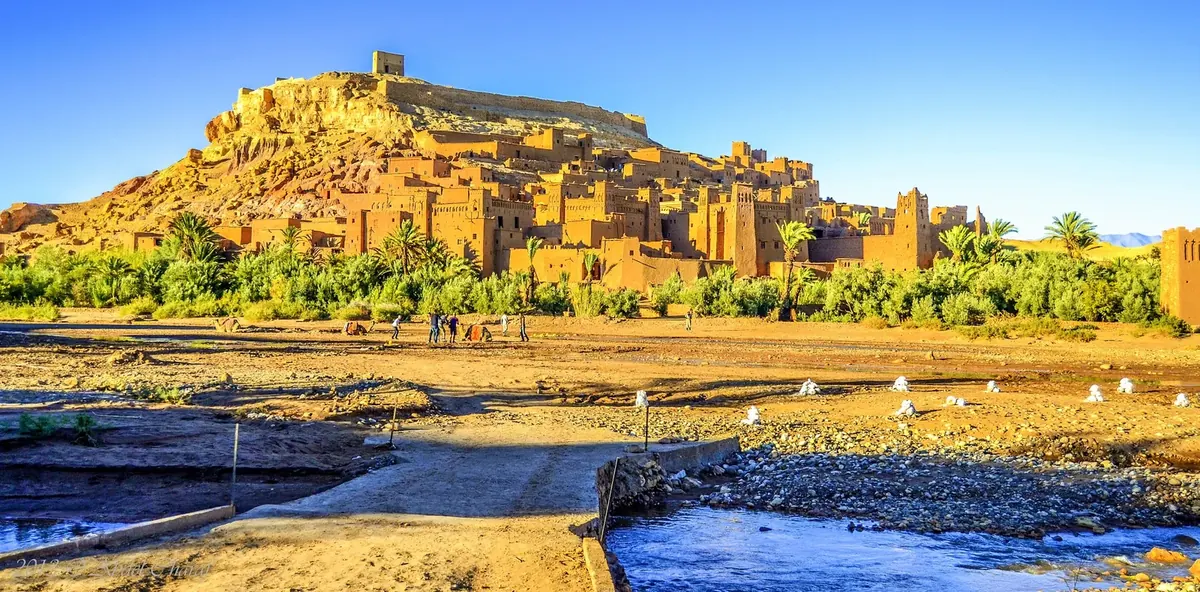
Leave Marrakech after breakfast and make the day about the change of landscape. Aït Benhaddou is the logical cultural stop before Ouarzazate or a nearby overnight. UNESCO describes the ksar as a group of earthen buildings behind defensive walls and a striking example of southern Moroccan architecture.2 See it as a living historic place, not simply a photo stop: walk slowly, respect private space and let the daylight determine how much you attempt.
For this part of the trip, choose one of two approaches. A driver-led or small-group desert route makes sense if you do not want to manage mountain roads, parking and accommodation handoffs. Self-driving gives flexibility, but it requires a conservative plan, a vehicle and insurance you understand, and no assumption that you will drive after dark. Ask any operator exactly where each night is, what is included and whether there are shared transfers or activities.
Day 4: Valleys and gorges, then toward the dunes
Continue through the southern valleys and gorges in the direction of the Merzouga area. This is a scenic transit day, not a day to cram in every marked stop. Agree with your driver or operator on the route, comfort breaks and the night’s accommodation before leaving. If self-driving, build in daylight and weather margin; the official U.S. guidance warns that flooding can affect rural roads during the November–March rainy season.6
Day 5: Sahara edge — make the desert stay specific
The national tourist office’s longer route also links Ouarzazate, Tinghir and Merzouga, a useful reminder that these southern places belong together rather than as one-day detours.5
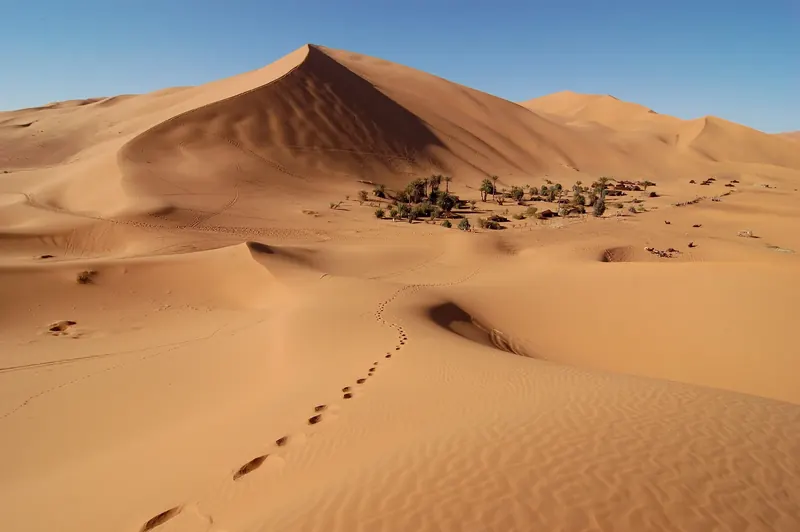
Use a full day and night around the dunes rather than treating the desert as a rushed add-on. “Desert camp” can mean very different things: a fixed camp with vehicle access, a transfer to a more remote camp, a private tent, a shared experience, or a night in a lodge outside the dunes. Before paying, get written confirmation of the exact pickup point, transfer method, meals, luggage handling, bathroom setup, return time and what happens if conditions change.
Do not assume camel riding is the only way to experience the area. A sunset walk, a quiet morning outside the camp, local music or time with the changing light may be a better fit. Choose the experience you actually want and avoid arranging it so tightly that an onward transfer becomes stressful.
Days 6–7: Choose your branch — return to Marrakech or continue north
For a seven-day Morocco itinerary, turn west after the desert portion and begin the return toward Ouarzazate and Marrakech. This is the compact version, so accept that it includes long overland days. Sleep in Marrakech before your flight whenever you can. The reward is a coherent first look at city, mountains, earthen architecture and desert; the compromise is that Fez and Volubilis wait for another trip.
For a 9–10-day Morocco travel itinerary, use these days to travel north through the Middle Atlas area toward Fez, with an overnight break rather than a forced same-day sprint. Build the route around the actual transfer you book. If a road segment, weather forecast or driver availability changes, protect your Fez nights rather than sacrificing rest to preserve a checklist.
Days 8–9: Fez — keep two full days
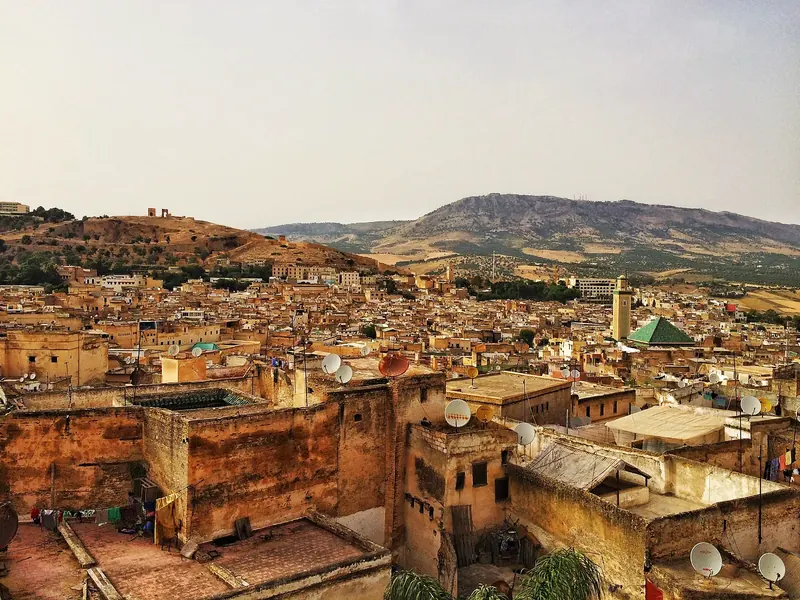
Fez is the payoff for taking the longer route. Give the medina two full days: one for a guided or self-paced orientation through its neighborhoods and historic fabric, and another for a museum, craft interest, food experience or simply revisiting an area at a slower pace. UNESCO notes that Fez was founded in the ninth century, flourished under the Marinids, and remains Morocco’s cultural and spiritual center; the medina’s monuments and living urban fabric merit more than a short stop.3
Stay near the medina only if the accommodation can help with luggage access and a meeting point. Otherwise, choose a property outside it and plan a simple taxi drop-off. In either case, save your accommodation location offline and agree on a recognizable landmark for any guide or transfer.
Day 10: Keep a buffer, or add Volubilis and Meknes
Use the final day in one of two ways. The conservative choice is a Fez departure buffer, a second slower Fez day, or a transfer to your departure airport. The culture-focused choice is a day trip around Meknes and Volubilis, if your timing works without jeopardizing your onward flight. Volubilis is a substantial archaeological site, not merely a roadside ruin: UNESCO identifies it as a Mauritanian capital that became an important Roman outpost, with extensive surviving remains in an agricultural setting.4
The right answer depends on your energy and flight time. Do not add Volubilis just to add another World Heritage name. Save it for a day when it can be enjoyed at walking pace.
Book transport around the hard parts, not every hour
For the southern route, decide first whether you want a self-drive trip, a private driver or a driver-led small group. A private driver can reduce the cognitive load of unfamiliar mountain roads and one-way baggage logistics. A group trip can be simpler, but check group size, hotel names, meal inclusions, luggage limits and how much independent time you will have. A rental car gives autonomy, yet it shifts parking, navigation and road-condition decisions to you.
Rail can be useful for a city-to-city extension, but it is not a shortcut through the southern desert route. Check the current timetable and departure station directly with the operator before you shape a flight day around it. State Department guidance says trains are generally safe but that theft can occur, so keep documents and valuables with you.6
Prepare for Morocco as a US visitor
Entry requirements and advisories can change. As of the official page accessed on October 15, 2026, the U.S. Department of State says US visitors do not need a tourist visa for stays of 90 days or less and that passports must have at least six months’ validity at entry.6 Recheck the official page before you buy nonrefundable travel, particularly if your passport situation or itinerary is unusual.
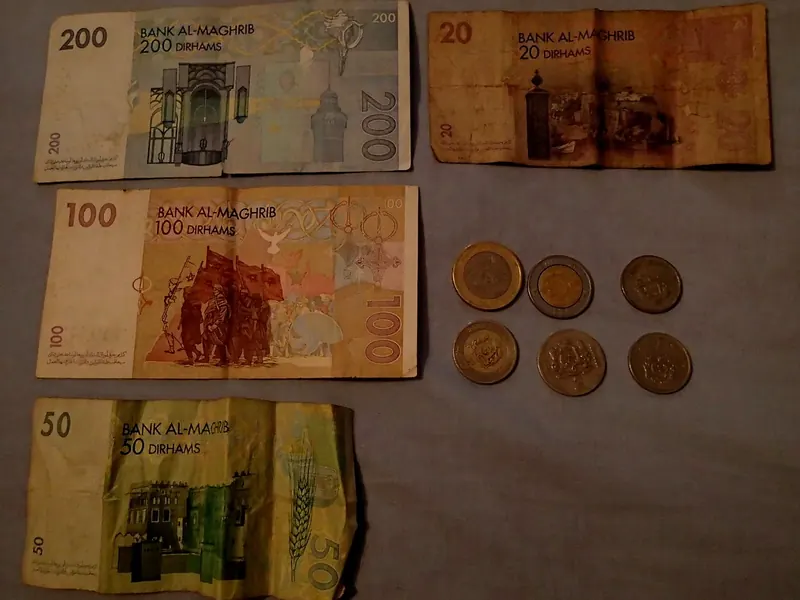
The same guidance lists Morocco at Level 2, “exercise increased caution,” and recommends staying alert in tourist areas and enrolling in STEP for updates.6 Treat that as practical planning rather than a reason to panic: keep valuables secure in crowds, use registered taxis, avoid isolated walks after dark and leave a margin for changing conditions. The dirham is a closed currency, so plan to exchange after arrival and again before departure rather than accumulating more cash than you need.6
The mistakes that make a short Morocco trip feel rushed
The first is counting arrival and departure days as sightseeing days. Long-haul arrivals, airport procedures and traffic can take more out of a day than a map suggests. The second is booking a desert night without knowing the transfer details. The third is adding Fez to a seven-day trip because it looks close on a national map.
Another common error is choosing accommodation purely by a pin. In medinas, ask about vehicle access, luggage help, stairs and a reliable meeting point. On a self-drive itinerary, never let a pretty route become an obligation to cross mountain roads in the dark. Finally, leave one movable block in a 10-day plan. It can become a weather buffer, an extra night in a place you love, or a solution when an onward connection changes.
Get help only where it reduces friction
If you would value a single point of contact while providers handle their own bookings, see the Personal Travel Assistant. It is available at USD 20 per inclusive Morocco calendar day and provides 24/7 WhatsApp and call assistance during purchased dates. Providers still confirm and charge for cars, rooms, meals and experiences separately, so you remain able to choose the route and level of support that fits your trip.
1: https://whc.unesco.org/en/list/331/ "UNESCO World Heritage Centre: Medina of Marrakesh" (accessed 2026-10-15) 2: https://whc.unesco.org/en/list/444/ "UNESCO World Heritage Centre: Ksar of Ait-Ben-Haddou" (accessed 2026-10-15) 3: https://whc.unesco.org/en/list/170/ "UNESCO World Heritage Centre: Medina of Fez" (accessed 2026-10-15) 4: https://whc.unesco.org/en/list/836/ "UNESCO World Heritage Centre: Archaeological Site of Volubilis" (accessed 2026-10-15) 5: https://www.visitmorocco.com/en/suggested-tours/great-tour-morocco "Moroccan National Tourist Office: Great tour of Morocco" (accessed 2026-10-15) 6: https://travel.state.gov/en/international-travel/travel-advisories/morocco.html "U.S. Department of State: Morocco Travel Advisory and Travel Guidance" (accessed 2026-10-15)