What currency does Morocco use?
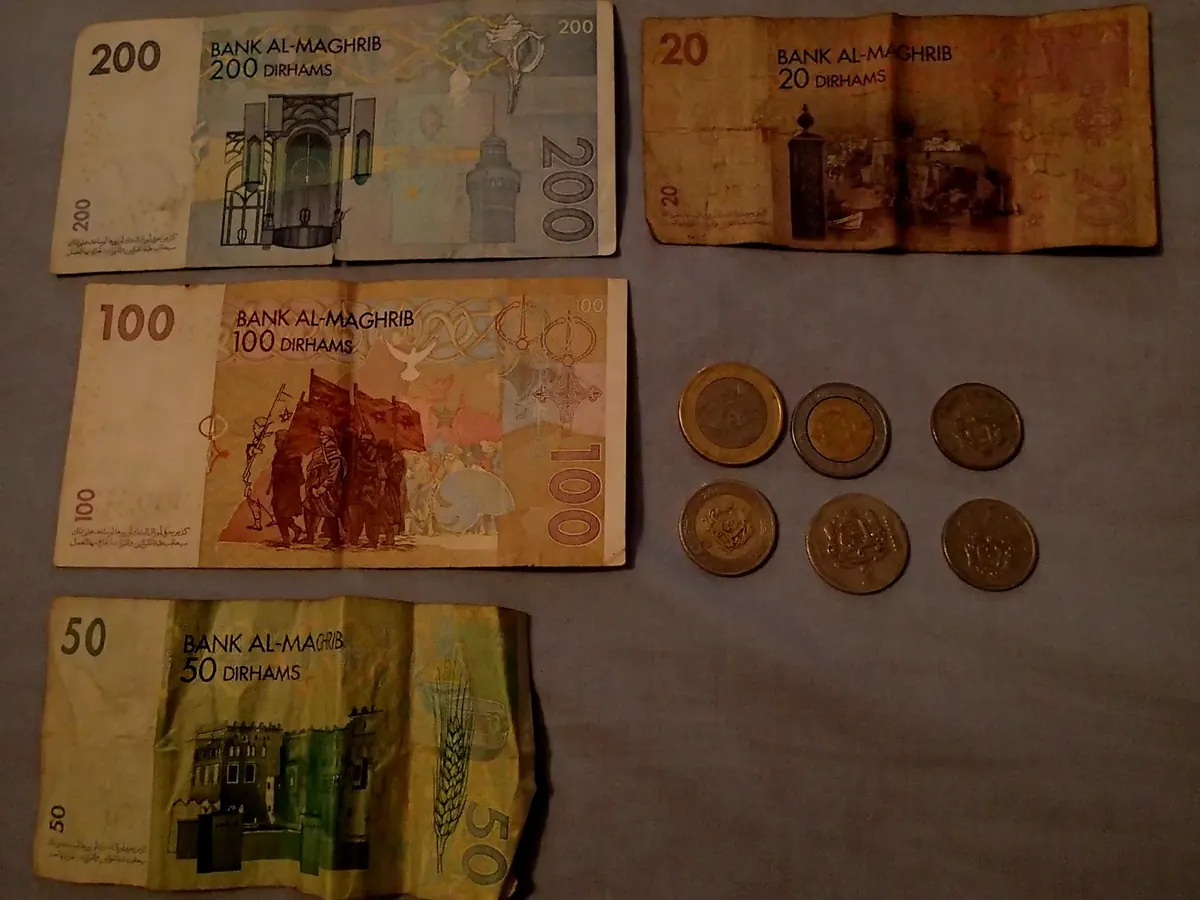
The official currency is the Moroccan dirham, with the international code MAD. Prices may appear with MAD, DH or a dirham symbol. Use the number and currency shown on the menu, tag or bill to confirm what you are paying; do not assume a price quoted in conversation is in dollars or euros. 1
There is no need to memorize a changing exchange rate to make a practical plan. Check a current rate shortly before travel or use your bank’s calculator, then remember that the final card charge can also reflect your issuer’s conversion method and any applicable fees. Bank Al-Maghrib publishes currency indicators, but a reference market rate is not necessarily the rate or total cost offered by a card issuer, exchange desk or ATM. 2
For example, if a café bill is listed as 120 MAD, the bill is in dirhams even if your banking app later displays a U.S.-dollar equivalent. Check that the transaction receipt shows the same local-currency amount before approving it.
How much cash should you carry?
Use a combination of cash and cards rather than relying on either one alone. The U.S. Department of State says many small establishments accept only cash, while many larger establishments accept cards but may add a substantial fee. U.S.-issued bankcards are accepted at Moroccan ATMs, but that does not mean every shop accepts every card brand or that every withdrawal will succeed. 1
Cash is useful for small purchases, local transport, tips, market shopping and situations where a card terminal is unavailable. Cards can be convenient for a larger hotel, restaurant or retailer, but ask whether the business takes your card and whether it adds a card surcharge before you commit. A card logo on a door is a useful clue, not a guarantee that the terminal is working or that the specific card will be accepted.
Rather than carrying your whole trip budget in a wallet, withdraw a modest working amount and replenish it as needed. Keep most cash secured separately from the amount you expect to use that day. Avoid flashing a large bundle when paying, and put your card away before moving on. These are practical precautions, not a claim that any particular area is risk-free.
Keep smaller notes and coins where possible. A large note can be inconvenient for a very small purchase if a seller cannot readily make change. If you receive a large denomination at an ATM, use it at a larger purchase when convenient or ask politely whether the seller can make change before you buy. Do not treat a lack of change as an invitation to leave a larger amount without agreeing on the total.
Getting dirhams: ATMs, exchange desks and cards
For many visitors, withdrawing MAD from a bank ATM is a straightforward way to get local cash after arrival. Tell your bank where and when you are traveling, confirm that your debit card works internationally, and check its withdrawal and daily limits. Also ask whether your bank charges a foreign transaction fee or a separate international ATM fee. The Moroccan ATM operator may impose its own charge; review the screen before accepting. Fees and limits vary by card, account and machine, so do not rely on a traveler’s report of one fixed fee or withdrawal ceiling. 1 3
Prefer a cash machine attached to a bank branch when practical, especially if you are unfamiliar with the location. That gives you a staffed place to ask for help during opening hours if a transaction fails. Use the machine’s English-language option if available, shield your PIN, and decline any transaction you do not understand. If a machine retains your card or debits your account without dispensing cash, contact your card issuer promptly using the number on your card or its app.
Currency exchange is another option. If you bring foreign cash for exchange, use an established bank or exchange bureau, check the displayed rate and any commission, and count the MAD before leaving the counter. Keep the receipt: the U.S. State Department specifically advises retaining receipts when exchanging U.S. dollars because they may be required to exchange leftover dirhams back before departure. 1
Avoid exchanging more than you expect to spend. The dirham is a restricted currency, and the State Department advises exchanging leftover Moroccan currency before departure rather than taking it out of the country. Its current Morocco guidance also lists customs requirements for declaring foreign currency and documenting large sums. Travelers carrying unusually large amounts should verify the latest Moroccan rules with an official source before travel. 1
Using cards in Morocco without conversion surprises
Before your trip, check whether your credit and debit cards charge foreign-transaction fees, what exchange rate method applies, whether cash advances incur interest, and what your bank’s cash-withdrawal limits are. A credit card cash advance can be costly and may begin accruing interest immediately, depending on your account terms. If you plan to withdraw cash, use a debit card linked to the account you intend to draw from and understand its fees first.
If a card terminal or ATM asks whether to charge you in U.S. dollars or Moroccan dirhams, the home-currency choice usually means the merchant or ATM provider is converting the amount under its own terms. Choosing local currency (MAD) generally lets your card issuer process the conversion instead. This does not guarantee the lowest possible total cost, because your issuer may still charge fees, but it avoids accepting an unfamiliar conversion quote without comparison. 3
A practical example: at checkout, a terminal shows a total in MAD and offers an approximate dollar amount. Select MAD, then check your card statement later for the issuer’s rate and fees. If a shop adds a card surcharge, compare that cost with paying cash if you have enough safely available. Ask first; do not discover an unexpected fee after the transaction.
Have a backup. A second card from a different account or network, stored separately from your primary card, can help if one is declined, lost or blocked. Keep your bank’s international contact details available offline. Mobile wallets can be convenient where supported, but they are not a replacement for a physical card and cash if your phone battery dies or a payment terminal does not accept contactless payments.
Planning for your arrival and departure
Do not expect to pay routinely in U.S. dollars. The dirham is the normal spending currency, and acceptance of foreign cash is not assured. Keep a bank card and a small reserve of accessible funds for your first practical expenses, then obtain local currency through an ATM or exchange facility. Avoid carrying more cash than you need. 1
Before your flight home, estimate what you will still need for transport, food or other final expenses, then exchange or spend the remaining MAD before leaving. Save your exchange receipt and ask the exchange provider about its current process, fees and hours. The State Department says dirhams should be exchanged before departure and that receipts are required to exchange leftover dirhams into U.S. dollars. Do not leave the decision until the final few minutes at the airport. 1
For a broader trip-preparation checklist, see our Morocco travel tips. If you want help coordinating practical details during your stay, Maroc Mobility’s Personal Travel Assistant is a separate service; hotels, transport and other providers confirm and charge for their own products.