
Start with the kind of comfort you need
“Senior-friendly” is not a precise tour standard. One traveler may want a slower walking pace but manage steps easily; another may need a lift, a roll-in shower, frequent seating or a vehicle that accepts a mobility device. Start with the tasks that make a day tiring: standing in queues, walking on uneven paving, getting in and out of a high vehicle, carrying bags up stairs, or sitting through a long road transfer. Ask each traveler what is comfortable on an ordinary day at home, then plan below that limit rather than around an optimistic best day.
Morocco can reward an unhurried visit, but access is inconsistent. The U.S. State Department says accessibility is limited across much public transport, lodging and infrastructure, and older buildings often do not meet accessibility rules. It describes national rail as a relative bright spot, with ramps, accessible bathrooms and designated seating, but those facilities do not automatically solve the route between station, taxi and hotel. 1
For a traveler who can walk but tires easily, a comfortable trip may mean a short guided outing in the morning, lunch near the hotel and a quiet afternoon. For someone using a wheelchair or walker, plan from exact door-to-door details: vehicle access, curb or step at each entrance, surface and slope, accessible toilet locations and a credible backup if a lift or adapted vehicle is unavailable. Do not assume that a tour operator’s word “accessible” means the same thing you do.
Pick a route that protects energy
The simplest improvement is often fewer hotel changes. Repacking, checking out, loading a vehicle and finding a new room all take energy even when the drive itself is manageable. For a first trip, consider two or three bases rather than trying to connect every imperial city, mountain valley and desert in one loop. Spend several nights in a city, choose one day excursion, and leave a genuinely free day between demanding travel days.
A sample one-week shape could be four nights in Marrakech, with one low-key city day, one guided visit, one optional excursion and a rest day, followed by three nights in Essaouira or another preferred base. This deliberately avoids a cross-country dash. If Fez is a priority, add it only if you can give the transfer and stay enough time; do not squeeze Fez into a day trip from Marrakech. Journeys through the Atlas or toward the Sahara can be memorable, but they involve longer road days and more remote stretches. The State Department notes that mountain roads can be steep, narrow and winding, while adequate care may be harder to find in rural areas. 1 Travelers should weigh those specific trade-offs with their own needs and travel insurer, rather than treating a desert camp or mountain crossing as an obligatory highlight.
Traveling during cooler parts of the day can make walking more pleasant, but a calendar date is no guarantee of comfortable conditions. If heat, cold or fatigue affects you, schedule flexible indoor breaks and check the forecast close to travel. Avoid an itinerary where missing one timed activity makes the whole day unravel.
Compare group tours with private travel
A small-group tour can be sociable and may simplify logistics, but the schedule is built for the group. Ask the maximum group size, typical walking duration, whether the guide can pause or shorten a visit, and whether the group waits if one person moves slowly. Find out if everyone must take the same stairs, walk from a coach parking area, or join early departures. A “leisurely” label is less useful than a sample day with realistic walking intervals and breaks.
A private itinerary usually allows more control over start times, meal stops and optional activities. It costs more than sharing a vehicle in many situations, and flexibility depends on what the provider actually agrees to. A private car cannot remove the cobbles, slopes or restricted vehicle access inside a historic medina. Set expectations in writing: number of planned stops, whether the driver waits, where the vehicle can drop you, how much walking remains, and whether a companion or guide is available to assist. Compare the exact inclusions rather than assuming “private” means fully supported.
Train travel can be a practical link between some major cities. Morocco’s tourism portal says boarding and alighting assistance can be arranged with national railway operator ONCF in advance; the U.S. advisory also notes accessibility features on national rail. Confirm the exact station, train, assistance procedure, luggage plan and final-mile transfer for your dates. 1 2 If a service connection is missed or delayed, leave enough schedule slack that the next activity is not lost. For route-level comparisons see our Morocco train guide.
Ask specific questions about access
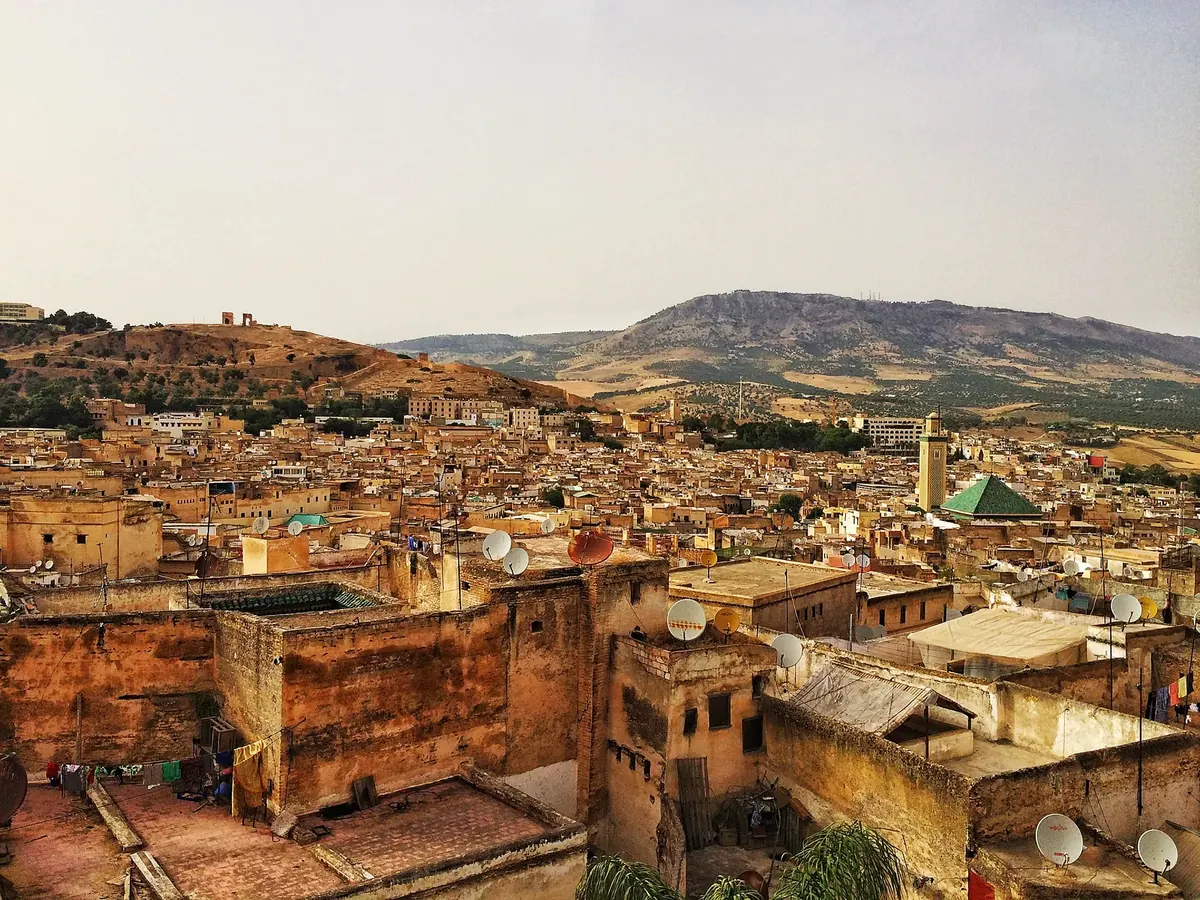
Historic medinas are the part of Morocco where a generic promise is least informative. In Fez, narrow lanes, uneven cobbles, potholes and steep inclines can make a route difficult for people with limited mobility; public restroom access may also vary. An independent wheelchair-travel account describes these on-the-ground constraints and stresses that conditions differ from one route and facility to another. 3 This does not mean every visitor must avoid a medina. It means choose a short, tailored route, establish a turnaround point, and do not confuse “car-free” with easy or smooth. A terrace view or a more level neighborhood can be a satisfying alternative if the lanes are not a good fit that day.
Send the hotel or riad a short checklist and request recent written answers, ideally with photos or a video of the actual route and room. Ask: Is there a step at the entrance? Is there a working elevator, and does it reach the room floor? How many stairs lead to the bedroom? Is the shower step-free, and is there a fixed seat or grab bar? How far is the room from breakfast, reception and the nearest vehicle drop-off? Can staff store medication that requires particular conditions? Do not rely on a property’s “ground floor” description without clarifying the route from the street.
For every tour day, ask the operator to specify approximate time on foot, steepness, paving, standing time, places to sit, toilet availability and whether the route can be shortened. If a wheelchair is involved, verify doorway width, vehicle ramp or transfer method, securement, storage and whether the chair stays with the traveler at each stop. The Morocco portal mentions airport assistance and advance railway help, but broad country-level information cannot confirm a specific provider or attraction. 2 An accessibility listing project, Woussoul, is also referenced by the portal; treat listings as a starting point and reconfirm directly.
Make transport and lodging part of the itinerary
Choose a central base only if it makes the actual door-to-door journey easier. A riad inside a medina may offer atmosphere but have a stepped entrance, internal stairs and a vehicle drop-off some distance away. A modern hotel in a newer district may have easier vehicle access and lifts, though it may involve more taxi rides to historic sights. Neither style is automatically the better choice. Ask the property to confirm the room, not just the building’s general facilities, and arrange luggage assistance if needed.
For road travel, ask what vehicle will be used, how easy it is to step in, how much legroom and luggage space it has, and how often you can stop. If using a cane or walker, specify whether it must fit in the trunk alongside suitcases. Build a stop into long transfers and avoid late arrivals where possible. A driver’s presence does not mean that a vehicle is specially adapted; confirm the specific equipment and assistance you need. For a tour involving an airport, train station or ferry, request help with the first and last mile separately.
The State Department notes that ambulance services are not widely available and that rural areas may have less adequate healthcare than major cities. 1 Travelers with ongoing health needs should discuss their own plans with a qualified clinician and insurer before departure, carry necessary medication in original packaging where appropriate, and know how to reach their insurer and local care. This is practical preparation, not a substitute for medical advice.
Build a sample day with room to change it
A comfortable day has one main anchor, not a chain of must-do stops. For example: breakfast without a rushed departure; a short guided section of the medina with a planned seated pause; lunch close to the hotel; a quiet afternoon; and an optional evening outing only if energy allows. Confirm whether a guide can end the walk near a taxi pickup, since a vehicle cannot necessarily reach the starting point or follow the walking route.
Decide in advance what gets dropped first when the day is tiring. It may be a second museum, a rooftop climb or an evening show—not the meal break or the return to the room. Ask whether a companion can remain behind without affecting the rest of the group. On a multi-day road trip, keep a spare day or at least a flexible night before an international departure; a delayed transfer should not force a strenuous rush to the airport.
Before booking, get the day-by-day plan and exclusions in writing. Clarify who pays for lodging, meals, admission, local guides, accessible transport or special equipment; providers may charge separately. The Morocco travel-package comparison guide explains how to inspect inclusions and exclusions before committing. If you want help coordinating arrangements, MarocMob’s Personal Travel Assistant service is listed at $20 per inclusive Morocco calendar day; transportation, hotels, meals and activities are independently provided and charged by their providers.
A useful final test: if one activity is canceled or the traveler needs an afternoon off, does the trip still feel worthwhile? If the answer is no, reduce the pace or number of stops before paying a deposit.