Start with the route, not the train
For many visitors, the best Morocco train decision is simple: use rail when both ends of the day are close to useful stations and your itinerary follows the north-and-central city spine. Choose a road transfer when the last mile becomes the whole trip—an airport arrival after a long flight, a riad far from the station, a beach or mountain destination, a desert lodging, or a day with planned stops.
That distinction matters more than whether one mode sounds more comfortable. A train can be an efficient city-centre-to-city-centre leg, while a private transfer can eliminate several separate handoffs. Compare the full door-to-door journey: the ride itself, getting to the departure station, managing bags, the arrival station, and the final connection.
The official Moroccan tourism board describes rail as serving much of the country and recommends booking ahead. Its overview also describes intercity coaches and local transport options, which matter when the final destination is outside the route you can book. Treat broad tourism summaries as orientation, not a station-by-station coverage list: confirm the exact destination in ONCF’s live planner rather than assume every visitor destination has a station. 1
A practical Morocco train map in words
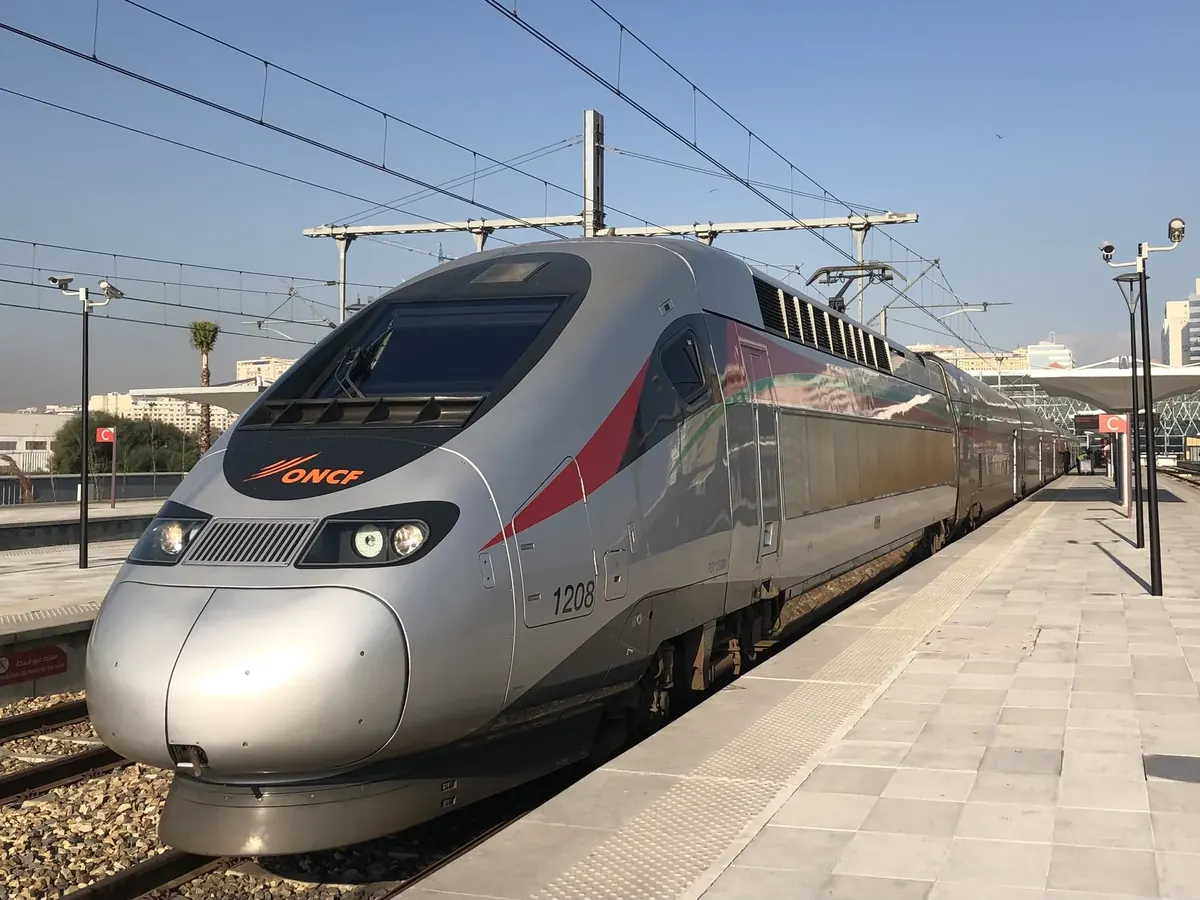
Think of the network as a set of useful corridors rather than a single web reaching every attraction. The high-speed Al Boraq corridor links Tangier, Kenitra, Rabat and Casablanca. The tourism board specifically lists those four stops; independent rail guidance also identifies Rabat Agdal and Casa Voyageurs as the relevant high-speed stations. 1 2
Beyond that high-speed spine, conventional services connect the main intercity network. A useful mental picture is a north-to-south and east-to-west set of links: Tangier, Meknes and Fez; then Fez/Meknes through Rabat and Casablanca to Marrakesh; plus routes east toward Oujda. This is why rail fits a classic cities itinerary particularly well, even though it will not put you at the door of every hotel, kasbah, surf town or desert camp. 3
Do not turn this guide into a timetable. Stations, stopping patterns and works can change. Instead, use the route shape to decide which days are rail candidates, then search your exact date in the official ONCF booking journey planner. It is the final result—not a generic route map—that should decide your booking.
The station detail that prevents a bad connection
A city can have more than one meaningful rail point. For the high-speed corridor, Rabat Agdal is the station to look for rather than assuming every Rabat search returns the same product. Casa Voyageurs is the key Casablanca high-speed station. 2 A hotel near Rabat Ville or central Casablanca can still be convenient, but factor in the local transfer before comparing a train against a direct car.
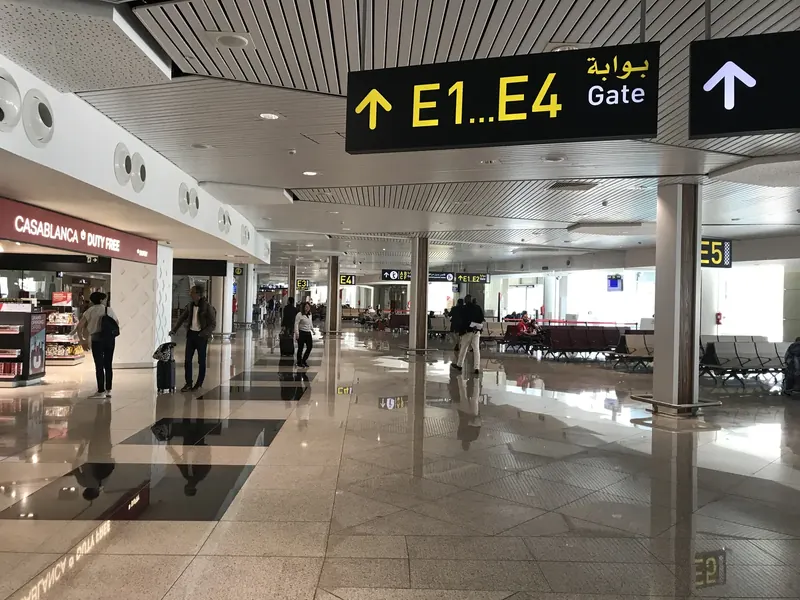
For Casablanca airport arrivals, check your actual terminal, landing time, luggage collection and the station result shown by ONCF before deciding that a rail connection is realistic. A journey that looks short on a route diagram may still involve a wait and a city transfer after a transatlantic flight.
Al Boraq versus conventional trains
Al Boraq is the high-speed product for the Tangier–Kenitra–Rabat–Casablanca axis. Its value is clearest when you are moving between those cities and can use the named stations easily. It is not the answer to every long Moroccan journey: Marrakesh, Fez, Meknes and Oujda are part of the broader conventional network described in current travel guidance. 1 3
Conventional trains—often encountered in planning under the Al Atlas name—make sense when the rail route already follows your itinerary. They can be a relaxed way to connect major cities without driving, but the comparison should include your final transfer. For example, a direct train can be the better call for a solo traveler staying close to a central station; a family arriving with several suitcases may value a confirmed vehicle that finishes at the accommodation.
Avoid assuming that a promised future extension is available for your trip. Travel articles may discuss expansion plans, but only the live ONCF search can confirm the route and product being sold for your date.
How to buy Morocco train tickets with fewer surprises
Start on ONCF’s official journey planner rather than on a reseller. Enter the precise origin and destination, your travel date, and your party. Search both directions if you are weighing a day trip, because the return timing can be the constraint. The Moroccan tourism board points travelers to ONCF for high-speed and conventional ticket purchase. 1
Before payment, pause on four checks:
- Station names: Confirm the departure and arrival stations—not just Tangier, Rabat or Casablanca as city labels.
- Connection design: If there is a change, make sure the layover leaves room for an unfamiliar station and normal travel friction.
- Fare conditions: Read the conditions displayed with the exact fare. Do not assume every ticket has the same flexibility.
- Journey boundaries: Plan how you will get to the first station and from the last station to the accommodation.
Keep the booking confirmation accessible on your phone and allow a buffer at the station, especially on a flight-arrival day or a public holiday period. If the online result is unclear, a station ticket office may be a better place to resolve the specific journey than guessing from a third-party listing.
When a private transfer makes more sense
A private transfer is not automatically the premium choice, and a train is not automatically the economical choice once the whole journey is counted. Use the following decision rules.
Choose the train when the endpoints line up
Rail is usually the cleanest fit when you are travelling solo or as a couple between connected cities, can reach each station without stress, and want downtime rather than a road journey. It is especially compelling on the high-speed Atlantic corridor. The travel decision is simple when your lodging is near the relevant station and the departure you find on ONCF fits your day.
Choose a private transfer when the road leg is the itinerary
A private transfer is often more practical if you are going to an off-network destination, carrying bulky luggage, travelling with children or a group, arriving late, or moving between places that would require several local taxis around a rail segment. It also suits a sightseeing day where you want to make pre-agreed stops rather than travel station to station.
The State Department notes that Morocco’s modern freeways connect Tangier, Rabat, Fez, Casablanca and Marrakesh, while rural roads can be narrow, steep or winding. That is a reason to use a confirmed, professional provider for a long or unfamiliar road leg—not a reason to rush into an unplanned ride. 4
Use a hybrid plan for a smarter itinerary
The best answer is often both. Take Al Boraq for a clean Tangier-to-Rabat or Tangier-to-Casablanca intercity leg, then arrange a transfer from the arrival station to a lodging outside the centre. Or use a train for a major-city day and reserve a road journey for a countryside, coast or desert portion. This approach preserves the strongest feature of each mode instead of forcing one vehicle type across the whole itinerary.
When requesting a transfer quote, give the real variables: date, pickup point, final address, party size, bag count, child-seat need and desired stops. Ask what is included, how the driver contact will work, and what happens if a flight or train runs late. Compare like with like: a low quote without baggage capacity, waiting terms or a defined pickup is not the same product as a door-to-door transfer.
Luggage, personal security and realistic buffers
Use the same basic precautions you would in any crowded transit setting. The U.S. State Department says trains in Morocco are generally safe but that theft sometimes occurs; it also warns of pickpocketing in crowded tourist areas and on public transportation. Keep passports, money, medication and electronics with you, avoid leaving bags unattended, and stay alert when boarding and alighting. 4
Build time into station changes, especially if luggage, children or a tight accommodation check-in are involved. The aim is not to overpay for a vehicle; it is to avoid saving on a ticket while creating a stressful chain of missed connections.
For a complicated rail-to-road handoff, an arrival-day contingency or coordination during your purchased Morocco dates, Maroc Mobility’s Personal Travel Assistant service can help keep the plan organized. Transport providers confirm availability and charge separately.
The practical choice
Use Morocco’s trains for the routes they are built to do well: major-city travel along the rail spine, especially the Al Boraq corridor. Switch to a private transfer when the destination, schedule or group logistics turn a station-to-station trip into several uncertain transfers. Search the live ONCF itinerary first, map both ends of the day, and choose the option with the fewest fragile handoffs—not merely the lowest headline price.