Is Imsouane the right stop for your Morocco trip?
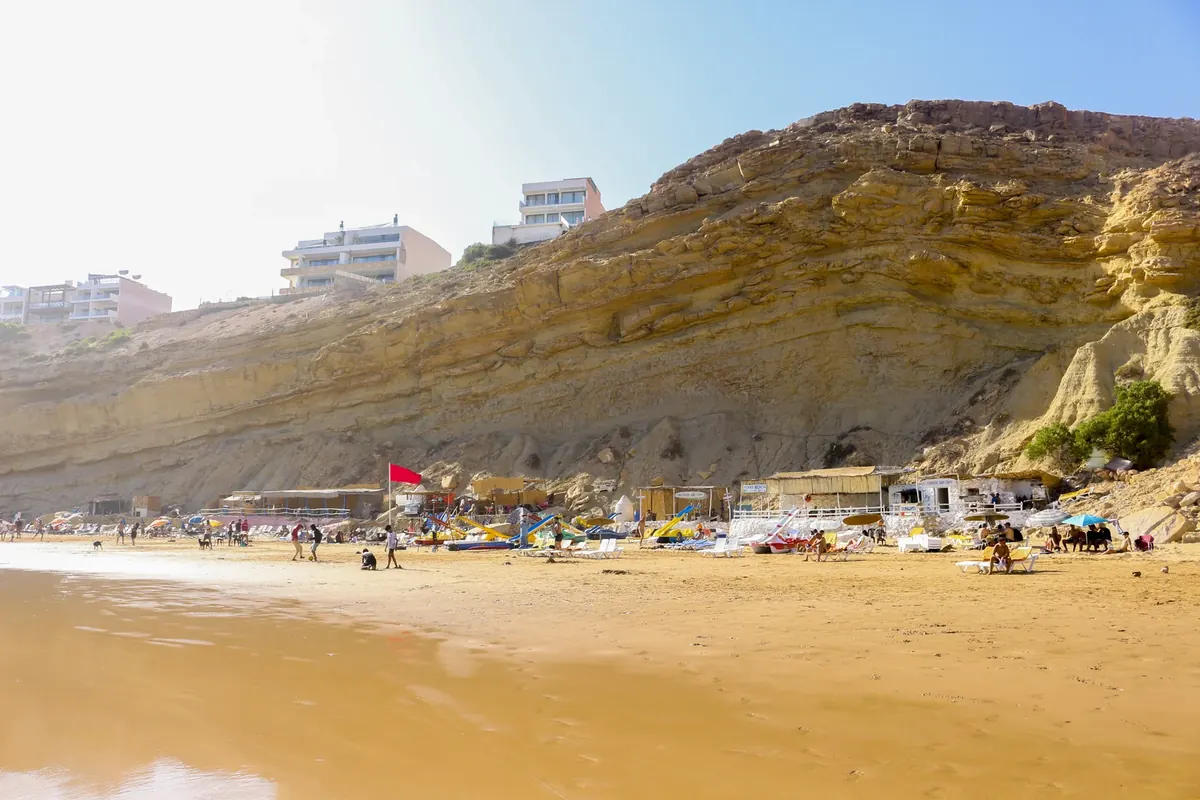
Imsouane is not a city break with a long sightseeing checklist. It is a small Atlantic fishing and surf village north of Agadir, where the daily plan usually follows the sea: check conditions, walk to a break, eat, rest, and repeat. Its appeal is the contrast between the protected curve of the Bay and the more exposed coast around Cathedral. A regional tourism itinerary places Imsouane on the coastal N1 corridor between Agadir and Essaouira, with the Agadir approach turning inland from the highway toward the village. 1
Choose Imsouane if surfing, a modest village scale and several unhurried days matter more than nightlife, shopping or extensive non-surf attractions. It works as a short dedicated surf stay or as a pause on a self-drive coast route. It is less suitable as a rushed day trip from Marrakech: the coastal route adds substantial road time, and a same-day return leaves little margin for traffic, a late session or simply waiting for workable conditions. For a broader Agadir base with city services and a beach promenade, see our Agadir guide; for the walled old town farther north, compare the Essaouira medina guide.
Bay or Cathedral: pick by conditions and ability
The Bay is Imsouane’s signature. Its right-hand point can peel along the bay for a long ride, and local surf descriptions characterize it as comparatively mellow, making it attractive to longboarders and learners working with an instructor. “Beginner-friendly” is not a promise that every tide, swell or crowd is safe for a first solo session. Ask a local surf school where to enter, what the current is doing, and whether the day’s size fits your actual ability. The Souss-Massa regional tourism guide also describes the Bay as a place used by longboarders and surf schools. 1 2
Cathedral sits on the more exposed side of the headland. Independent surf guides distinguish it from the Bay by its faster, more powerful conditions and a less forgiving character when swell is larger. The regional guide likewise notes greater exposure to swell and wind and distinct peaks there. Don’t choose it simply because it is quieter or because a forecast looks impressive. If you are not confident reading currents, rocky entries and shifting peaks, get local instruction or stay on a lesson-selected section. Conditions change by swell direction, wind and tide; online spot descriptions are orientation, not a substitute for a same-day assessment. 1 2
Season and crowd trade-offs
Surf travel sources place the stronger and more consistent swell period broadly in the cooler months, roughly autumn through spring, with the highest winter interest. Summer can bring smaller or less consistent waves, but may suit travelers who value a softer introduction over powerful surf. These are seasonal tendencies, not a forecast; independent surf coverage also describes winter as the stronger-swell period and summer as less consistent. 4 The Bay can become crowded, particularly when visiting surfers and lessons converge on the same long ride. A Condé Nast Traveler report describes Imsouane’s post-2024 surf-tourism growth, the loss and rebuilding of some businesses, and crowding concerns in the lineup; it also records local views that tourism supports livelihoods. 2 3
If you have flexibility, avoid scheduling your whole trip around a single promised “perfect” surf day. Allow a buffer day, check conditions shortly before traveling, and choose a lesson or rental provider after confirming what equipment and instruction are included. Bring or arrange a suitable wetsuit rather than assuming warm air means warm water; check the current water-temperature forecast and your own cold tolerance before packing.
Getting there: make the road leg part of the plan
The simplest gateways are Agadir to the south and Essaouira to the north. The regional tourism authority’s suggested coastal itinerary gives the Agadir–Imsouane leg as 85 km and about 1 hour 40 minutes, via the N1 and a turn toward the village. Treat that as a route-planning reference, not a live traffic promise; allow extra time for stops, roadworks, darkness or a driver unfamiliar with the turn. 1
A rental car or prearranged private transfer gives the most direct door-to-door approach, especially if you carry boards or want to continue along the coast. If renting, confirm that your vehicle and rental agreement permit your planned route and that board transport fits safely. A private transfer is convenient but should be confirmed in writing for pickup point, luggage/board capacity, waiting time and the return arrangement. There is no need to invent a fixed fare: obtain a current quote for your party and date.
Public transport may require connecting through a larger town and arranging a final local leg. Confirm the entire journey—not just the intercity segment—with the operator for your travel date, including the last departure and where you will meet a local taxi. Do not assume a bus reaches your guesthouse or that you can summon transport late at night. If arriving from Marrakech, compare an onward flight or rail-to-road combination only after checking current schedules; there is no rail station in Imsouane. For a longer coastal itinerary, the regional authority lays out Imsouane alongside Tamri and Taghazout, showing why a car can be useful when you intend to stop at several points. 1
Arrive before dark when possible, particularly on a first visit. Ask your accommodation for a pin, the final turn or landmark, and whether the driver can reach the door or must stop nearby. Share your arrival details in advance, and keep a little cash for small local purchases rather than assuming every café or shop takes cards.
Where to stay and how long to book
For surf access, prioritize the actual walking route over a listing’s broad “oceanfront” label. Ask which break the property is near, whether the route involves stairs or an uphill walk, and whether it offers secure board storage, rinsing space, breakfast or dinner, and a quiet place to rest. A surf camp can bundle lessons, equipment, meals and sometimes transport, which reduces coordination; an independent guesthouse or apartment gives more control over your schedule but leaves you to arrange sessions and meals yourself. Compare the written inclusions, group size, cancellation terms and board condition, not just the package headline.
Book directly only after you have confirmed the exact property identity, location and current operating status. Some structures and businesses were removed or changed in early 2024 as authorities acted on coastal buildings; later reporting describes businesses reopening and rebuilding, but that does not verify any particular listing today. Ask for recent confirmation and avoid relying on old reviews or map pins alone. 3
Two nights is a sensible minimum for a quick visit: one arrival evening, one full surf-and-village day and a departure morning. Three or more nights make more sense if surf is the main reason for coming, because swell, wind and fatigue may disrupt a rigid one-day plan. Families or non-surfing companions should check whether the lodging has quiet common space and whether there are easy non-surf activities nearby; Imsouane is not a resort town with a guaranteed children’s program.
A practical rhythm for a short stay
On arrival, settle in and walk the route to the water rather than immediately paddling out. Find the safe entry and exit, note where lessons gather, and ask a local instructor which break fits your level. On the first full day, take a lesson if you are new to surfing or unfamiliar with the break; otherwise rent or use a board only after checking its suitability and the lineup. Plan food and rest around the session. On the next morning, decide whether to surf again or continue the coast route.
The village’s food options are informal and may change. Ask your lodging what is operating and whether it can accommodate allergies or dietary needs; explain restrictions clearly and do not assume a menu’s brief English description covers ingredients or cross-contact. For broader food-planning context, see our Moroccan street-food guide. Bring needed medication and personal essentials from a larger city instead of assuming a small village shop will stock a particular item.
Pack reef-aware water footwear only if appropriate to the break and your instructor’s advice, plus sun protection, a quick-drying layer and warm clothes for breezy evenings. Keep valuables out of sight on the beach, follow surf etiquette, and leave waste behind nowhere—not on the sand or near the water. Surf tourism brings income but also puts pressure on shared coastal infrastructure; reporting from Imsouane has highlighted litter and waste-management concerns as visitor numbers grow. 3
What to confirm before you go
Before departure, confirm the road pickup, accommodation’s current operating status and exact location, board and lesson arrangements, and the latest surf and weather outlook. Ask what happens if conditions are unsuitable for a lesson and whether the provider offers a reschedule or refund under its own policy. Keep enough flexibility to skip the water if conditions exceed your ability. The village’s charm lies partly in being small and coastal; do not treat it as a place with guaranteed inventory, fixed opening hours or a full-service resort desk.
If you want help coordinating a multi-stop Morocco itinerary, the site’s Personal Travel Assistant is available for $20 per inclusive Morocco calendar day; lodging, transport, meals and activities remain separately arranged and charged by their providers.