What Moroccan street food is like
Street food in Morocco is not one fixed menu. It includes griddled breads sold for breakfast or a snack, bowls of soup, fried potato bites, skewered meats, seafood sandwiches and sweets. A busy city square may offer several of these at once, while a small neighborhood bakery or roadside counter may specialize in one. Even familiar dishes change by cook and region, so ordering the same name twice does not guarantee identical ingredients. 2 3
For visitors, the easiest way in is to order a small portion of something cooked in front of you, then add another item if you are still hungry. Bread-based snacks are filling; soups and grilled items make a more substantial stop. The descriptions below are a starting point rather than a promise that every dish is sold everywhere.
The best Moroccan street foods to try
Breads, soups and quick savory bites
Msemmen (also spelled msemen or msemmen) is a square, layered flatbread cooked on a hot griddle. It may arrive plain, with honey or jam, or folded around savory fillings such as onion and herbs. It is especially easy to recognize at breakfast counters and bakeries. Some places use related names such as rghaif or melawi for similar folded or layered breads; if the distinction matters, point to the item or ask to see the filling before ordering. 2 3
Harira is a tomato-based soup thickened with pulses and sometimes pasta or flour. Recipes may include meat, so a meat-free request should be explicit rather than assumed from the soup’s appearance. Morocco’s tourism office describes harira as traditionally associated with Ramadan, when it is commonly eaten to break the fast; it is also served outside that season. 2 4
Maakouda are potato fritters, sometimes tucked into bread for a quick sandwich. You may see them at snack counters and in some coastal-city food scenes, but they are not universal. Ask whether they are plain potato or mixed with other ingredients, and whether the batch is being fried now. 3
Bissara (also written bssara) is a thick fava-bean soup, often finished with olive oil and cumin. It is a warming, inexpensive-style breakfast or snack in places where it is served. Ask whether it contains anything beyond beans and seasonings if you have restrictions; recipes and toppings are not standardized. 3
From the grill and the coast
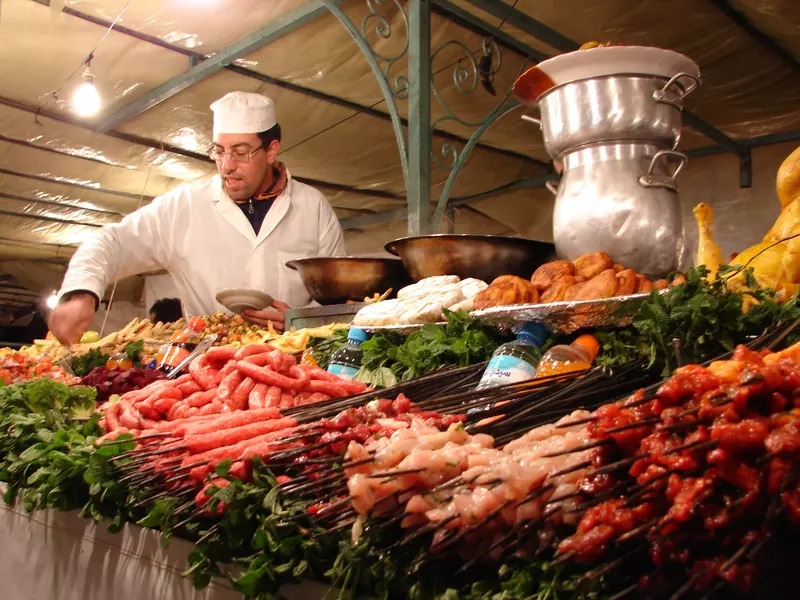
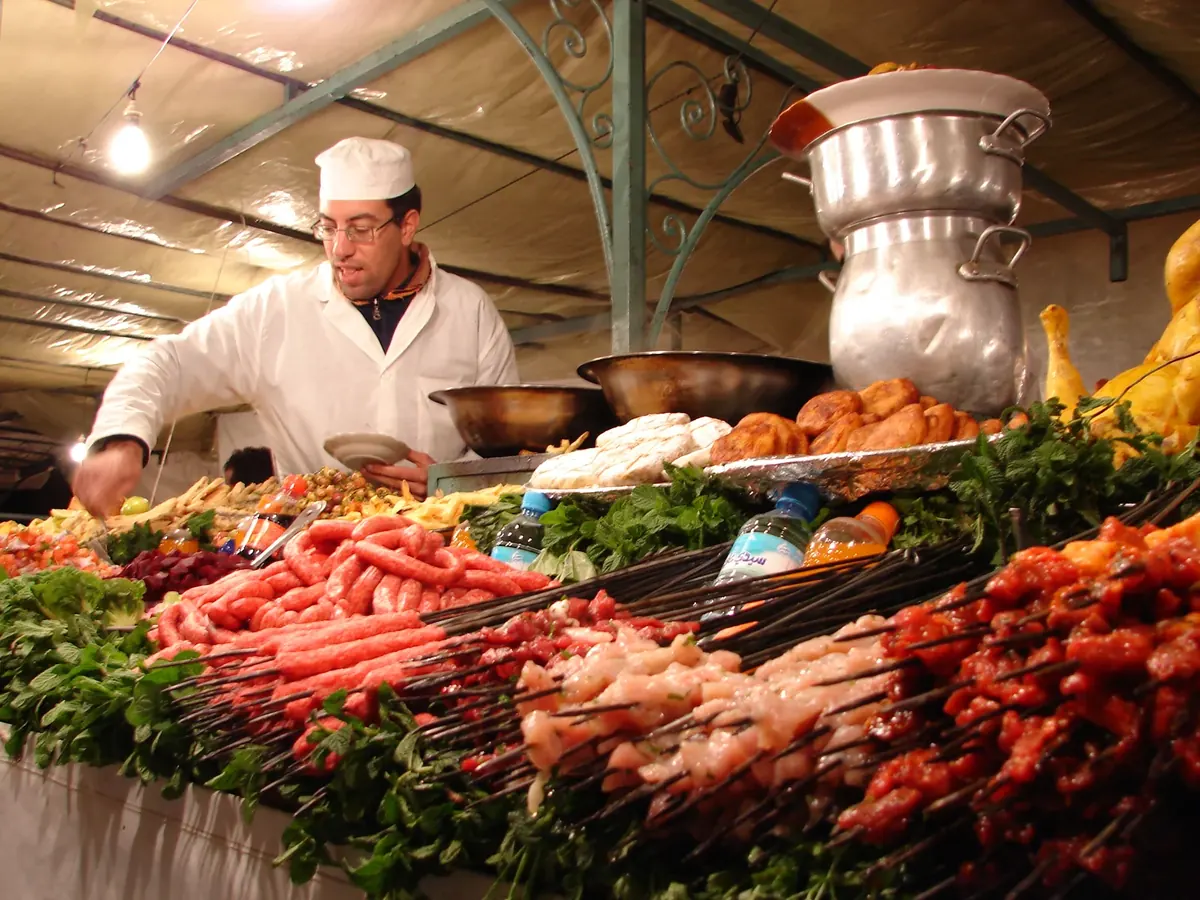
Brochettes are skewers of grilled meat, while kefta is seasoned ground meat shaped around a skewer. Merguez is a spiced sausage, usually made with lamb, beef or a mixture. They are often served with bread. The practical attraction is that you can watch the food cook; wait until it is thoroughly cooked through and served hot. A lively queue can mean brisk turnover, but it is not by itself proof of safe handling. 1 2 3
At the coast, look for sardines, grilled or fried, sometimes served in bread with herbs or other accompaniments. Essaouira is among the places associated with grilled seafood and sardine sandwiches. Ask whether the fish is cooked to order, and choose a stall where raw and cooked items are handled separately as far as you can tell. A fish sandwich may contain sauces or salad; ask what comes in it if you prefer to leave something out. 2 3
A distinct Marrakech evening experience is babbouche, snail soup sold from carts. The snails are served in spiced broth, sometimes with a toothpick for removing them. It is an adventurous choice rather than a must-try; if you are unsure about ingredients or the broth has been sitting lukewarm, choose something else. 2 3
Something sweet
Sfenj are airy rings of fried dough, sold plain or with sugar. You may find them early in the day or as a snack. Chebakia is a sesame pastry coated with honey or syrup and is strongly associated with Ramadan, though availability varies. Sellou and other sweets may appear in bakeries and market counters too. If you want to know whether a pastry contains honey, sesame, nuts or dairy, ask before buying; ingredients are not always displayed. 2 4
Where to look—and when
Marrakech’s Jemaa el-Fna is a conspicuous evening destination for food stalls, but do not expect every city’s street-food scene to look the same. Seek out the local bakery streets for breads, neighborhood counters for fritters and soups, and coastal markets for fish. Essaouira is a sensible place to look for sardines; in other cities, ask your accommodation host or a shopkeeper where residents buy the particular snack you want rather than asking only for a tourist-oriented “best” stall. Local guidance can identify the dish and its usual time of day, but it does not replace your own check of food handling. 2 3 4
Many snacks are convenient between sightseeing stops. Morning is a natural time to try griddled breads or sfenj; soups and grills may be easier to find later, but opening hours and daily availability change. Ramadan can shift eating rhythms and make harira and chebakia more visible around iftar, the fast-breaking meal. Be considerate in public during daylight fasting hours, and check what is open rather than assuming every stall follows the same schedule. 2 4
How to order without overcomplicating it
At a counter, identify the food by name if you know it, or point and ask what it is. A useful sequence is: “What is this?”, “What is inside?”, “Can I have one?” and “How much?” Confirm the price before ordering where it is not clearly displayed, and make clear whether you want the item plain, with filling, or in bread. These are practical gestures, not a guarantee that a language barrier disappears. A translation app with the names of your allergens can help, but do not rely on a short translated phrase to communicate a severe allergy if you cannot confirm the answer.
For a vegetarian choice, msemmen with a clearly described sweet topping or plain maakouda may be easier to assess than harira, which may contain meat, or grilled foods cooked on shared surfaces. Ask about stock, cooking fat and shared utensils. “No meat” may not answer whether a dish contains animal broth or has been cooked alongside meat. If you need strict vegan food, check for butter, honey, eggs and dairy as well. 2 3
For an example order, you might point to one fresh msemmen and ask whether it is plain or filled, then order a small bowl of harira after checking whether it contains meat. At a coastal stall, ask whether sardines are served in bread and what sauce or salad is included. These short checks help you choose without expecting a street vendor to offer a printed menu.
Food safety in Morocco: practical choices
No stall or dish can be called risk-free. The CDC advises travelers to avoid street-vendor food; for those who choose to eat it, its general guidance is to avoid raw vegetables and select food cooked and served steaming hot. It also advises avoiding lukewarm food, raw produce and cut fruit where water or handling is uncertain. Use clean hands before eating. 1
Watch a few moments before you order. Prefer food cooked to order or kept genuinely hot, a clean preparation surface, utensils used for cooked food, and ingredients that are not visibly left uncovered for long periods. Avoid food that looks lukewarm, undercooked or repeatedly handled. These are practical screening cues, not a health inspection or a guarantee. A busy stall may have quick turnover, but choose based on what you can actually observe. 1 3
Take care with drinks as well as food. CDC guidance says to avoid ice where drinking water may be unsafe and recommends factory-sealed drinks; it also cautions against fresh juice prepared by others in places where water safety is uncertain. Hot tea served steaming is a more cautious option than a drink with unknown ice or water. Follow current destination-specific health advice for your own trip, especially if you have a medical condition or are pregnant or immunocompromised. 1
Common mistakes to avoid
Do not assume a dish is vegetarian because it looks meat-free, or that a food is mild because the portion is small. Ask what is inside and how it is cooked. Do not order a large selection before seeing portion sizes; sharing one or two items lets you learn what suits you. Avoid making a stall’s popularity your only safety test, and do not eat raw salad or unpeeled fruit just because it accompanies a hot sandwich. For a serious allergy, uncertainty is a reason to decline rather than gamble on an unclear answer. 1 3
Moroccan street food is easiest to enjoy when curiosity is paired with simple checks: choose dishes that are being cooked now, ask what is in them, and make room for regional variation. For help planning a food-focused day alongside the rest of a Morocco itinerary, see our travel assistance service; vendors remain independent and set their own menus and terms.