What a Morocco food tour can include
The phrase “food tour” covers several formats. A street-food walk typically moves through a medina or market district, stopping for small portions at several vendors. A market-focused outing may explain ingredients and shopping customs, but a market visit does not automatically include a meal. A progressive dinner moves between seated venues for courses. A cooking experience puts the emphasis on preparation and may include eating what the group makes. A desert dinner or restaurant crawl is another category, with different transport and atmosphere.
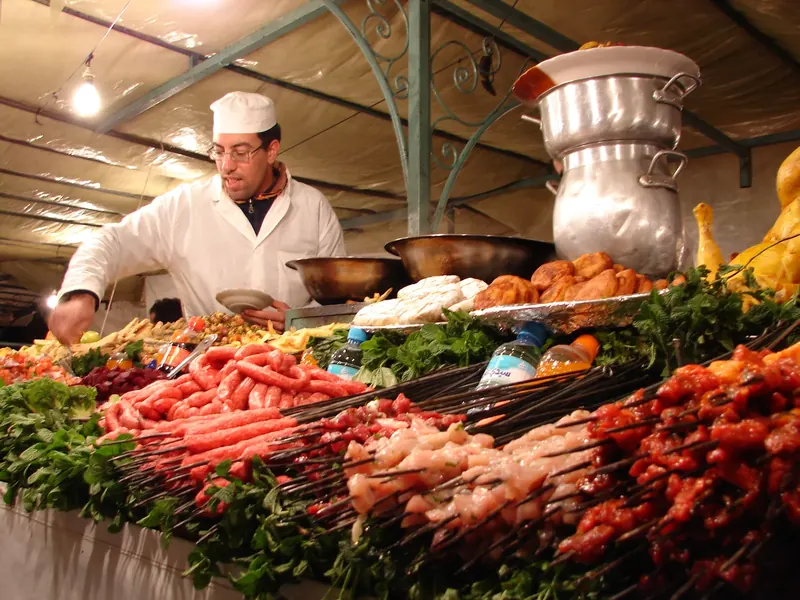
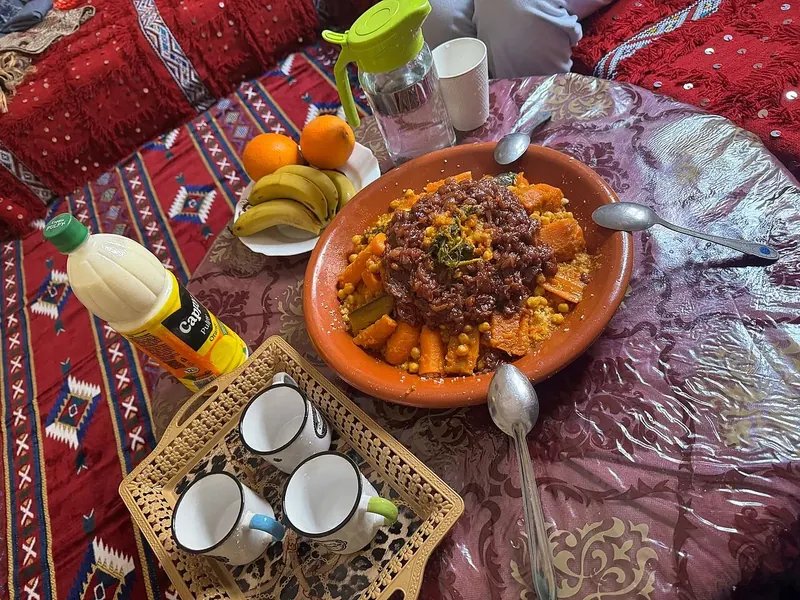
Marrakech is a common place to book a guided food walk. One independent account describes a walking route through the medina with tastings including slow-roasted mechoui, tangia, msemen, harira, sardine kefta, couscous and pastries. That is one reported itinerary, not a standard menu or promise that each dish will appear on another tour. 1 A different account describes a progressive meal served at several riads, with salads such as zaalouk and taktouka, bastilla and rfissa—an example of how a culinary evening can be quite unlike a stall-to-stall walk. 2
Tours elsewhere in Morocco may focus on local specialties, seafood, market produce or a neighborhood meal. Do not assume that a Marrakech route, dish list or style of tasting represents Fez, Casablanca, Essaouira or the country as a whole. If you have a particular interest—breads, sweets, seafood, family cooking or regional ingredients—ask whether the tour makes that its focus rather than relying on a broad “authentic” label.
A food tour differs from a cooking class. If you mainly want context and variety, a guided walk keeps the attention on tasting and place. If you want to learn techniques and prepare a dish, choose a class and confirm whether market shopping is included. The existing Moroccan cooking-class guide explains that distinction in more detail. For a self-guided shortlist of dishes, see the traditional Moroccan food guide and the guide to Moroccan street food.
Pick the format that fits your appetite and schedule
Walking street-food tour: Best for travelers who enjoy trying small portions, moving through busy streets and hearing local food context as they go. Expect uneven paving, crowds and standing between stops; a listing's description of a “gentle” route is specific to that operator and should be checked if mobility is a concern. A sample tour might visit a bakery, a grill and a small café, rather than sitting down for one complete dinner. Ask whether the advertised tastings are substantial enough to count as dinner or whether you should eat beforehand.
Market and ingredients tour: This suits curious cooks and shoppers. Clarify whether the guide demonstrates ingredients, translates vendor conversations, includes samples or simply shows the market. If buying spices, sweets or produce is optional, ask whether shopping time is built into the route and whether purchases are your own expense. A market stop can be valuable even when it is not a tasting stop, but the distinction matters when comparing offers.
Progressive dinner: Choose this for a calmer, seated meal and a sense of different dining settings. It may include fewer locations and longer pauses than a walking tasting route. Check whether transfers are provided between venues, whether stairs are involved, what courses are served and whether the menu can accommodate you. A published travel account of a riad-to-riad dinner is useful as an illustration of the format, but it dates from 2016 and does not establish today's availability or standard practice. 2
Private or shared group: A shared outing may cost less per person and create a social atmosphere, but the pace and stops are set for the group. Private tours can make it easier to tailor timing and questions; they do not guarantee every requested dish or accommodation. Ask the maximum group size, minimum age if traveling with children, and whether the guide can adjust the route.
Day or evening: Daylight can make ingredient displays and market activity easier to see. Evening walks may encounter more active food stalls and a lively square, but can be crowded and end later. Choose based on your energy, family schedule and appetite rather than assuming night is always more “authentic.” Ramadan, weekly patterns, holidays and seasonal availability may affect what is open; confirm the specific date with the operator.
Compare the details before you book
Read past the headline count of “stops” or “tastings.” Ask what is included in the quoted fee: food samples, a full meal, nonalcoholic drinks, bottled water, transport and tips can be treated differently by different providers. Some tours may include many small bites; another may include fewer, more substantial dishes. Current operator pages illustrate how much detail listings can provide—such as group cap, walking format, meeting gate and dietary notes—but terms and prices belong to that listing and can change. 3
Request a clear meeting point, not just a neighborhood name. Medinas have narrow, branching lanes; find out whether you should meet at a gate, landmark or hotel, and whether the tour ends nearby. Confirm the expected duration and likely finish time. If the route description says “flat” or “accessible,” ask about cobbles, thresholds, steps, standing time and restroom access rather than assuming step-free access. For a stroller, wheelchair or reduced walking tolerance, share what you need and get a specific answer before payment.
Check cancellation and late-arrival rules, the tour's operating language and what happens if a planned vendor is closed. Ask whether a tour is still worthwhile if you do not eat one of its signature samples. If you are booking close to arrival, verify that the actual date and time are confirmed rather than inferred from a general promotional page.
Dietary needs, allergies and food handling
Be specific about your needs before booking. “Vegetarian” might mean no meat but still allow dairy or eggs; “vegan” excludes both, as well as honey for many travelers. A dish described as vegetable-based may still use broth, butter or shared cooking equipment. For halal requirements, ask how the operator selects food stops and whether the answer concerns ingredients, preparation or both. Do not rely on a generic dietary icon if the issue is medically significant.
For a food allergy, send the exact allergen and ask whether the operator can communicate it to each vendor, check sauces and shared equipment, and provide a safe alternative. A guide's translation is helpful, but cannot ensure a vendor's knowledge or prevent cross-contact. If the operator cannot answer plainly, choose a different experience or skip the risky tasting. Bring any personally necessary emergency medication according to your own clinician's advice; this guide does not offer medical treatment advice.
The CDC advises travelers to Morocco to take food and drink precautions and lists avoiding contaminated food and water among its health guidance. 4 This is general travel guidance, not a certification of a particular stall or tour. Use ordinary judgment: favor food prepared for the order and served hot where appropriate, wash or sanitize hands before eating, and ask what water and ice are included. A guide can point out local favorites, but no tour can promise that every traveler will avoid illness. See the related street-food guide for more general ordering and food-choice context.
Make the most of the experience
If it fits your itinerary, scheduling a food walk early in a stay can help you learn dish names and identify places or flavors to seek out later. Do not make the first evening after a long flight a tight, late-night commitment if fatigue or jet lag is likely. Arrive hungry but not ravenous, wear comfortable shoes, and bring a little flexibility: a vendor may be busy or a dish may not be available.
Try a small portion before deciding whether to order more. Ask the guide what a dish is, how it is normally eaten and whether it is spicy, sweet or contains an unfamiliar ingredient. You can decline a sample without explanation. If you have children, check whether the route includes mild or familiar options, enough seated breaks and a finish time that works for them.
A tour should make dining more legible, not turn every meal into a checklist. If your priority is choosing a restaurant for a full evening rather than grazing, compare the tour with a meal reservation and consult Marrakech restaurant options by area. If you want help coordinating a Morocco itinerary, the Personal Travel Assistant is available for $20 per inclusive Morocco calendar day, with 24/7 WhatsApp and call assistance during purchased dates. Dining, tours and other providers are independently arranged and charged; availability and terms are confirmed by those providers.