Quick answer
A Moroccan cooking class is worth choosing when you want to do more than eat a tagine: look for a small, genuinely hands-on session that explains ingredients and techniques, gives you a clear menu, and ends with tasting what you made. Marrakech has options ranging from half-day workshops to short lessons; classes are also listed in cities such as Fez and Rabat. Before booking, confirm the location, language, group size, meal, market visit, and how the host handles dietary needs. 1 2 3 4
Key takeaways
- Decide whether you want a market visit, cooking instruction, a shared meal, or all three; not every class includes each part.
- Check which dishes you will prepare yourself and which are only demonstrated.
- Confirm the full duration, meeting point, language, group size, and what the booking includes.
- Communicate allergies and dietary restrictions before paying; ask about ingredients and cross-contact, not just substitutions.
- Treat a class as one useful window into Moroccan cuisine, whose traditions and dishes vary by region. 1
What a Moroccan cooking class is like
There is no single standard format. Some experiences begin in a market, where a host introduces produce and spices before taking the group to a kitchen. Others start at a cooking school and focus on preparation. A half-day class might cover a starter and main dish, include a dessert demonstration, then serve the meal; La Maison Arabe, for example, describes that format and also advertises a shorter express lesson. That is one provider's model, not a promise about all classes. 2 3
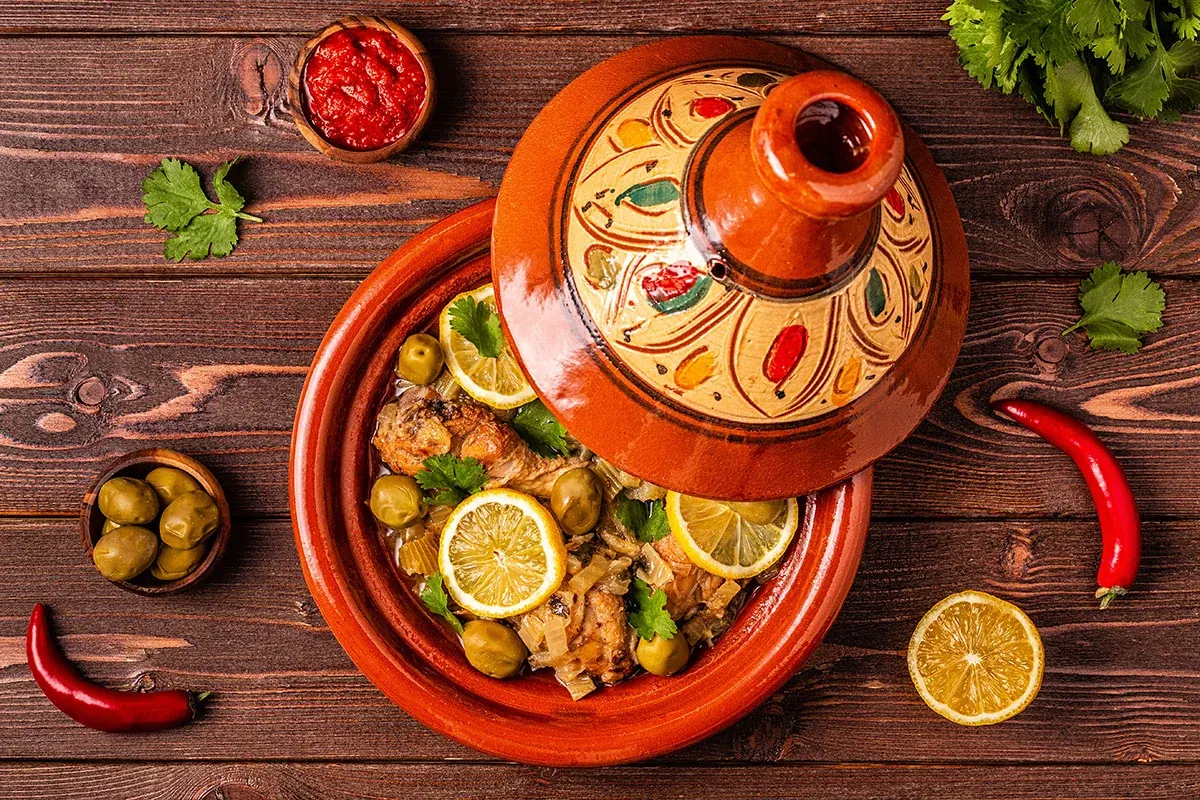
Expect more than following a recipe if the class is well matched to your interests. Ask whether you will chop, season, shape, stir, and assemble dishes yourself, or mostly watch a chef. You might learn how ingredients are layered in a tagine, how preserved lemon and olives balance a chicken dish, or how sweet and savory notes appear in recipes such as m'rouzia. Royal Mansour's workshop descriptions, for example, list chicken tagine, briouates, fish tagine and seffa among its offerings. The menu varies by provider and session. 4
The meal is often part of the experience, but ask whether it is included and whether the dishes you prepare are what you will eat. A cooking class should not be assumed to include a market tour, transport, drinks, recipe booklet, or private instruction unless the offer says so. Listings in Marrakech, Fez and Rabat show different session formats, which is a reminder to compare the details rather than shop by title alone. 5
How to choose the right class
Match the format to your day
Choose a market-to-table experience if browsing food stalls and learning ingredient names matters as much as cooking. It can add context but may involve extra walking, heat, crowds, or a longer schedule. A kitchen-only lesson is often a better fit if you have limited time or want more direct instruction. If you are travelling with children, older relatives, or anyone who tires easily, ask about seating, stairs, standing time, restroom access, and whether the session can be adapted.
For example, a couple with a free morning might prefer a half-day format that ends with lunch. A family arriving late in Marrakech might choose a shorter lesson closer to their lodging rather than add a market visit and uncertain transfer. These are planning examples, not descriptions of a particular operator's services.
Check where the class happens
In Marrakech, a school may operate in a hotel, a country club, or a medina kitchen; La Maison Arabe describes both hotel and country-club venues. Verify the exact address and meeting point, and ask whether the host provides directions or pickup. A venue outside the central medina may change the transport time; in narrow lanes, the final approach can be on foot. Do not assume the advertised city name means the kitchen is near your accommodation. 3
If your itinerary is outside Marrakech, search the city you are visiting rather than making a special trip solely for a class. Marketplace listings include options in Fez and Rabat as well as Marrakech, but availability and content depend on the date and provider. 5
Judge the teaching, not just the setting
A beautiful kitchen can be enjoyable, but it does not tell you how much you will learn. Look for a menu, a description of what participants do, and a named language of instruction. Ask how many people share each workstation and whether the instructor can explain unfamiliar ingredients. If cooking technique is the priority, favor a clear hands-on description over vague claims such as “authentic” or “secret recipes.”
Moroccan cuisine is diverse, with dishes and influences associated with Amazigh (Berber), Arab-Andalusian and Jewish culinary traditions, alongside regional identities. Couscous, tajine, pastilla, rfissa and m'rouzia are among the dishes promoted by the national tourism authority. One class cannot represent every household or region, so think of it as a focused introduction rather than a definitive survey. 1
Questions to ask before you book
Before paying, get clear answers to these practical points:
- What is the exact duration, meeting place, and language of instruction?
- Which dishes will I make hands-on, and which will be demonstrated?
- Is the meal included? Are water, tea, other drinks, and written recipes included?
- Does the session include a souk visit or transport, and how much walking is involved?
- What is the maximum group size, and can each participant take part at a workstation?
- What is the cancellation or rescheduling policy, and when is payment due?
- Can the host accommodate my food allergy or dietary restriction, and how are shared utensils and surfaces handled?
For a serious allergy, communicate the exact ingredient and risk before booking and again on arrival. Ask about shared equipment and cross-contact, rather than relying on a broad “allergy-friendly” label. The U.S. Department of State recommends preparing for health needs abroad; it does not certify any cooking experience or guarantee a particular kitchen's practices. If a provider cannot explain its approach clearly, do not assume a safe accommodation. 6
Vegetarian, vegan, gluten-free, or dairy-free requests also need specific confirmation. Moroccan dishes can include meat, butter, wheat, nuts, or other ingredients that may not be obvious from a menu name. Ask for the proposed menu in writing and clarify whether a substitute changes the cooking activity or only the final meal.
Make the most of the experience
Arrive ready to participate, wear comfortable clothes and closed-toe shoes, and avoid scheduling a tight transfer immediately afterward. Follow the host's instructions around knives, hot surfaces and food handling. If you are most interested in a particular dish—say couscous rather than tagine—ask before booking whether it is actually on the session menu. Some workshops offer set menus, and the class page may not promise customization.
Take notes on quantities and sequence, not only ingredient names: when spices are added, how long the dish cooks, and what texture signals that it is ready. Ask whether the recipe can be shared for home use. Then enjoy the meal as part of the lesson: the national tourism authority describes Moroccan dining as a tradition of conviviality and sharing, as well as a body of regional dishes and techniques. 1
If a cooking class is one part of a wider Morocco itinerary, you can plan the experience alongside other trip details through travel planning support; the class itself is booked and confirmed with its provider.