What traditional Moroccan food is like
Moroccan cooking brings together grains, bread, vegetables, pulses, meat, seafood, fruit and fragrant seasonings. The flavors can be warm and layered without being especially hot: cumin, ginger, saffron, cinnamon, herbs and preserved ingredients all appear, while chili may be offered separately. There is no single menu that represents every household or region. Morocco’s tourism authority notes that starters and couscous accompaniments vary by region, and that tagines range from meat and chicken to fish and vegetables. 1
A useful way to explore is to order by texture and flavor, not just by famous names. Choose a slow stew if you want comfort food, a pastry pie for a sweet-savory combination, or vegetable salads and bread for a lighter start.
The essential Moroccan dishes to try
Tagine: slow-cooked stew
“Tagine” refers both to the conical earthenware cooking vessel and to the stew prepared in it. The covered pot traps steam, allowing ingredients to cook slowly. Common combinations include chicken with preserved lemon and olives, lamb or beef with prunes, and vegetable tagines; recipes differ from cook to cook. 1 2
For a first order, chicken with preserved lemon and olives is savory, tangy and easy to recognize. Beef or lamb with prunes leans sweet and rich. Ask whether a vegetable tagine is cooked in vegetable stock and without meat fat if you need it to be vegetarian. A restaurant may serve tagine with bread rather than couscous, so ask what comes with it.
Couscous: a meal to share
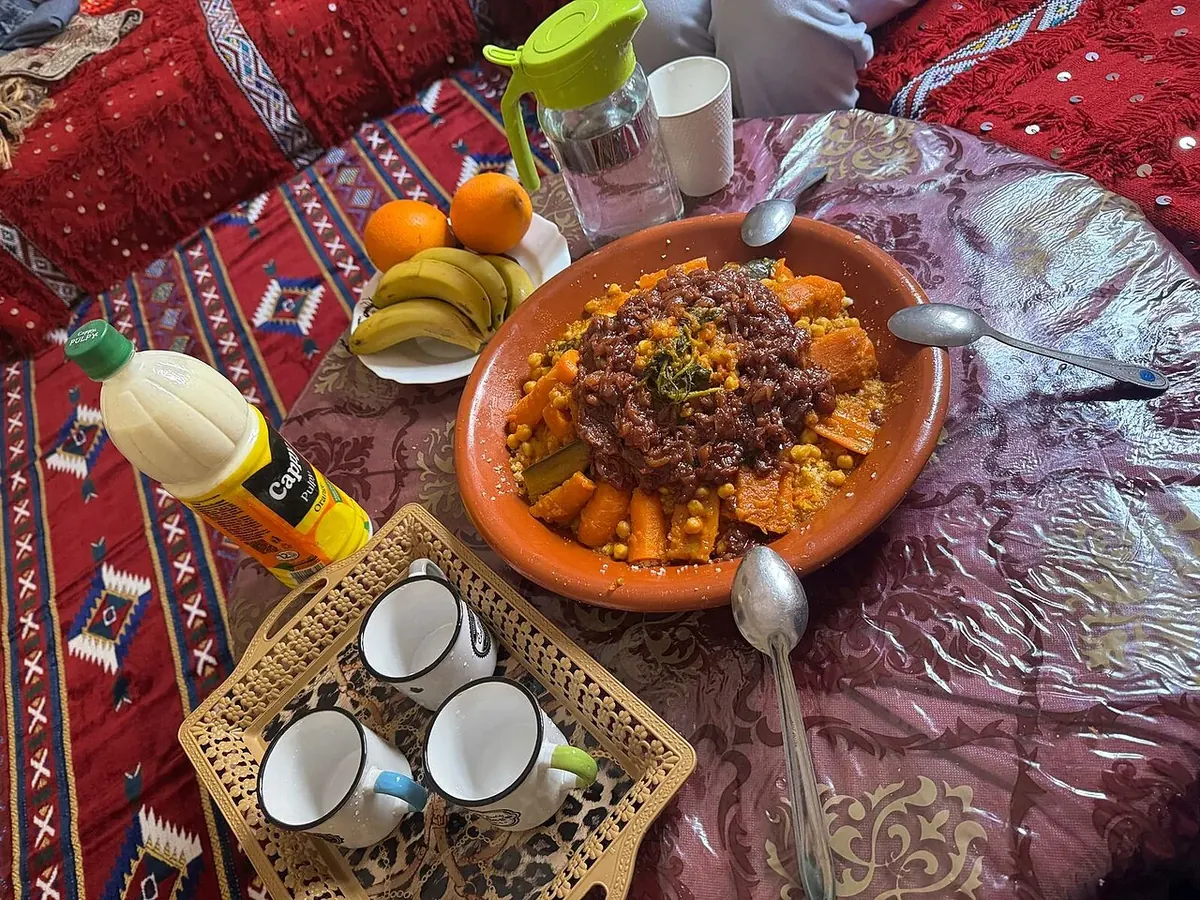
Couscous is steamed semolina served with accompaniments such as vegetables, broth and, depending on the recipe, meat, fish or chicken. UNESCO recognizes the knowledge and practices around its production and consumption as intangible cultural heritage shared by Morocco, Algeria, Mauritania and Tunisia. The tradition includes hand-rolling and steaming, and the dish’s social meaning includes sharing and conviviality. 3
In Morocco, Friday is a traditional day for couscous, and a well-known version pairs it with several vegetables and broth. But do not assume that every restaurant serves it only on Friday, or that every plate has the same toppings. Ask whether it is available that day and whether it is a single serving or a larger platter to share. Couscous is made from wheat semolina, so it is not gluten-free.
Pastilla: crisp, sweet-savory pastry
Pastilla (also spelled bastilla or b’stilla) is a layered pastry pie. A classic version combines a savory filling—traditionally pigeon, though chicken is common—with almonds and spices, then adds a light finish of sugar and cinnamon. The contrast is the point: crisp pastry, tender filling, nuttiness and sweetness in one bite. Fish versions are also found. 1 4
It is a good choice if you like both savory pies and pastries. Because it can be substantial, consider sharing one as a starter before ordering several mains. Confirm the filling and whether nuts or egg are used if allergies matter.
Harira: tomato and pulse soup
Harira is a hearty soup commonly built around tomatoes and pulses such as lentils or chickpeas, with herbs and sometimes noodles or meat. It is strongly associated with Ramadan meals, when it is traditionally eaten to break the fast, but is also found outside that season. 1
A bowl can make a satisfying light meal with bread. If you avoid meat, ask whether the stock is vegetable-based; a soup that looks meat-free may still be prepared with meat broth.
Marrakech tanjia, salads and small bites
Tanjia is a slow-cooked meat specialty associated with Marrakech, traditionally prepared in a tall clay vessel. It is distinct from tagine despite the similar-sounding name. Its long cooking makes the meat tender; it is usually a choice for meat-eaters rather than a general-purpose stew. 1 2
To begin a meal, look for zaalouk, a cooked eggplant-and-tomato salad, or other cooked vegetable salads. Briouats are crisp pastry parcels that may be filled with meat, chicken, cheese or other ingredients. Neither “salad” nor “pastry” guarantees a meat-free filling, so ask what is inside. 1 4
Breads, sweets and tea
Bread is central to many meals and can be used to scoop food. At breakfast, try msemen, a folded griddled flatbread, with honey or another accompaniment. For sweets, gazelle horns are almond-filled pastries scented with orange blossom; chebakia is a sesame-coated honey pastry particularly associated with Ramadan. 1 2
Mint tea—green tea brewed with mint and often sweetened—is a familiar gesture of hospitality as well as a drink. If you prefer it less sweet, ask whether it can be prepared with little or no added sugar; what is possible depends on the setting. 1
How to order with confidence
Menus may use French, Arabic transliteration or a mix of spellings. Pointing to a dish name is fine, but a few specific questions help prevent surprises:
- “What is in this?” Ask about the main ingredients and sauce or broth.
- “Is it spicy?” This distinguishes aromatic seasoning from added chili.
- “Does it contain meat, meat stock, butter or animal fat?” Useful when ordering soups, couscous or vegetable dishes.
- “Can you prepare it without [ingredient]?” Ask before ordering, especially for allergies; kitchens cannot always accommodate every request.
- “Is this for one person or to share?” A platter may be larger than expected.
For a vegetarian meal, combine cooked salads, bread and a vegetable tagine only after confirming the stock and cooking fat. Vegan and gluten-free diners should be especially explicit: couscous contains wheat, while breads and pastries commonly use wheat, and animal-derived stock or butter may be less visible than the main ingredients. If you have a serious allergy, communicate it clearly and decide whether the kitchen’s answer gives you enough confidence.
A simple first evening order might be zaalouk and bread to share, followed by chicken tagine with preserved lemon and olives, then mint tea. Another day, try couscous if it is available, or choose harira and a pastry when you want something lighter. Trying dishes across different towns and kitchens is more revealing than expecting one definitive “authentic” recipe.