The short decision
Choose the Ounila Valley route only when it is the scenic focus of a flexible daylight day, not a shortcut between booked stops. It can link Telouet and Aït Benhaddou, but use the direct N9 route instead when you have a fixed arrival, an uncertain forecast, a late start, or a rental agreement that does not clearly permit the route. That answer is deliberately conditional: a published description of a road surface or journey time is not a live road-status report.
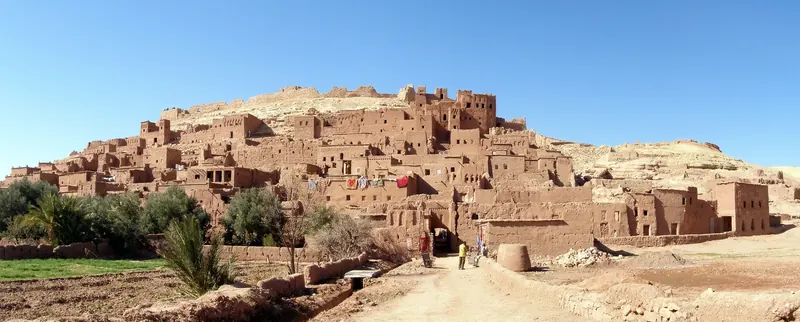
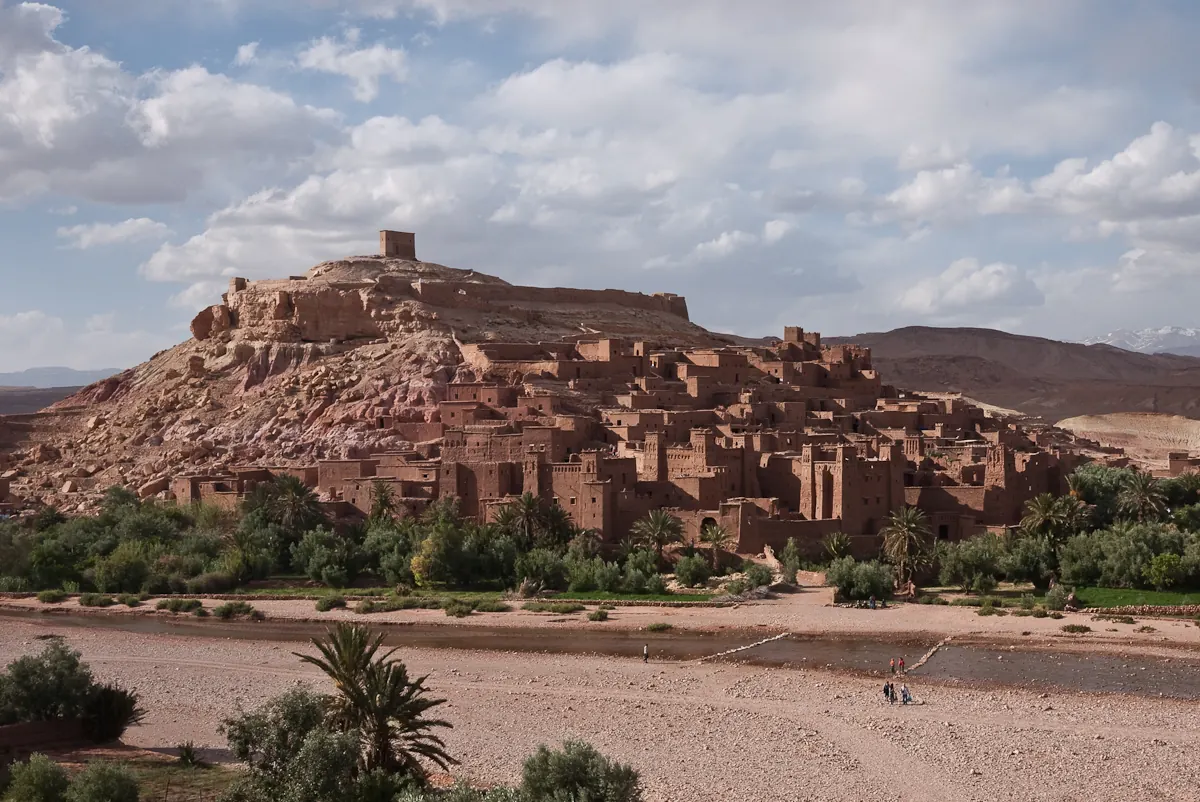
The reason to make room for the route is the sequence, not a promise of speed: a Telouet stop, valley scenery and a finish at Aït Benhaddou. UNESCO describes the latter as a ksar of earthen buildings in the Ounila Valley and notes the vulnerability of its earthen fabric. Treat it as a heritage stop rather than a target to rush through. 3
Make this a route choice, not a shortcut
The practical choice is between using the P1506/Ounila Valley line as part of a High Atlas crossing or staying on the direct N9 alignment. Do not frame it as a simple side trip to squeeze into a Marrakech–Ouarzazate transfer. Once you leave the main road, the useful question is whether you still have enough daylight and energy for slow, observant driving and for the stop you actually want.
Choose the valley route when all of these are true:
- the day has no non-refundable check-in, tour, or onward transport you could miss;
- every named driver is approved on the rental agreement and the supplier has confirmed the intended route is allowed;
- same-day navigation, weather information, and a local source give you no reason to expect disruption; and
- you are content to turn around and use the N9 if the situation no longer matches the plan.
Stay on the N9 when any of those conditions fails. This is not a lesser trip. It protects a timed arrival and leaves Aït Benhaddou for a visit with enough attention. The site's Aït Benhaddou visitor guide is the better resource for planning the ksar itself; this page is about the driving decision.
Use a three-clock route plan
Do not borrow an old online transit estimate. Set three decision times in the navigation app on the day, using its current route and an arrival before dark. Keep the direct N9 alternative saved offline before leaving mobile coverage or a familiar town.
1. Departure clock
Before turning off the main route, check the supplier's written permissions, weather, fuel range, phone charge, offline map, water, and the estimated arrival at your actual overnight. If that arrival no longer leaves a comfortable daylight margin, stay on the N9.
2. Telouet decision clock
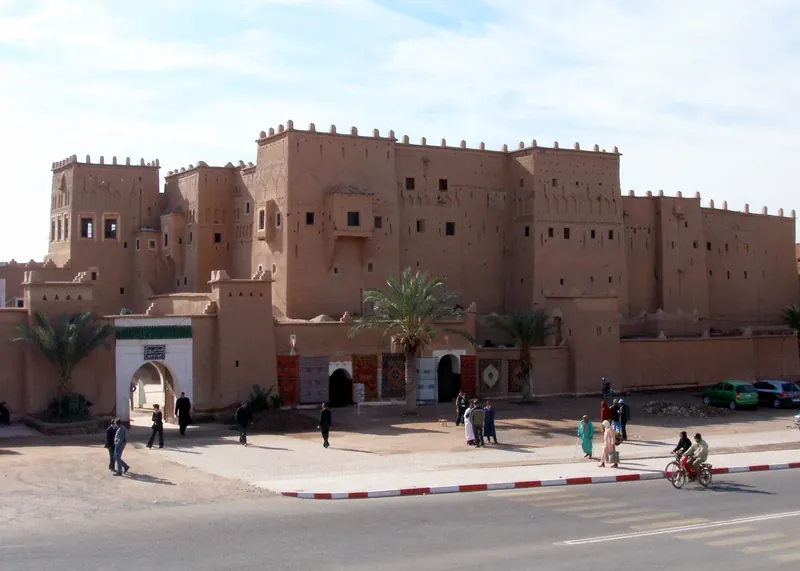
Make Telouet the first deliberate stop rather than an obligation. Plan the exterior view as sufficient; do not build the day around an unverified interior opening time, entrance fee, or access route. If you are already behind your own turnaround time here, take the direct-route fallback rather than trying to recover time on a mountain road.
3. Arrival clock
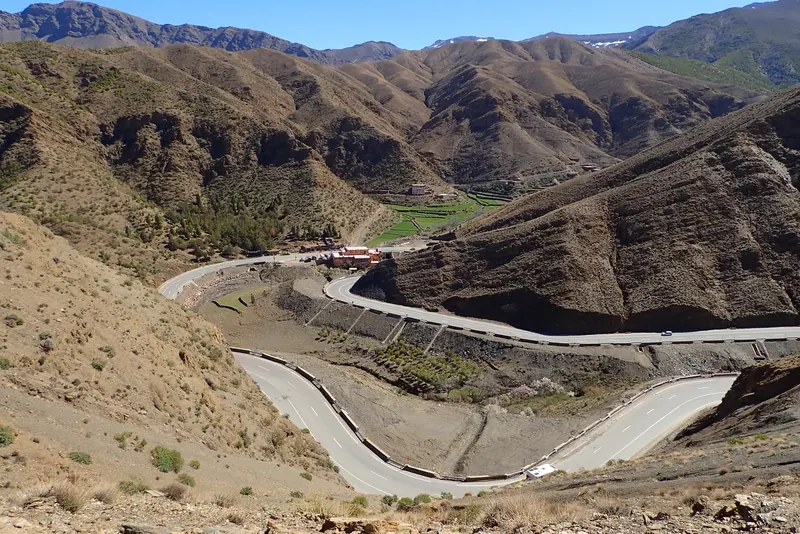
At the final valley decision point, ask one question: can the remaining route, parking, and arrival happen in daylight without hurrying? If not, retrace to the N9 or stop where it is safe and permitted. The U.S. State Department specifically advises extreme caution at night because of poor lighting, and says Atlas roads can be steep, narrow, winding, and dangerous. 4
Separate the law, rental contract, and cover
These are three different checks. Passing one does not answer the others.
National rules and residency
For a visitor using a foreign licence, the U.S. State Department says foreign licences are valid in Morocco for up to one year; foreign residents must then pass the Moroccan test and obtain a Moroccan licence. 4 That is a rule about driving eligibility, not an assurance that a particular rental desk will accept every licence.
For a UK licence holder, current UK government advice says to carry both the UK licence and a 1968 International Driving Permit in Morocco; it says Morocco no longer accepts the 1949 version. 1 2 That guidance is specific to UK licence holders. A U.S. licence holder or a holder of any other national licence should not assume the UK rule applies: ask the rental supplier and the relevant Moroccan diplomatic or licensing authority before travel, and take the original licence rather than relying on a phone image.
Supplier conditions
Age, length of licence holding, payment card, deposit hold, extra-driver approval, and where the vehicle may be driven are supplier policies. The UK government's Morocco advice flags that hire companies often impose minimum experience and higher-age requirements. 1 Ask for the answers in writing before paying:
- Is every intended driver named on the agreement, and what documents must each bring?
- What are the minimum and maximum ages, minimum licence-holding period, and any young- or senior-driver charge?
- Is the P1506/Ounila Valley route allowed for this vehicle on the rental dates? Are unpaved sections, detours, river crossings, or recovery off the normal road excluded?
- What deposit or payment-card hold applies, and who must present that card at collection?
A vague answer such as “the car is suitable” is not route permission. If the supplier cannot answer, choose the direct route or another transport plan.
Cover is not the same as a waiver
Do not equate a named damage waiver with comprehensive insurance. Ask the supplier to identify, in the contract, the mandatory third-party cover; what collision/loss and theft waivers change; the excess; excluded damage such as tyres, glass, underbody or keys; any territory or road-surface restriction; and the recovery procedure. Also ask whether a breach of a route restriction affects the waiver. Keep the emergency number and accident instructions with the agreement.
If there is a collision, the U.S. State Department says parties must remain at the scene and not move the vehicle before police or the insurance investigator documents it; it gives 190, or 19 from a landline, for police. 4
Make weather and turning around part of the plan
This route needs a reversible plan. UK travel advice says secondary and mountain roads can be especially hazardous in poor weather and that driving can be dangerous in flooded mountain areas. 1 U.S. advice says flash flooding is frequent in Morocco's rainy season, November to March, and can wash away rural roads and vehicles. 4
After heavy rain, a flood warning, low visibility, a closure notice, or a surface that contradicts your rental terms, do not “test” the route. Return to the N9 or wait for current local advice. The same rule applies when animals, pedestrians, or oncoming traffic make the pace slower than expected: slow down or abandon the scenic plan, rather than trying to make up time.
A compact car may be appropriate only if the provider permits the intended route and current conditions support it. A larger or higher vehicle is not a substitute for permission, visibility, daylight, or a safe turnaround. Avoid promises based on old blogs, vehicle marketing, or another driver's past journey.
Stop choices without a rigid timetable
Telouet and Aït Benhaddou are best treated as two possible stops, not two appointments. If Telouet absorbs more time than expected, keep the valley drive short or arrive at Aït Benhaddou on a later day. If Aït Benhaddou is the priority, protect time for it and skip the less certain stop. UNESCO's listing is a useful reminder that Aït Benhaddou is a living example of southern Moroccan earthen architecture, not merely a roadside photo opportunity. 3
For an overnight and onward-route decision, use the Ouarzazate guide. For broader driving rules, roadside habits, and preparation, read Driving in Morocco and Renting a car in Morocco. If you want help comparing an independent provider's rental terms with a fixed itinerary, Maroc Mobility's Personal Travel Assistant service can help coordinate the planning; the rental agreement, charges, and vehicle cover remain with the provider.