Understand the place before choosing a stay
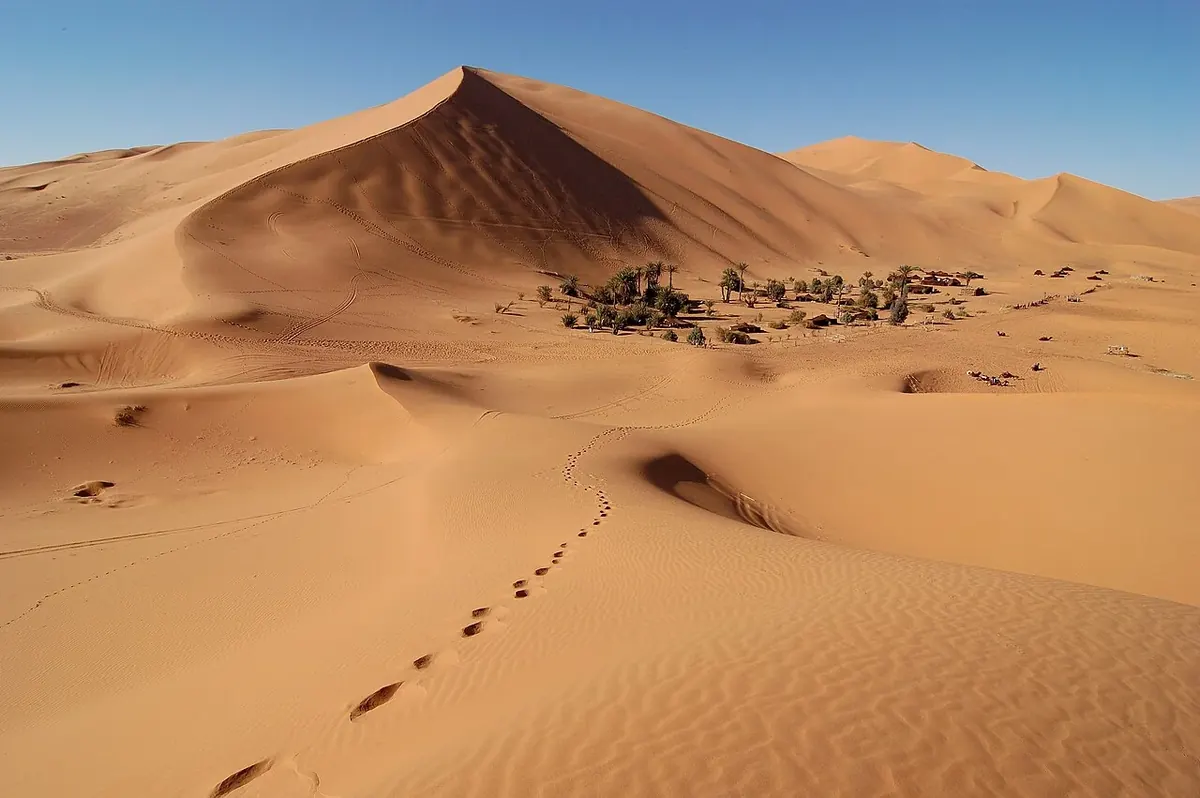
Merzouga is a small settlement in southeastern Morocco, best understood as a base beside Erg Chebbi rather than the dunes themselves. An erg is a broad area of wind-shaped sand dunes; this distinction matters when comparing accommodation: a guesthouse in or near the village, a lodge at the dunes’ edge, and a camp farther among the dunes are different experiences with different access needs. Nearby starting points include Hassi Labied and other settlements around the erg. 1 2
Erg Chebbi is the classic orange-sand landscape many visitors picture when they imagine the Moroccan Sahara. Yet it is not an empty movie set: tracks from vehicles, neighboring camps, weather and the changing dune surface affect what a particular view looks like. An independent account from a winter visit described both the striking sunrise and vehicle tracks, a useful reminder that the real place is more varied than a perfect promotional panorama. 3
Give the journey the time it needs
Merzouga is far from Morocco’s major cities. A first-party camp guide describes the route as more than 550 km from Marrakech and over 450 km from Fez, with its own indicative driving times; another independent destination guide likewise emphasizes the long road approach. Those figures are route descriptions, not dependable door-to-door itineraries: stops, traffic, weather, road works, driver breaks and where you start or finish change the day substantially. 1 2
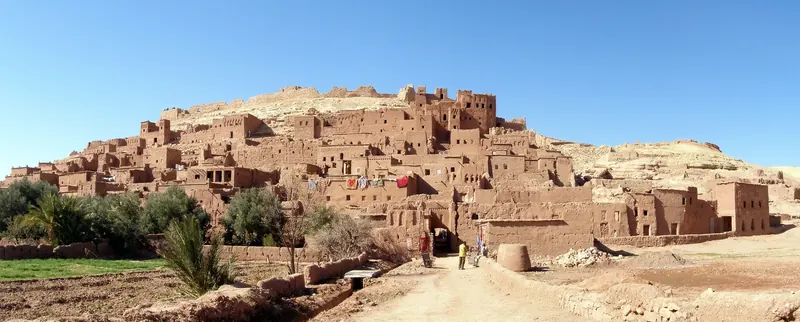
From Marrakech, a common sensible shape is to split the journey: cross the High Atlas corridor, stop around Aït Ben Haddou or Ouarzazate, then continue through the southern valleys and oasis towns before reaching Merzouga. The exact overnight town depends on whether you want to prioritize the kasbah landscape, a gorge, or a more relaxed drive. From Fez, route plans typically pass through the Middle Atlas and towns such as Midelt and Erfoud. Do not interpret these stops as a mandatory checklist; choose one or two that make the drive itself worthwhile. 2
A short Marrakech-to-Merzouga excursion can be sold as a package, but it usually means considerable time on the road and little unstructured time at the dunes. If the desert is the point of the trip, allow enough days to travel at a humane pace and keep a full morning or afternoon at the destination. A rushed itinerary can technically include a camp night while leaving you too tired to enjoy the dunes. For route comparisons, see our Morocco road-trip guide and Morocco travel packages guide.
Independent public transport is possible to plan, but it is not the same as stepping off a train beside your camp. Supratours’ official site lists Merzouga among its destinations and identifies Merzouga-area agencies; check the operator’s actual origin, destination stop, current departure date and ticket details directly. Arrange and reconfirm the final connection between the bus stop and your lodging, especially for a late arrival. Rail is not a door-to-dune service. 4
Choose a camp night or a village base
A night in a desert camp gives you access to the changing light at sunset and sunrise without having to return to town immediately. Camps differ widely. A camp’s marketing label alone does not tell you whether the tent has a private toilet, hot shower, reliable electricity, heating, or a proper bed. Ask for the exact room configuration and facility arrangement, and whether bathrooms are inside the tent or shared. A provider’s description of its own camp can illustrate possible amenities, but it is not a standard shared by all camps. 1 2
Also establish how you reach the camp. Some itineraries include a camel caravan; others use a 4x4 transfer, and some may offer alternatives. Confirm whether the transfer is included in the quoted booking, where it departs, how luggage is moved, and whether a vehicle can take you if riding a camel is not suitable or appealing. A camp in the dunes is not necessarily reachable by an ordinary car. 1 2
Choose a village guesthouse or hotel when you want a conventional room, easier vehicle access, or more than one night to explore the region. You can still book a sunset or sunrise outing without sleeping in a tent. This often works better for travelers with mobility limits, small children who need routine, anyone who sleeps lightly, or visitors who prefer reliable bathroom access. Tell the accommodation or activity operator what you need and ask what can actually be provided; do not assume a camp’s “luxury” label means step-free access or suitable facilities.
For a mixed itinerary, consider one camp night and another night in a village or nearby lodge. That gives you the distinctive after-dark setting without making every night depend on camp conditions. Pack a warm layer even in a hot season: desert days and nights can feel very different, and camp operators describe winter nights as especially cold. 1 3
Pick activities around your comfort and priorities
Walk the dunes. If you mainly want the scale and shifting light, a short walk from an accessible edge or camp may be enough. Loose sand makes climbing tiring; take water, protect your feet and avoid attempting unfamiliar routes far from other people. Dunes can look alike, and tracks or landmarks may be difficult to read. Do not wander off alone or assume a phone map will make an unmarked desert route safe. 3
Choose a camel ride for the slow approach. A camel caravan is a traditional-looking way to reach some camps and offers time to watch the landscape change. It involves mounting, balancing and a repetitive seated ride, which may not suit everyone. Ask the operator about duration, departure and return times, the saddle arrangement, and whether a vehicle or walking option is available. Wear comfortable trousers and closed shoes; keep a layer and eye protection handy. You are not obliged to ride a camel to see the dunes. 2 3
Consider a 4x4 outing for distance. A four-wheel-drive excursion can reach areas that would take a long walk to explore, but ask what the route actually visits and how long you spend driving versus stopping. If your priority is a quiet, low-impact experience, motorized trips may be less appealing: vehicles can leave tracks and create noise. Avoid driving off with an unqualified driver or entering dunes independently. 3
Sandboard only if you want the climb as well as the slide. Boards may be arranged through local lodging or activity providers, but availability and equipment are not guaranteed. Confirm whether a board is supplied, whether instruction is included and how you return to the starting point. Walking back up soft sand is strenuous.
Make room for stillness. Sunset, early light and night skies are compelling without adding a motor activity. The view depends on cloud, dust, moonlight and weather; stargazing is not guaranteed to be clear. If cultural music or a shared meal is advertised, ask who provides it and what is included. Treat people and communities as hosts rather than attractions: ask before photographing someone, and avoid assuming that all residents share the same identity or way of life.
Nearby stops worth choosing deliberately
Use Merzouga as a regional base, not a reason to book every nearby outing. Khamlia is known for Gnawa musical traditions; if you visit, ask whether a performance is scheduled and whether any contribution is expected rather than assuming it is a spontaneous show. Rissani offers a market and local town life, but market days and opening patterns can change, so verify locally before building a fixed itinerary. Erfoud is a possible stop for fossil-related workshops; distinguish an educational demonstration from a sales visit and decide in advance whether you want to shop. 2
Dayet Srij and other seasonal wetland areas can vary with rainfall. Do not plan around a lake, flamingos or other wildlife as if they were guaranteed; ask a local guide about current conditions. The landscape and route can be part of the outing even when a named feature is dry or inaccessible. 2
What to confirm before you book
Ask for a clear written list of what the amount covers: transport to the region, transfer from the village to camp, camel or 4x4 ride, meals, drinking water, bedding, bathroom access, and any guide or activity. Confirm whether the price is per person or per room, how luggage is handled, and what happens if you arrive late or weather affects an activity. Avoid comparing only tent photos or the word “luxury”; compare the actual inclusions and facilities.
If traveling with children, ask about minimum ages, seat arrangements and whether a non-camel transfer is possible. For mobility needs, request concrete details such as vehicle access, walking distance over sand, steps and bathroom layout. For food allergies or dietary requirements, tell the camp in advance and get explicit confirmation; do not rely on a generic promise that meals can be adapted.
Bring sun protection, water for the journey, comfortable shoes, a warm evening layer and a small day bag. Keep larger luggage with your vehicle or lodging only after confirming secure storage. Do not leave valuables unattended, and avoid carrying more than you need on a camel or camp transfer. Check current travel advice and transport details shortly before departure; road conditions and schedules can change.
Merzouga suits travelers who want the dunes enough to give them time. If you have limited days, consider whether a nearer rocky desert excursion fits better than a long round trip. If you commit to Erg Chebbi, slow down, choose lodging for your actual comfort needs, and let the light rather than a packed activity list shape at least part of the visit. For help coordinating separate transport, lodging and activities, learn about the Personal Travel Assistant; providers confirm and charge for their own services separately.