The easiest respectful outfit formula
There is no single outfit that tourists are required to wear across Morocco. In cities such as Marrakech, Casablanca and Fez, people dress in a range of ways. A practical starting point for a visitor is a breathable top that covers the shoulders, plus loose trousers, a longer skirt or a dress reaching around the knees. That combination feels comfortable for a long day out and is less revealing than beachwear without requiring you to dress in traditional clothing. Morocco’s customs and expectations vary by place; a Moroccan travel writer notes that smaller towns and rural areas tend to be more conservative than major cities. 1
Think of coverage as a flexible courtesy and comfort choice, not a rule imposed on every street. You do not need a djellaba, headscarf or special “tourist” wardrobe for ordinary sightseeing. A scarf can be handy for sun, wind or an extra layer, but it is not a universal entry requirement. Men can use the same practical approach: light shirts, trousers or longer shorts depending on setting, and a layer for changing weather. Choose clothes that let you walk, climb steps and sit comfortably.
A simple city-day outfit: a linen or cotton button-up shirt, loose trousers or a midi skirt, supportive closed-toe shoes and a light overshirt. If it is hot, choose loose, airy fabric rather than tight synthetic layers. For a cooler evening, add a cardigan or light jacket.
Choose clothes for the place, not just the month
Morocco’s geography creates more than one kind of weather. Coastal, Mediterranean, arid steppe, desert and mountain climates all occur in the country, and altitude and ocean influence conditions. A trip that combines Marrakech, the Atlas Mountains and the coast therefore calls for layers rather than one all-purpose summer outfit. 2 Check a current forecast for each stop shortly before departure; seasonal averages cannot tell you what a particular day will feel like.
Cities and medinas
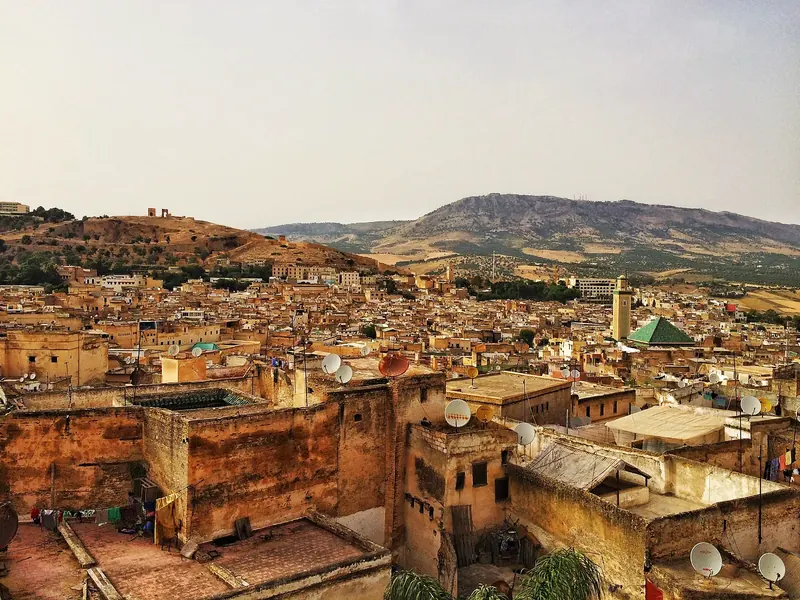
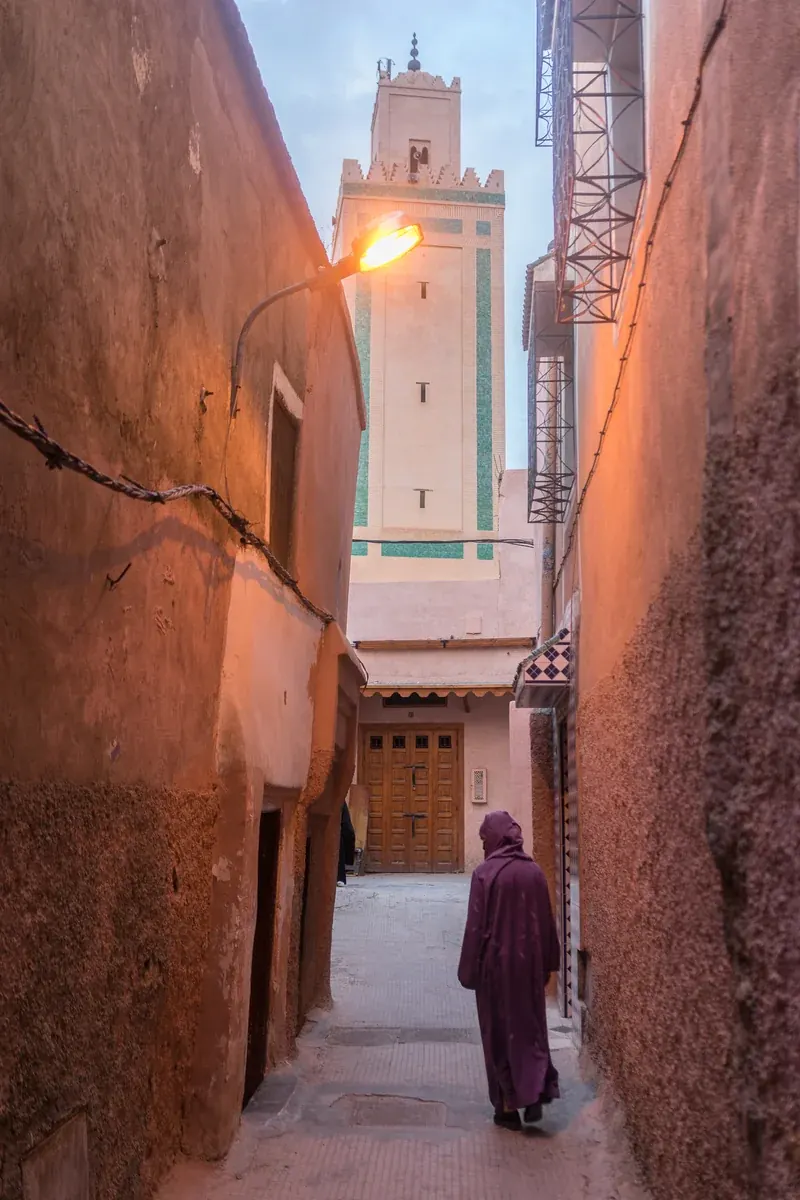
Medina sightseeing involves uneven paving, steps and long stretches on foot. Pick shoes with a secure fit and a sole that feels stable on stone; avoid relying on brand-new sandals or thin flip-flops as your only walking footwear. Light trousers, a relaxed shirt and a thin layer work well for a day that moves between sunny lanes and shaded interiors. A skirt or dress is fine if it allows you to step easily and sit comfortably.
In larger cities, tourists will see a broad range of clothes. In a small town or village, choose a slightly more covered version of the same outfit—such as swapping a short top for a loose shirt or adding a light layer. This is a practical way to adapt without assuming that all residents share identical expectations. The goal is to feel at ease and show consideration, not to imitate local dress. 1
Coast, beach and pool
A swimsuit is suitable for swimming and sunbathing at a beach or hotel pool. Keep a loose cover-up, shirt dress or sarong in your day bag so you can put it on when leaving the sand or pool area. A bikini or other swimwear is not a useful all-day outfit for market streets, restaurants or the walk between a town and the beach. At a public beach or a pool outside a resort, take cues from the setting and choose what feels comfortable; norms can be less predictable than at a private pool. 1
For a seaside day, wear a breathable shirt over swimwear, shorts or a skirt that allows easy movement, sandals that can handle sand, and a hat if you use one. Keep a thin extra layer for a breezy waterfront or a late return.
Mountains and desert routes
For a mountain walk, prioritize footwear made for the terrain, socks that do not rub and clothing that can be added or removed. A sunny city can be warm while higher ground feels cooler; the country’s mountain climate is distinct from its coastal and arid zones. 2 Ask your local guide or accommodation about the actual route and conditions, especially if you are planning a strenuous hike. Ordinary city sandals are not a substitute for suitable trail footwear.
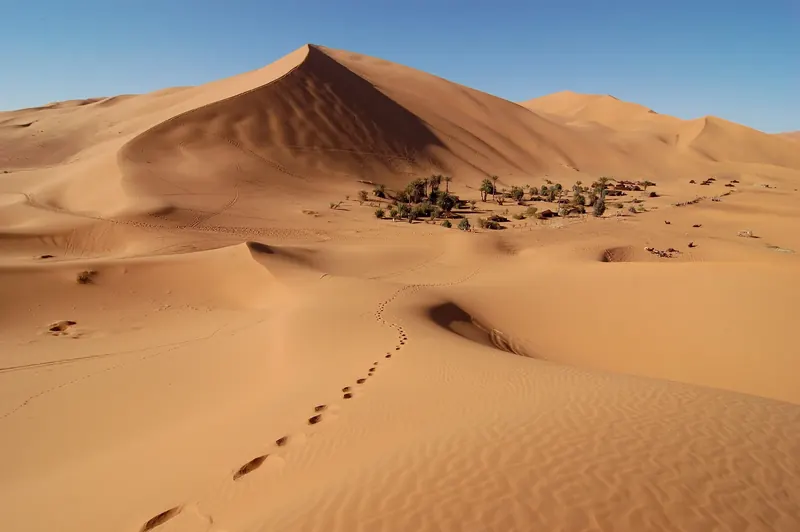
Desert excursions also call for coverage that works in sun, dust and wind. Loose long sleeves and trousers can protect skin from direct sun while remaining comfortable in breathable fabric. Bring a warm layer for after sunset rather than assuming that daytime heat continues through the evening. Conditions vary by season and exact location, so confirm what your trip includes instead of relying on a generic “desert uniform.”
Religious sites and special venues
Do not assume a dress rule at one site applies to every place in Morocco. At Hassan II Mosque in Casablanca, the official visitor rules specify clothing that covers the shoulders, chest and reaches the knees; shorts and short shirts are forbidden. Visitors also need to remove their shoes before entering. Check the foundation’s current visitor information before going, since venue rules and tour arrangements can change. 3
For other religious or historic places, look for an official visitor page or ask the venue or guide before arrival. A scarf may be useful to carry, but do not assume that every mosque admits non-Muslim visitors or that a scarf alone satisfies a site’s requirements. Dress guidance for a specific place is more reliable than a blanket rule repeated online.
What to pack: a small, flexible clothing list
Rather than packing an outfit for every hypothetical occasion, choose pieces that work together and can be layered. For a city-focused trip, consider: a few breathable tops, two or three bottoms such as trousers or a longer skirt, one comfortable dress if you wear dresses, a light overshirt or cardigan, supportive walking shoes, and a compact rain or wind layer if the forecast and route call for it. Add swimwear and a cover-up only if you plan to swim.
For a multi-region itinerary, add a warmer mid-layer and appropriate walking or hiking footwear. If you will attend an upscale restaurant or planned event, check its own dress expectations; there is no benefit in carrying formal clothes for every trip. Laundry access can also let you pack fewer items, but confirm it with your accommodation rather than assuming it is available.
You do not need to buy traditional clothing in advance. If you would enjoy wearing a locally made item, you can decide after seeing what is available and how it feels. Avoid treating Moroccan clothing as a costume or assuming one garment represents everyone.
Common clothing mistakes to avoid
Packing only tank tops, very short shorts and beachwear leaves few comfortable options for ordinary sightseeing or a cooler evening. The reverse mistake is overpacking heavy clothes for a hot inland day when a light layer would do. Use a forecast for the route and pack one or two adaptable layers instead of guessing by country alone.
Do not wear pool clothes through town simply because the hotel is nearby; carry a cover-up. Do not count on flimsy footwear for a full day on uneven streets. And do not assume that a general travel blog overrides a place’s published visitor rules. For the mosque example, the official foundation’s requirements are clear and site-specific. 3
Clothing is a matter of comfort and courtesy, not a guarantee of how others will behave. The U.S. Department of State notes that women travelers may experience verbal harassment, unwanted attention or inappropriate touching in Morocco, particularly in crowded areas. That warning should not be turned into blame or a claim that changing an outfit prevents harassment. 4
For broader trip-planning support, see Maroc Mobility’s Personal Travel Assistant service; clothing choices remain yours, and providers for separate travel products confirm and charge independently.