The short version: tip by situation, not by rule
Tipping in Morocco is common in many parts of hospitality and tourism, but travelers should not treat it as a mandatory percentage everywhere. Customs differ by establishment, service and individual. A small amount or rounding up can be enough for a routine interaction; more may make sense when someone has provided attentive, substantial help. A Morocco-focused guide describes a broad range of local practices and stresses that gratuities are optional, while another travel guide uses about 10% as a restaurant rule of thumb.1 2
Think of the amounts below as practical orientation, not an official tariff. They are examples drawn from travel guidance, not guarantees of what every worker expects. If service was poor, a tip is not obligatory. If you are uncertain, ask discreetly whether a service charge is already on the bill or what a tour price includes.
Restaurant and café tips
At a casual café or small local restaurant, rounding up the bill or leaving a few dirhams is a simple approach. Taste of Maroc suggests 5–10% of the bill, or roughly 5–10 MAD per person, as one possible range for smaller eateries. For mid-range or upscale restaurants, it gives 10–15% as a reference and recommends checking whether a tip has already been included.1 Wise similarly describes around 10% as a general restaurant guide, while acknowledging that circumstances differ.2
For example, if lunch costs 180 MAD and the service was good, adding about 18 MAD is a straightforward 10% calculation. If you shared a small tea or coffee at a neighborhood café, you might instead round a bill of 27 MAD to 30 MAD. These are choices, not required sums. You do not need to mimic U.S. tipping conventions automatically or calculate a large percentage for every counter purchase.
Look at the printed bill before paying. If a service charge is listed, you can decide whether to add anything further based on the service and your own preference. If the bill is unclear, ask, “Is service included?” A Morocco travel operator’s guide likewise says service charges may already appear on restaurant bills and advises checking before deciding whether to tip; these published ranges remain suggestions rather than official rates.4 A tip in cash can be handed to the server when paying; avoid leaving it where it could be mistaken for unpaid change. Small dirham coins and notes make these gestures easier.
At a street-food stall, juice stand or counter, tipping is especially situational. A small coin may be welcomed when someone has given extra help, but it is not necessary to tip for each routine purchase. Do not let an unsolicited demand turn an optional gesture into an obligation.
Taxis, transfers and drivers
For a short city taxi ride, rounding the fare up to a convenient amount is an easy option. For a longer ride or when the driver has helped with luggage, a little more may be appropriate. Published Morocco travel guidance suggests rounding a petit-taxi fare to a nearby 5- or 10-dirham amount; it also notes that tipping depends on the service.1 2
Keep the fare and the tip separate in your mind. First confirm the fare arrangement for the ride; then decide whether you want to leave a gratuity. A tip does not replace agreeing on a fare or confirming how the meter is being used. If you pay with a large note and the driver cannot make change, say clearly how much you want returned and how much is the tip.
Airport transfers and private drivers involve more time and luggage than a short city ride, so a larger party-level tip can be reasonable when service has been good. For an organized multi-day itinerary, clarify whether the person driving is also your guide and whether any gratuity is already included. A Morocco-focused tipping guide offers examples around 100 MAD per day per party for a multi-day tour driver and higher examples for full-day service, but those figures are suggestions rather than fixed rates.1 Consider the length of the day, the number of travelers and the quality of help.
For a shared coach, a small amount per traveler may be more practical than one large tip, if you choose to tip at all. Avoid paying the same person twice because a group collection and an individual tip were both suggested.
Guides and organized tours
A knowledgeable licensed city guide can shape an entire visit, and a gratuity is a common way to say thanks for service you valued. Tour guidance varies widely: a short walking tour, a private full-day outing and a multi-day circuit are not comparable. Decide on an amount in relation to duration and party size, rather than applying a single percentage blindly.
Before a tour begins, check the booking details: Is the guide’s fee included? Is the driver a separate person? Are meals, entrance tickets or other expenses included? The answers help you avoid confusing a tip with a charge owed for the service. You can also ask the operator how gratuities are normally handled, without committing to tip.
If you are pleased with a guide, you can hand over a cash tip at the end and thank them directly. For a multi-day experience, waiting until the service is complete lets you assess the whole experience and avoids repeated awkward calculations. You are not expected to provide a tip in advance to secure normal service. If a person offers unsolicited help and then demands payment, you can calmly decline if you did not agree to the service.
Hotels, riads and small acts of help
At a hotel or riad, small tips can recognize specific assistance: carrying bags, bringing room service or attentive housekeeping. One Morocco-focused guide suggests about 10–20 MAD for a porter and 10–20 MAD per day for housekeeping; amounts vary by property and service, and are not universal.1 Another guide lists smaller sample amounts, illustrating how recommendations differ.2
For housekeeping, leaving a modest amount each day can be clearer than one tip at checkout if staff rotate. Put it somewhere visibly intended for the housekeeper, such as with a brief thank-you note, rather than leaving loose money on a table where it may be mistaken for your own change. For a porter, give the tip directly after the bags arrive. A concierge tip makes sense when someone has gone beyond routine directions to arrange a useful service, not simply for every standard interaction.
If you are unsure whether a property pools tips or shares them among staff, ask reception. This matters especially at smaller riads, where staff may cover several roles. Do not assume that a tip added to a card payment will reach the person who helped you.
Currency, manners and avoiding pressure
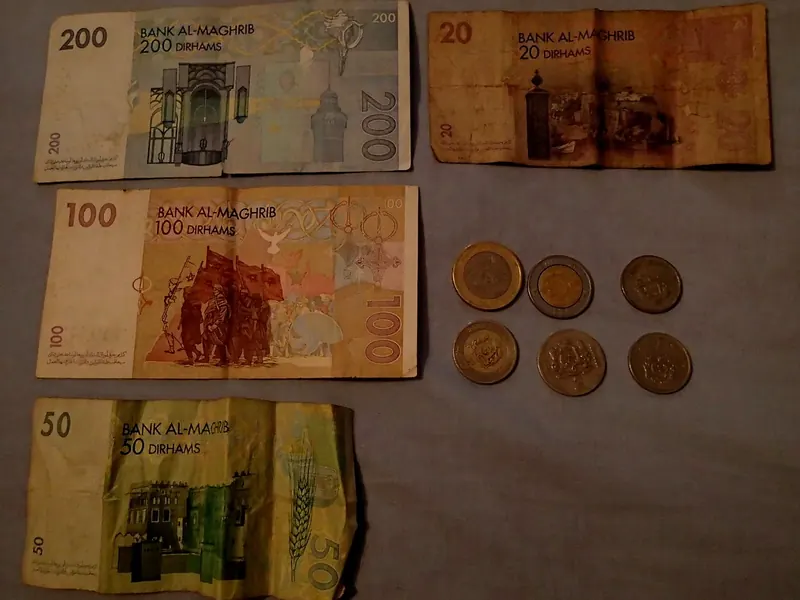
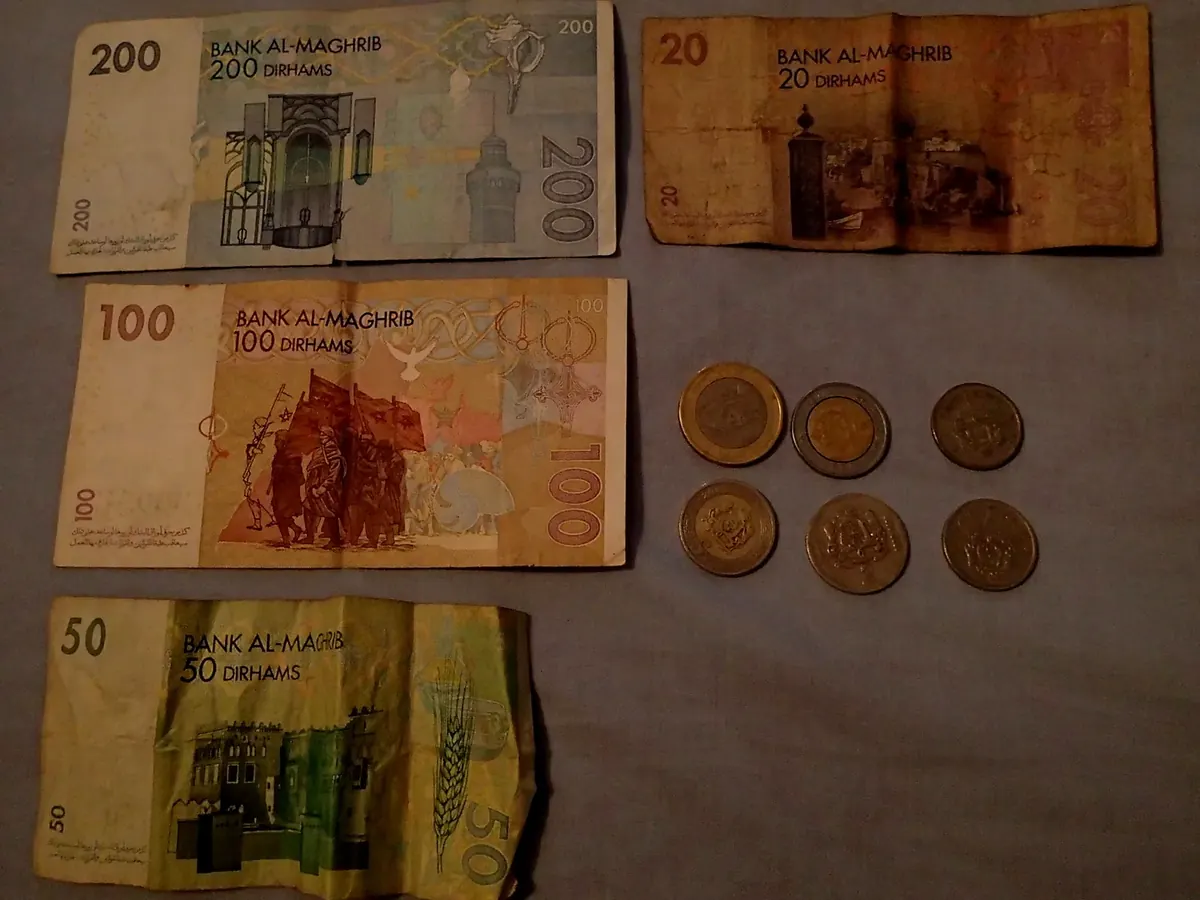
Use Moroccan dirhams (MAD) for small gratuities. Morocco’s central bank is the authority responsible for issuing the country’s banknotes and coins, making dirhams the practical local currency for these small cash gestures.3 Cash is useful because a few coins or a small note can be handed directly to the person; check the amount before passing over a note, particularly when denominations look unfamiliar. Wise also recommends tipping in the local currency.2 Avoid using U.S. coins, which are not practical local change. Foreign banknotes can be difficult for a worker to exchange and are not a substitute for local cash.
A simple “shukran” (thank you) with a smile is welcome whether or not you add money. Hand a tip discreetly rather than making a performance of it. If you do not wish to tip, a polite thank-you is enough. You can decline a tip request you did not agree to, and you do not have to pay for unsolicited assistance. When you do accept a service, settle any agreed fee separately from any optional gratuity.
If traveling with children or a group, set aside a small shared envelope of low-value dirham notes and coins. That avoids scrambling for change, while a quick note on your phone can prevent duplicate tips across multiple travelers. There is no need to turn every encounter into a calculation.
A practical way to decide
Use four questions: Was a service actually provided? Was the price or fare already agreed? Is a service charge included? Would a modest amount feel appropriate for the time and care involved? If the answers point toward a tip, give a reasonable amount in dirhams and move on. For more detailed help planning the logistics around a Morocco trip, see Maroc Mobility’s travel-assistance service; tipping remains your own choice and is separate from providers’ charges.