What makes Fez worth exploring?
Fez is a city to experience at walking pace. Its old medina, Fez el-Bali, is not a museum district preserved away from daily life: homes, workshops, shops, food stalls and historic monuments share the same dense urban fabric. UNESCO describes the medina as founded in the ninth century, with many principal monuments and much of its urban fabric dating to the Marinid era of the 13th and 14th centuries. It remains a place where traditional skills and culture are actively renewed. 2
That mix is the point. A good visit balances a few architectural landmarks with time to watch artisans at work, pause for tea or lunch, and take in the changing sound and smells of the lanes. Morocco's national tourism office highlights the medina, leather tanneries, Nejjarine Museum and Marinid Tombs among the city's visitor draws. 1
Explore Fez el-Bali without rushing
Bab Boujloud, often called the Blue Gate, is a convenient, recognizable starting point for a first walk into the old city. 1 From there, follow a planned route to two or three places you especially want to see, but treat the map as a guide rather than a promise that every turn will be obvious. The medina's tightly packed alleys can feel confusing, and pedestrian lanes also carry local deliveries. Keep aware of people and animals moving through, step aside when needed, and avoid stopping in the middle of a narrow passage. 4
For a first visit, a local licensed guide can help explain the layout and history, particularly if you have limited time. Confirm the length, language, meeting point, included sites and total cost in advance. If you explore independently, save your accommodation location and a few main gates offline, keep your phone secure, and ask a shopkeeper or café for directions to a known landmark rather than following unsolicited offers to be led somewhere. These are practical navigation choices, not a claim that every visitor needs a guide.
Look for the small details as well as headline sights: a carved doorway, a fountain, a glimpse into a courtyard, the transition from a busy market lane to a quieter residential street. Be respectful around homes and places of worship. Do not photograph people at close range without permission, and remember that many religious interiors are not visitor-accessible to non-Muslims. Check locally before making a specific site the centerpiece of your day.
Visit a madrasa and the Nejjarine Museum
Historic madrasas offer a close look at the decorative traditions that make Fez distinctive. Bou Inania Madrasa is noted for carved cedar, stucco and tilework; the Moroccan tourism board brochure describes its courtyard ornament in zellij, carved plaster and wood. 3 The experience is as much about looking carefully at material and pattern as it is about a quick photograph. Dress respectfully, speak quietly and check current opening arrangements before you go, since access can change.
The Nejjarine Museum of Wooden Arts and Crafts occupies a restored historic fondouk, a former inn and trading building. It is a useful complement to the medina itself: displays help put woodworking and related crafts into context, while the building provides a sense of how commerce and lodging once fitted into the old city. The tourism board lists it among Fez's popular sights. 1 Check the museum's current hours and admission details through its official channels or locally before planning around a visit.
See the Chouara tanneries thoughtfully
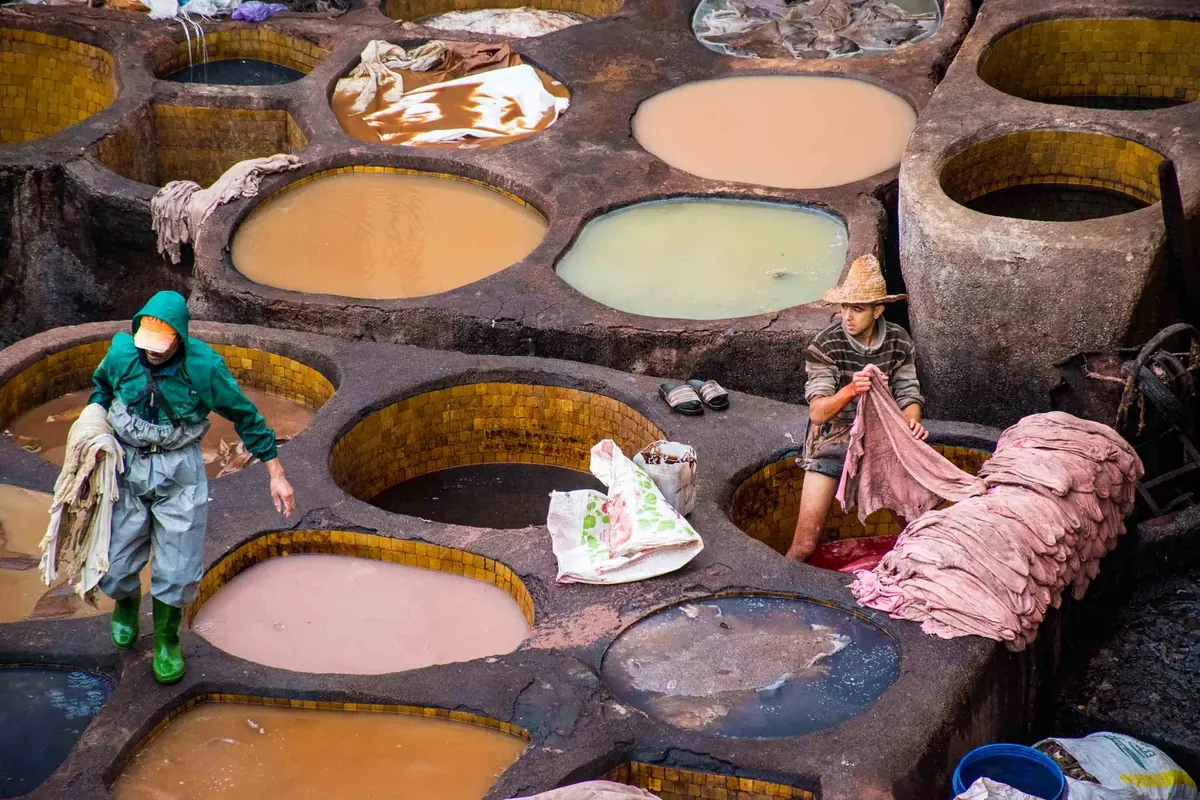
The Chouara tanneries are among Fez's most recognizable sights. The dyeing and leather-working vats are part of a functioning craft landscape, not simply an attraction designed for visitors. A common visitor vantage point is an upper terrace reached through surrounding shops. From above, you can see the work area and its dense arrangement of vats; views depend on which terrace is open and where you stand. Audley Travel describes visitors being taken to viewing platforms above the working yard. 4
Expect a strong smell, especially in warm conditions, and do not assume that a sprig of mint will make it disappear. If a shopkeeper offers a terrace visit, ask clearly whether there is an entry charge, whether browsing or buying is expected, and whether you may leave freely. You are not obliged to purchase leather goods. If you are interested in shopping, compare workmanship and price across more than one seller, ask what kind of leather a product uses, and agree on the final price before a purchase.
The tannery is a workplace. Observe from the designated vantage point and do not attempt to enter the vats or approach workers for photographs. If odors bother you, skip the visit; the medina offers plenty beyond the tannery. The tourism office recognizes the tanneries as a key Fez attraction, while UNESCO's broader account places local skills within the living heritage of the medina. 1 2
Follow the craft lanes and browse with intention
Fez's souks are not one uniform market. Different lanes and districts are associated with particular trades, so browsing can feel like watching a city-sized workshop. The tourism board describes carpentry around Nejjarine, metalwork around Seffarine, pottery, embroidery and leather trades as part of the city's craft tradition. 3 Audley also details ceramics and zellij tilework, copper and bronze wares, textiles and leather goods. 4
Take time to watch the process where it is appropriate, but remember that workshops are businesses and homes may be close by. Ask before taking photos, avoid blocking workspaces, and do not touch tools or unfinished pieces. If you want to buy something, decide your approximate budget before entering a shop. For fragile or bulky purchases, ask about packaging and shipping arrangements in writing, including who handles customs or delivery; never assume a shop's verbal estimate guarantees a result.
Not every attractive object is handmade locally. If provenance matters to you, ask where and how the item was made, and accept that you may not be able to verify every answer. Shopping can be enjoyable without buying: a slow walk through the metalworkers' lane or a ceramics display is an experience in itself.
Add a viewpoint, garden or food stop
For a wider perspective, head to the Marinid Tombs area above the medina. The hillside viewpoint is a popular place to understand the scale and dense roofscape of Fez el-Bali; the Moroccan tourism brochure specifically notes the panoramic outlook from the tombs area. 3 It is particularly rewarding near the end of the day, when you can look back over the route you have walked. Confirm transport back to your lodging if you visit later, and do not rely on an exact sunset time or a particular service being available.
If you need a quieter break, Jnan Sbil is a garden option near the old city, listed by the national tourism office among Fez essentials. 1 For food, make a deliberate pause rather than eating only when exhausted. Choose a place whose menu and prices you can understand, ask about ingredients if you have dietary restrictions, and confirm whether a listed price includes service or extras before ordering. Fassi cuisine is one of Fez's pleasures, but no particular dish or restaurant is essential for every traveler.
How to plan a satisfying day
With one full day, begin in the morning around Bab Boujloud, visit one madrasa or museum, and make a relaxed circuit through craft lanes before seeing the tannery from a terrace if it interests you. Stop for lunch, then choose between more medina wandering and the hilltop viewpoint. With two days, split the sights: use one day for Fez el-Bali's lanes and crafts, and another for a slower museum visit, Fez el-Jedid or the Mellah area, a garden and a longer meal. This is a suggested rhythm, not an official itinerary; opening days, access and conditions vary.
Wear comfortable shoes with grip, bring water, and carry some small local cash for modest purchases or refreshments. The historic lanes have uneven surfaces and steps, so visitors with mobility limitations should check routes and site access in advance; a route that looks short on a map may involve stairs, crowds or difficult paving. Families may find a shorter route with regular breaks easier than a full-day checklist. For current visitor logistics and destination updates, consult the Moroccan tourism office's Fez guide.