Start with the blue medina, not a checklist
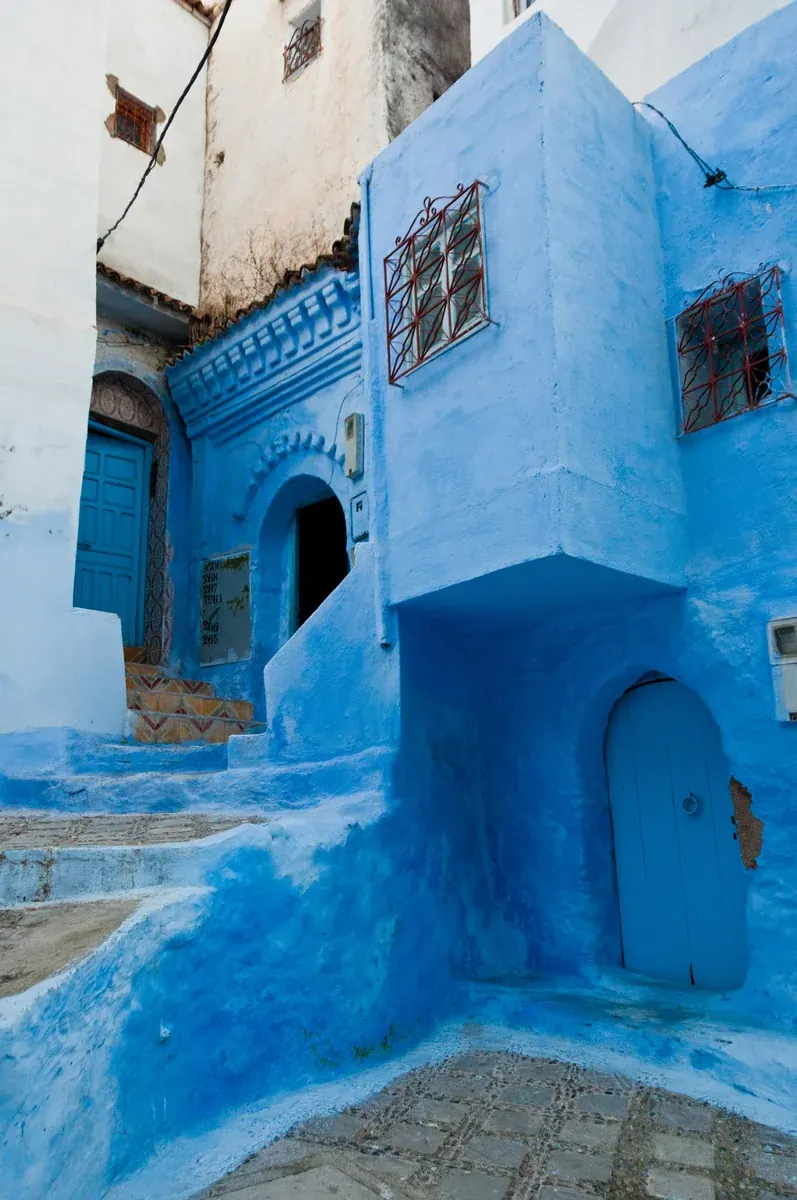
Chefchaouen’s central attraction is the old medina: a compact but hilly web of blue-washed lanes, steps, doorways and courtyards beneath the Rif Mountains. The National Tourist Office describes its narrow winding alleys as a place to encounter local life, food and heritage, with the Kasbah at its center. 1 2
Leave room to wander without a rigid map. Pick a landmark such as Place Uta el-Hammam, then follow lanes that catch your eye and use the square or a saved map to reorient. Look for local woven goods, pottery and everyday shops as well as the familiar blue stairways. Shop respectfully: ask before photographing a craftsperson or resident, and do not block a doorway or treat a private home as a set.
The lanes are not a smooth promenade. Steps, slopes and uneven paving make comfortable shoes useful, and the medina may be difficult for visitors with limited mobility or strollers. Take breaks at a café or in the square rather than forcing a fast circuit. If mobility is a concern, ask your lodging about the steepness and access of the exact route from its entrance; “in the medina” does not mean step-free.
Pause at Place Uta el-Hammam and the Kasbah
Place Uta el-Hammam is the natural pause point in the old town. Its cobbled square is lined with cafés and restaurants, and the Kasbah sits beside it. The adjacent Grand Mosque is a landmark to appreciate from outside; do not assume a non-Muslim visitor can enter. 2 3
The Kasbah’s garden offers a quieter counterpoint to the busy lanes, while its museum presents local history and objects. The tourist office identifies the garden and collections of old weapons, photographs and textiles. 1 Check locally whether the museum and garden are open on your chosen day and confirm any admission arrangements; published hours and fees can change. Even if you skip the museum, the central location makes the Kasbah an easy anchor for a first walk.
For lunch or tea, the square is convenient, but it is not the only option. Walk one or two lanes away and compare menus, seating and shade. If you have dietary needs, state them clearly and ask how a dish is prepared; do not rely on a menu label alone for allergy safety.
Walk to Ras El Maa
Ras El Maa lies just beyond the medina, near one of its gates. The small watercourse and falls make a pleasant change of scene after the crowded center, and it is close enough to combine with a morning or afternoon town walk. 2 3 Think of it as a local waterside stop, not a remote wilderness excursion: enjoy the setting without assuming that water is suitable for drinking or swimming.
A simple half-day plan is to wander the medina in the morning, take a break around the square, visit the Kasbah if open, then continue toward Ras El Maa. Reverse the order if you prefer to walk before the lanes get busier. Build in time to return at an easy pace; this is a better fit for a short visit than adding Akchour on the same day.
Choose a viewpoint—or devote a day to Akchour
For a broader view of the blue town and surrounding hills, many visitors walk toward the Spanish Mosque area above the medina. It is a viewpoint-focused outing, not a reason to enter a religious building; check locally for the appropriate path and conditions. If you plan to go around sunset, leave enough time for the uphill walk and return before it is fully dark. The U.S. State Department advises travelers to stay alert and avoid poorly lit streets after dark; review its current Morocco advisory before travel because guidance can change. 4
Akchour is different in scale. It lies outside Chefchaouen in the Rif landscape and is known for waterfalls and mountain walking; the National Tourist Office describes a forest approach that involves hours on foot. 1 5 Some visitors also aim for the rock arch often called God’s Bridge, but routes and walking time vary. Decide whether you want a shorter out-and-back or a longer hike, and turn around when your time, footing or energy says so.
Plan Akchour as a separate day, especially if traveling with children, anyone who tires easily, or a group with mixed fitness. Confirm current transport to and from the trail area before leaving Chefchaouen, including where to meet the return ride and what happens if you finish later than expected. Carry water, sun protection, a charged phone and shoes suitable for uneven walking; bring a light layer if weather or season calls for it. Ask locally about recent trail, weather and water conditions. Do not treat old online fares or timings as current, and do not assume a ride will be waiting at your preferred return time. A guide is a personal choice; if hiring one, agree on route, duration and total cost before setting off.
Fit the sights to your time
- A few hours: Explore the medina, stop at Place Uta el-Hammam, and take a short outward walk toward Ras El Maa if time and mobility allow.
- One full day: Add the Kasbah and a relaxed meal, then choose either a viewpoint walk or more time for shops and photography.
- Two days or more: Keep one day for the medina and town viewpoints; reserve another for Akchour if trail conditions, transport and fitness suit your party.
An overnight stay changes the rhythm. Early and later walks let you enjoy the lanes in different light and avoid turning a long intercity transfer into a rushed visit. For itinerary context, see our Morocco itinerary for first-time visitors. If you want help coordinating logistics, Maroc Mobility’s Personal Travel Assistant is a separate support service; local activity providers set their own arrangements and charges.
Practical details that make the visit better
Wear shoes with grip for cobbles and steps, and keep hands free where possible. Carry small cash for incidental purchases, but keep valuables secure in busy spots. Be considerate when taking photographs: colorful walls are part of lived neighborhoods, and a person in a frame deserves the same courtesy as anywhere else. For families, set a simple regrouping point such as the main square, and keep children close on steep stairs.
The medina’s terrain can be tiring in heat or rain. Plan a slower pace, check the day’s weather, and avoid committing to a mountain walk late in the day. The U.S. advisory also recommends awareness in tourist areas and remote places. 4 This is practical preparation, not a prediction of a specific incident or a guarantee of safety.