The best things to do in Casablanca
Casablanca rewards visitors who look beyond its reputation as a business hub. Morocco’s tourism office presents it as a busy Atlantic city where modern infrastructure sits beside Arab-Muslim heritage and colonial-era architecture. Its own short list includes Hassan II Mosque, the Old Medina, Habous, Ain Diab and Morocco Mall.1 For most first-timers, the strongest day combines the mosque, old center and one neighborhood or seaside stop rather than attempting every item.
Visit Hassan II Mosque
The oceanfront Hassan II Mosque is the city’s defining landmark and the most compelling reason to build a Casablanca visit around a fixed time. The Foundation’s official paid-visit page describes a guided route through the prayer hall, minaret hall and ablution hall, with close attention to traditional materials and craft.2 Non-worship visits are organized tours, not casual drop-ins; consult the Foundation’s current schedule because tour times vary by season, weekday and Ramadan.
Dress with shoulders, torso and knees covered. The Foundation says visitors remove shoes before entering and carry them in a supplied bag; drinks and cigarettes are prohibited during the tour.2 Allow time to arrive, join the group and appreciate the exterior waterfront setting. If travelling with children or anyone who finds standing or walking difficult, verify the route and access arrangements directly with the Foundation before committing. Photography restrictions can apply inside; follow the guide’s instructions.
Explore the Old Medina and Sqala
Casablanca’s Old Medina is smaller and newer than the famous medinas of Fez or Marrakech, so approach it as a lived-in historic quarter rather than expecting a vast maze of monumental monuments. The national tourism office says the present medina was rebuilt after the 1755 earthquake and notes its blend of Arabic-Islamic and European influences.3 Wander slowly, browse local shops and pause for a drink or meal without turning every encounter into a transaction. Ask before photographing people or private interiors.
Near the port, look for the Sqala, an eighteenth-century fortified complex now associated with a café-restaurant, according to the same tourism source.3 It makes a useful short extension to the medina, but confirm opening and dining availability independently if it is central to your plans. This area works well for visitors interested in city history and everyday street life, not just landmark checklists.
Walk downtown for Art Deco and civic squares
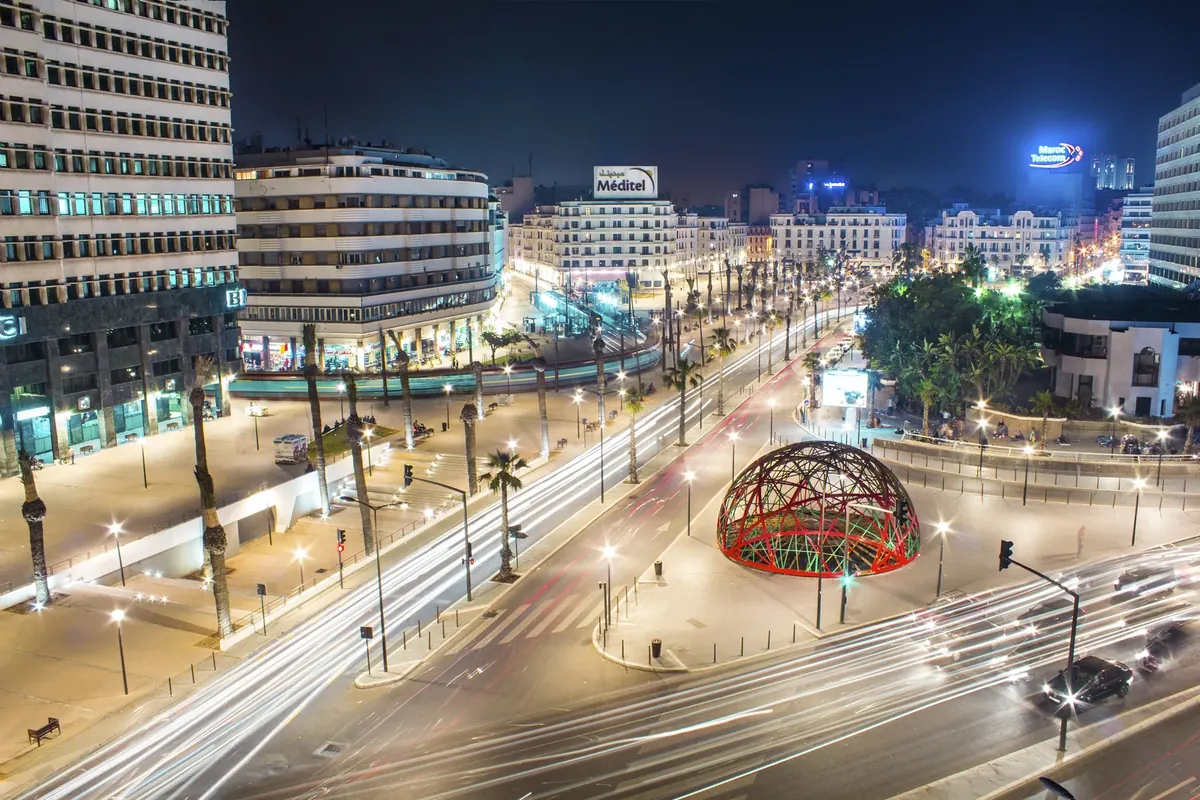
The central city provides a striking contrast to the traditional quarters: broad avenues, substantial early-20th-century buildings and public squares. The tourism office specifically recommends exploring central Art Deco buildings and identifies United Nations Square among the city’s essentials.1 Use the walk to notice façades, arcades and changing street scale rather than treating downtown as a single museum with one entrance.
United Nations Square is also a practical orientation point. The photo used with this guide depicts the crossing of Boulevard Hassan I and Avenue des FAR as viewed from the square, in an image dated 2013; it is an archival view, not a claim about current traffic or streetscape.4 Bring a map and allow for traffic crossings. Architectural walks are best enjoyed in daylight and at an unhurried pace.
Browse Habous, the New Medina
Habous, often called the New Medina, is a worthwhile change of scene after downtown. The official tourism list places it among Casablanca’s most popular attractions.1 Visitors generally come for its arcades, shops and traditional-looking urban design; treat shopping as optional and compare prices or ask clearly before buying. The Mahkama du Pacha is often mentioned as an architectural highlight in this district, but access may be restricted because it functions as an official building. Do not make entry a fixed itinerary assumption: ask locally or confirm through a dependable current channel before detouring.
Take the Atlantic air at Ain Diab
Ain Diab and the Corniche are the city’s seaside leisure zone. The tourism office includes the Corniche among its top attractions and describes the coastline as offering beaches and recreation.1 A promenade visit is an easy late-day option after indoor sightseeing, with cafés and views toward the Atlantic. Beach facilities, swimming conditions and activity availability can change; check locally, and do not assume that a scenic shoreline means safe swimming or that a particular business is open.
Add a gallery, garden or mall only if it suits your trip
If you have extra time, select an activity that matches your interests. Morocco’s tourism office names ISESCO Park as an essential and Morocco Mall as one of the popular Casablanca stops.1 The mall is a substantial out-of-center detour, most useful for shopping, family entertainment or a weather-proof break rather than heritage sightseeing. A park offers a quieter pause if open and convenient. Check current opening information before travelling to either.
For a culture-focused second day, look for a current exhibition at a city gallery or museum rather than assuming a permanent display or fixed hours. Casablanca’s attraction mix is broad, but many visitors find the city most distinctive outdoors—in its changing architecture, neighborhoods and waterfront.
A practical one-day Casablanca itinerary
Start with a pre-booked or confirmed morning guided visit at Hassan II Mosque, using the Foundation’s current visitor information to select a suitable tour.2 Continue toward the port and Old Medina; add the Sqala area if it fits your pace. Have lunch nearby, then walk or take local transport into the central district for Art Deco façades and United Nations Square.
Choose Habous if you prefer shops and neighborhood architecture, or head to Ain Diab for an oceanfront finish. If the mosque tour timing or your arrival makes this sequence awkward, reverse it or omit one district. Distances and traffic make an overpacked route less enjoyable than it looks on a map.
For two days, slow the first day down and devote the second to a longer neighborhood visit, a current exhibition, a park or a relaxed Corniche afternoon. Morocco Mall is best treated as its own optional excursion, not an automatic addition to a compact central-city route.
Getting around and planning well
Casablanca is a large city. Use the official Casa Tramway and CasaBusway network map to plan between districts and verify routes before setting out; the operator provides the network map and route-planning tools online.5 For short central stretches, walking reveals architectural details, but heat, traffic and uneven pavement can make door-to-door trips slower than expected. For journeys that do not line up with public transport, use a clearly agreed taxi ride or another reputable local transport option, confirming the destination and fare arrangement before departure.
Keep mosque tour timing as the anchor and leave buffer for traffic. Carry water for outdoor walks, dress respectfully near religious sites, and bring a light layer for the coast, where wind can make an evening feel cooler. If you have mobility needs, contact attractions and transport providers about step-free access and walking distance rather than assuming facilities. Families with strollers may find some sidewalks and historic lanes inconvenient. Travelers with dietary needs should communicate them clearly at restaurants and confirm ingredients, since menus and options vary by venue.
If you need help coordinating local logistics, Maroc Mobility’s Personal Travel Assistant is a separate assistance service; attractions, transport providers and restaurants confirm and charge for their own services independently.