Is Tafraoute worth the detour?
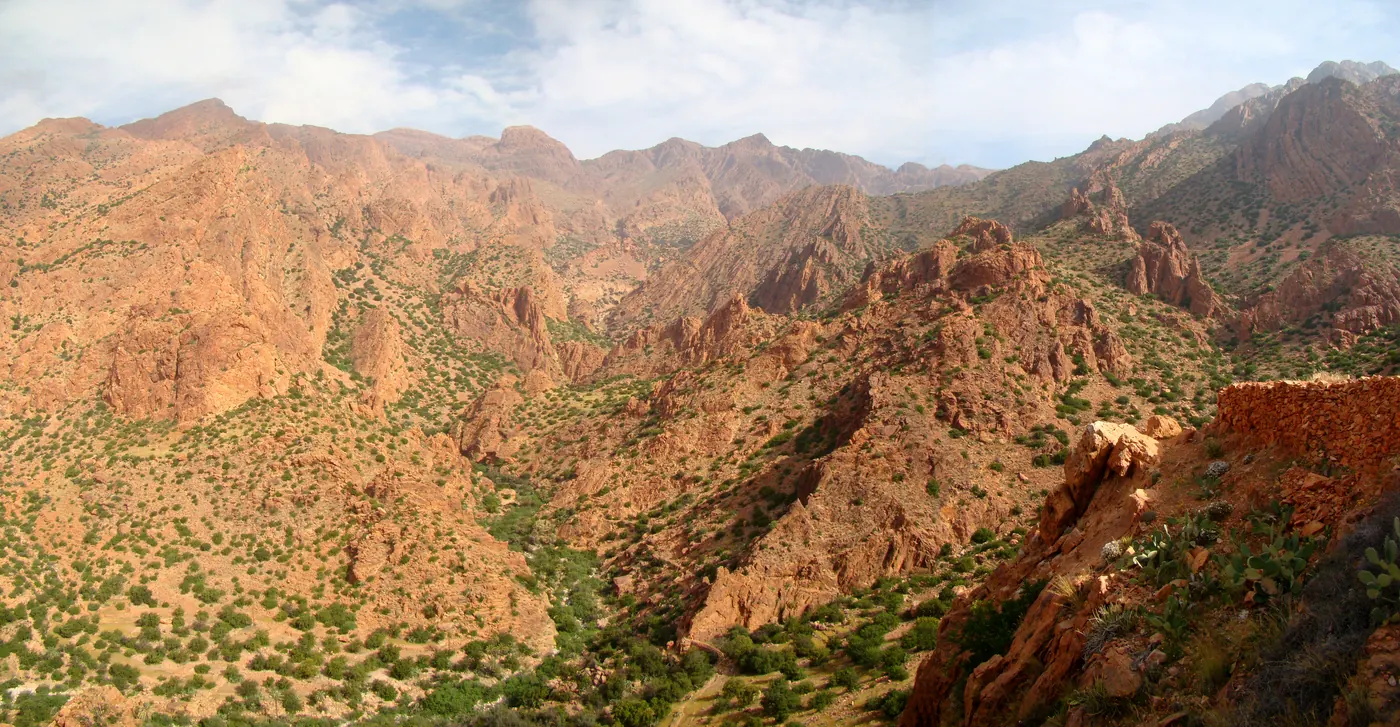
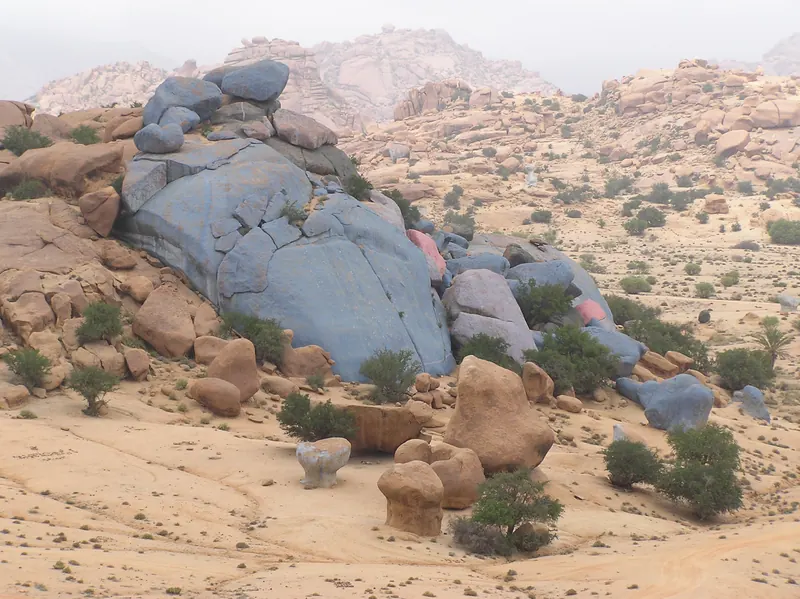
Tafraoute earns a place on a Morocco itinerary when the point is the Anti-Atlas landscape itself: pink-granite boulders, dry valley scenery and a small-town pause between bigger stops. It is a weaker fit for a traveler who needs a dense, walkable roster of staffed sights or has only a tightly timed transfer day. Morocco’s national tourism office specifically identifies Tafraoute’s painted rocks in the Almenn Valley as part of the destination’s outdoor landscape. 1
The useful decision is not simply whether to see the painted rocks. It is whether you can arrive with enough daylight, have a reliable way to move beyond the town, and are comfortable treating the landscape as the experience. In practice, give Tafraoute at least one night rather than asking it to carry a same-day detour from a distant city.
| If this is your priority | Tafraoute is a good fit when | Main trade-off |
|---|---|---|
| Anti-Atlas scenery | You want time for roads, boulders and valley views rather than a museum circuit. | The visit depends on transport and weather more than opening times. |
| The painted rocks | You are happy with a short, self-guided outdoor stop within a wider landscape day. | Facilities and the visual condition of an outdoor artwork should not be assumed. |
| A car-light trip | An official, date-specific bus search and your last-mile plan both work. | Local connections can limit the pace and the places you can combine. |
| A low-stress road trip | You can keep daylight for the mountain approach and avoid forcing a long arrival day. | The approach is part of the trip, not a quick urban transfer. |
Shape the visit around your transport
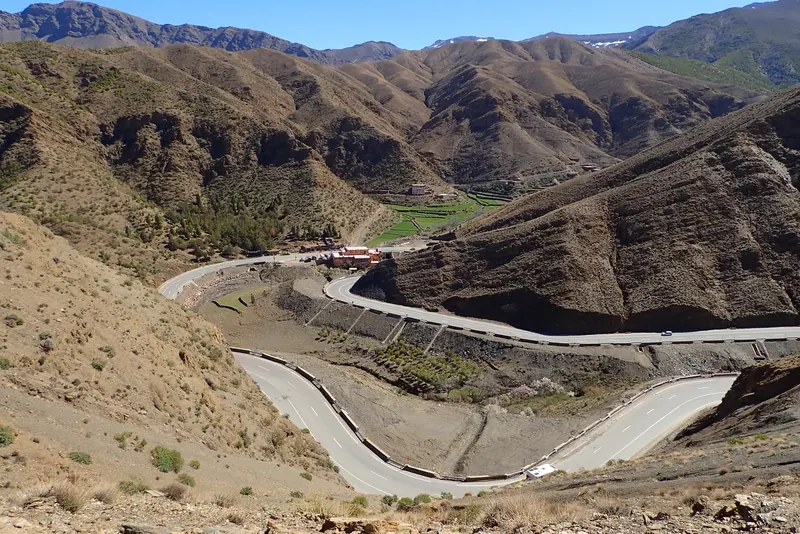
For most visitors, a rental car or a driver arranged directly with a local provider is the clearest way to make Tafraoute useful. It allows you to decide how much landscape time you want and to stop only where it is safe and permitted. Morocco’s official tourism material describes the 110-kilometre Tiznit–Tafraoute road as a winding route over the Kerdous pass; use the distance as orientation, not as a promised drive time. Leave a daylight margin and check the road and weather on the day. 2
Public transport can work, but it should be confirmed before accommodation is made non-refundable. CTM’s official site has a booking engine, so search the exact origin, date and passenger details there instead of copying an old timetable. 3 A locally focused access page still mentions CTM links from Agadir and Marrakech, but that page is copyrighted 2016; it is useful background, not current schedule evidence. 5
If you are self-driving, pair this stop with the site’s practical guidance on driving in Morocco and choosing a rental car. If you will not have a car, settle these questions in order: does the official booking search return a workable journey, where does it end, how will you reach your lodging, and how will you reach the rocks or other valley viewpoints? If any answer is vague, a pre-arranged local transfer is usually the safer planning choice.
The painted rocks: plan a self-sufficient stop
The painted rocks are the signature visual stop, but they should be approached as outdoor land art among boulders rather than as a museum with a reception desk. A recent independent field report describes routes from town by car, foot or bicycle, and says it found no entrance fee or toilets. It also says overnight parking was not allowed when the writers visited. Those are useful planning signals, not an official visitor policy: verify access, parking and any local directions on the day. 4
Bring water, sun protection, food if you will be out for long, footwear that is secure on dusty and uneven ground, and an offline map. Do not assume shade, a café, a toilet, a staffed information point, or a marked route. Do not climb unstable boulders, add paint, or treat the artwork as a play structure.
A walk or cycle can make sense only if you have checked the exact route, daylight and heat. The same field report puts its walking alternatives at roughly 6–7 kilometres and advises carrying supplies because there is nothing at the site; the route, surface and condition can change, so it is not a substitute for a current local check. 4
Choose your time and base
An overnight in town is the right baseline for travelers who want to see the painted rocks without turning the day into a rushed out-and-back. It gives room to arrive, inspect local conditions, visit the rocks in a cooler or softer-light window, and keep an unhurried meal and return. Two nights make more sense if walking, photography or a wider valley drive are central to the trip.
The seasonal trade-off is exposure. A local climbing resource, whose climate page is an older general reference, describes very hot summers and chilly winter evenings in the area. Use that only to guide packing and timing; check a current forecast and local road conditions immediately before the drive. 6 In warmer weather, start early, protect skin and water supply, and leave time to return before the hottest part of the day. In cooler months, take a warm layer for the evening rather than assuming a desert setting stays warm after sunset.
The town is a practical base, not a reason to promise a specific festival, restaurant or tour. Event dates, accommodation terms and local guiding availability are provider-specific and can change. If an event or a particular lodge is essential to your trip, confirm it directly before building your route around it.
Build a two-part Anti-Atlas day
A good Tafraoute day has two contrasting parts. First, give the painted rocks a defined window rather than treating them as the entire destination. Then use the remaining daylight for a slow road or walk through the surrounding boulder-and-valley scenery, with an agreed turnaround point. The official tourism office’s description of the Tiznit approach—pink granite, palms and small hillside houses—is a useful expectation-setter for this wider landscape day. 2
Avoid packing a long road approach, a substantial hike and multiple remote stops into one day. The better trade-off is fewer stops with a reliable return. If the forecast, road information or driver availability changes, keep the day close to town and drop the least essential outing. Travelers building a wider loop should place Tafraoute within a realistic Morocco road-trip plan, rather than treating its mountain roads as motorway mileage.
Access, comfort and family decisions
The painted rocks are not a published accessible attraction, so do not infer step-free access from a map pin or a photograph. Ask a local driver or lodging host where a vehicle can reasonably stop, whether the surface from the drop-off is manageable for your party, and whether there is an alternative view that reduces walking. Anyone with balance, heat-sensitivity or mobility concerns should plan a short, reversible visit rather than a route that requires scrambling among boulders.
Families can use the stop as a short outdoor landscape visit if adults plan water, shade breaks, a toilet plan and close supervision around uneven rocks. There are no reliably published standard age rules or child facilities to rely on. For the same reason, do not assume pram suitability.
This is not a nightlife or alcohol-focused attraction. No formal alcohol, age or dress policy for the landscape visit was located in the sources used here. Wear clothing and footwear suited to sun, wind, dust and walking, and respect homes, farms and local directions when leaving the main road.
Questions to settle before you leave
- Does your date-specific CTM search, transfer or rental plan get you to Tafraoute with useful daylight?
- Has your lodging confirmed its arrival instructions, parking or drop-off point, and payment terms?
- Has a local contact confirmed the day’s road, parking and access situation for the painted rocks?
- Do you have water, sun protection, a layer for later, cash where appropriate, and an offline map?
- If driving, what is the turnaround time that still gets you back before dark?
Get planning support without overpromising the route
For a remote-road stay, Maroc Mobility’s Personal Travel Assistant can help you keep current transport and provider questions organized during purchased dates. Transport operators, lodging providers and local drivers set their own availability, prices and terms, so get any essential answer directly from the provider before committing.
FAQ
Do I need a car to visit Tafraoute?
No, but a car or pre-arranged driver makes it much easier to treat the painted rocks and valley scenery as one flexible visit. Without one, confirm a date-specific bus result and the last-mile plan before booking accommodation.
How long should I allow for Tafraoute?
Allow at least one night if the painted rocks are a priority. Add a second night when you want to walk, photograph, or explore nearby scenery without turning arrival and departure into the whole experience.
Is there an admission charge for the painted rocks?
A recent independent report says it found no entrance fee, but no official operator policy was located. Treat the visit as an outdoor site and recheck locally rather than depending on a static claim. 4
Can families visit the painted rocks?
They can work as a short outdoor stop, provided adults plan for exposure, uneven ground, supplies and supervision. Do not expect staffed facilities, a playground or a published child-access policy.