Start with the kind of surf trip you want
A Morocco surf camp may mean a simple guesthouse with optional lessons, a full-board week with daily coaching, or a lodge that arranges guiding and yoga. The name alone does not tell you what is included. Decide first whether you want to learn, improve with structured coaching, or get rides to different breaks and surf independently. Then compare what each camp actually supplies. Camp directories show that room type, meal plan, lesson length, board hire, guiding and transfers are often separate choices, not one standard package. 4
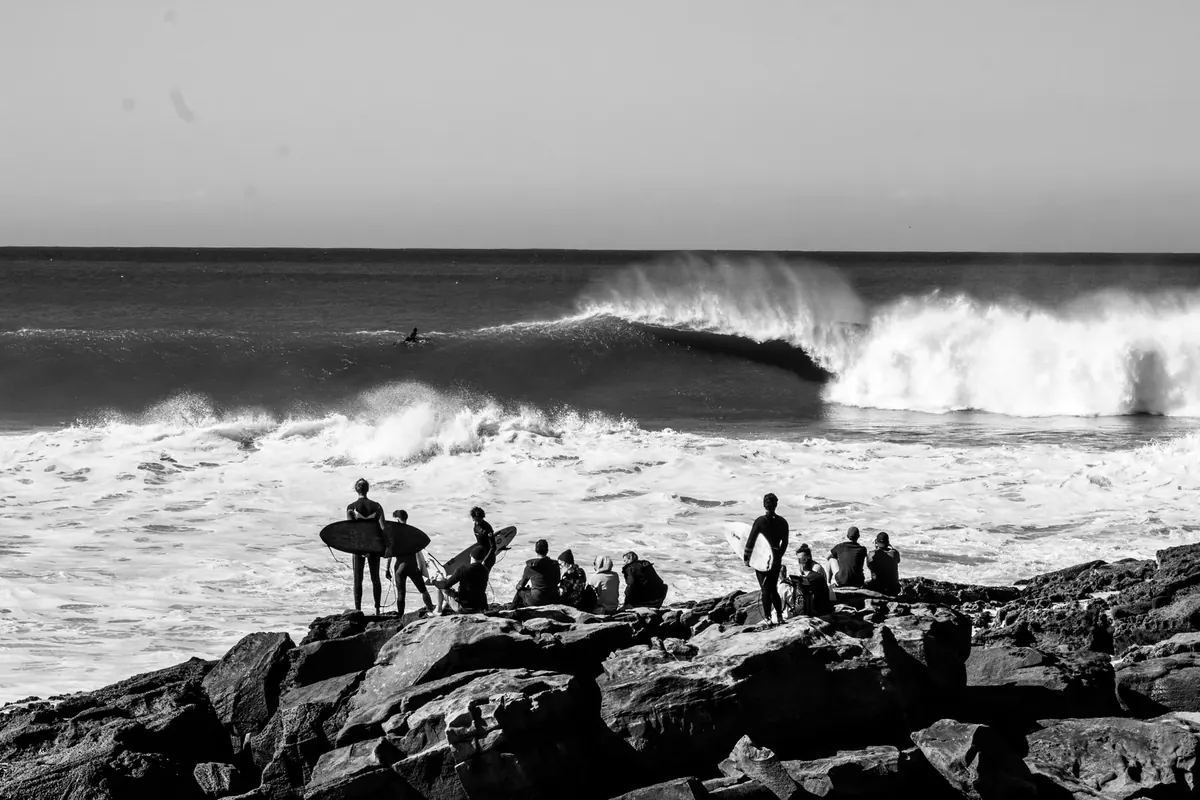
The Agadir–Taghazout coast is a natural starting point for many visitors. Morocco's tourism office describes Taghazout as a major surf destination a short distance from Agadir, with varied waves and famous Anchor Point and Killer Point for more experienced surfers. It contrasts the surfier coast with calmer water in Agadir Bay. 1 That distinction matters: a beachfront resort, an urban Agadir hotel and a surf house in Taghazout may all be called a surf stay, but they create different mornings and transport needs.
Choose a base by daily convenience, not just the map
Taghazout is the obvious choice if you want to stay in the well-known surf village, eat and spend evenings near other surfers, and be positioned for several nearby breaks. But popular names do not mean an empty lineup or that the best wave is walkable from your door. Ask which beach a beginner group usually uses, how long the drive takes, and whether the camp changes its destination with conditions. Condé Nast Traveler has reported crowding at popular breaks such as Imsouane, a reminder that famous-wave access is not the same as guaranteed uncrowded surf. 5
Tamraght is a nearby alternative that may suit travelers who prefer a quieter village lodging setting while keeping access to the broader Agadir coast. Do not assume “near Taghazout” means a short walk to every beach or that the same surf is on your doorstep; ask the property for its normal pickup plan and typical road time to the teaching beach. Camp listings treat Taghazout and Tamraght as distinct bases. 4
Agadir makes sense if you value a larger city setting, easier access to urban services, or a family beach break. It adds road travel to surf sessions farther north. The official tourism site specifically separates calmer Agadir Bay from the more exposed Taghazout surf coast. 1 If your trip combines surfing with a non-surfing companion's plans, that trade-off may be worthwhile.
Imsouane or a more southerly stop can be a better dedicated trip than a quick add-on. Factor in the additional transfer from your arrival airport and decide whether you will stay long enough to enjoy the area rather than spending a large share of the trip in transit. Morocco has surf opportunities beyond Taghazout, but conditions, access and accommodation differ by coast. 2
Match the camp to your actual level
If you are new to surfing, prioritize instruction over the camp's photos of advanced point breaks. Ask whether beginner lessons are taught in a designated group, how many students share an instructor, whether instructors enter the water, and how they choose a beach when swell or wind changes. Ask what happens if a participant is uncomfortable or conditions are unsuitable: a good answer explains alternatives, not pressure to paddle out. The official tourism description recognizes a range of wave types, while the renowned points are associated with experienced surfers. 1
If you have surfed before, ask what “intermediate” means to that camp. Can you paddle out independently, catch unbroken waves, turn both directions, or manage a reef or point lineup? A useful coaching week should explain its assessment, feedback and objectives. Confirm whether video review or technique sessions are included or cost extra.
Experienced surfers may prefer guiding to lessons, but guiding is not the same as coaching, rescue cover or a guarantee of an uncrowded wave. Ask how the guide selects a spot, whether the group is split by ability, what transport and board arrangements are included, and whether you can opt out of a break that feels beyond your comfort. Surf destinations include rocky and sandy bottoms and very different break types; a forecast alone does not determine whether a spot suits you. 2
Pick dates with the swell pattern in mind
Surf-travel sources generally describe September through March as the more consistent period, with stronger winter swell, while spring and autumn are transitional and summer can be less consistent. 2 3 Treat this as a broad seasonal pattern, not a promise for your particular week. Local wind, tide, swell direction and the individual beach change the session. An operator's season guide describes summer as potentially smaller and winter as stronger; it also notes that popular winter breaks can be busy. 3
For a first-timer, a quieter or smaller-wave period may feel less intimidating, but season alone cannot guarantee beginner-friendly surf. Choose a camp that teaches at suitable beach breaks and can move sessions when conditions change. For an advanced surfer chasing powerful points, winter may be attractive, but make sure the camp is not selling a fixed image of a perfect swell. Ask how it handles flat days and whether non-surf activities are actually part of your package.
Compare what the package really includes
Before paying, request a written, itemized description. Check these points against your dates and room choice:
- Lodging: private or shared room, number of beds, bathroom sharing, heating or cooling, stairs, noise, Wi-Fi and whether the room shown is the room type you are booking. A “private room” may still share a bathroom.
- Surf: number and length of lessons, group size, instructor-to-student ratio, coaching versus guiding, equipment included, board availability for your height and ability, wetsuit sizes, and damage or replacement rules.
- Transport: daily beach rides, airport pickup, pickup point, waiting time, luggage or board fees, and whether you pay separately for a taxi when plans change.
- Food: which meals and drinks are included, meal timing around early sessions, vegetarian or vegan choices, allergy handling and whether kitchen access exists. Tell the camp about significant dietary needs before booking and ask for a specific response rather than relying on a generic “we cater for everyone.”
- Costs and cancellation: taxes or local charges, deposit, payment dates, single-room supplement, refund or credit if weather prevents a session, and cancellation terms for your own change of plans. Ask the provider to explain any non-refundable portion in plain language.
Compare the total cost for the same length of stay and the same room category. A low headline rate can become less attractive if meals, boards or daily rides are extra; a higher rate may still be poor value if most of the package is optional. Current listed prices are not a reliable comparison without checking dates and inclusions. Camp platforms display different accommodation, catering and course combinations. 4
Make the stay comfortable for your group
Traveling with children? Ask the camp directly about minimum ages, child-sized equipment, how children are supervised on beach days, family-room layouts and whether lessons separate children from adults by ability. A surf camp is not childcare, and the Atlantic is not a controlled pool. If a non-surfer is joining, check whether there are nearby activities and whether the lodging is pleasant on a day when someone skips the water.
For dietary, mobility or sleep needs, describe the specific requirement before booking: number of stairs, walking distance to pickup, access to a private bathroom, meal ingredients or quiet-room availability. Do not infer accessibility from attractive photos or a broad “family-friendly” label.
Travel respectfully and surf thoughtfully
Taghazout is not merely a surf backdrop. Tourism Watch's account of research and interviews in the region describes how surf tourism can keep visitors in a tourist bubble and flatten local culture into scenery. 6 Choose locally rooted services where possible, eat at local businesses if it suits your needs, learn basic greetings, ask before photographing people and avoid treating Amazigh culture as a performance staged for visitors.
Follow the camp's surf-etiquette briefing and respect the lineup. If sessions are crowded, do not paddle through a pack or assume paying for a lesson gives priority over other surfers. Condé Nast Traveler has documented crowd pressure at sought-after breaks and environmental concerns tied to tourism growth. Carry a reusable bottle, take your rubbish back with you and ask what practical waste measures the camp uses. 5
A quick booking checklist
Before choosing, compare two or three camps using the same dates and room type. Get the lesson or guiding plan, lodging details, meal schedule, surf transport, airport transfer and cancellation terms in writing. Check the exact base on a map and ask what a typical surf day looks like from breakfast to return. Then choose the place whose schedule and instruction fit your ability—not simply the one promising the most famous break.
If you want help coordinating separate lodging, surf and transport decisions, Maroc Mobility's Personal Travel Assistant is a planning-support service; accommodation, activities and transport are provided and charged separately by independent providers.