Start with the experience you want
Jewish heritage travel in Morocco is not one standardized circuit. Some travelers want museum collections and architecture; others are returning to family places, visiting graves, attending services, or learning how Jewish life shaped Moroccan cities. Decide which of those matters most before selecting a package. An itinerary that spends hours in a vehicle to collect many mellah names may be less valuable than a slower visit to a few sites with time for context.
Casablanca is a strong starting point if you want a museum-centered introduction. The Museum of Moroccan Judaism was founded in 1997 and presents religious and everyday cultural objects, including synagogue artifacts and traditional wedding clothing. Its setting and collection help explain Jewish life as part of Moroccan society, though a museum visit alone cannot represent the full range of migration, community life and historical experience. 1 The city also has active communal institutions, but access to a synagogue or community event should be arranged rather than assumed.
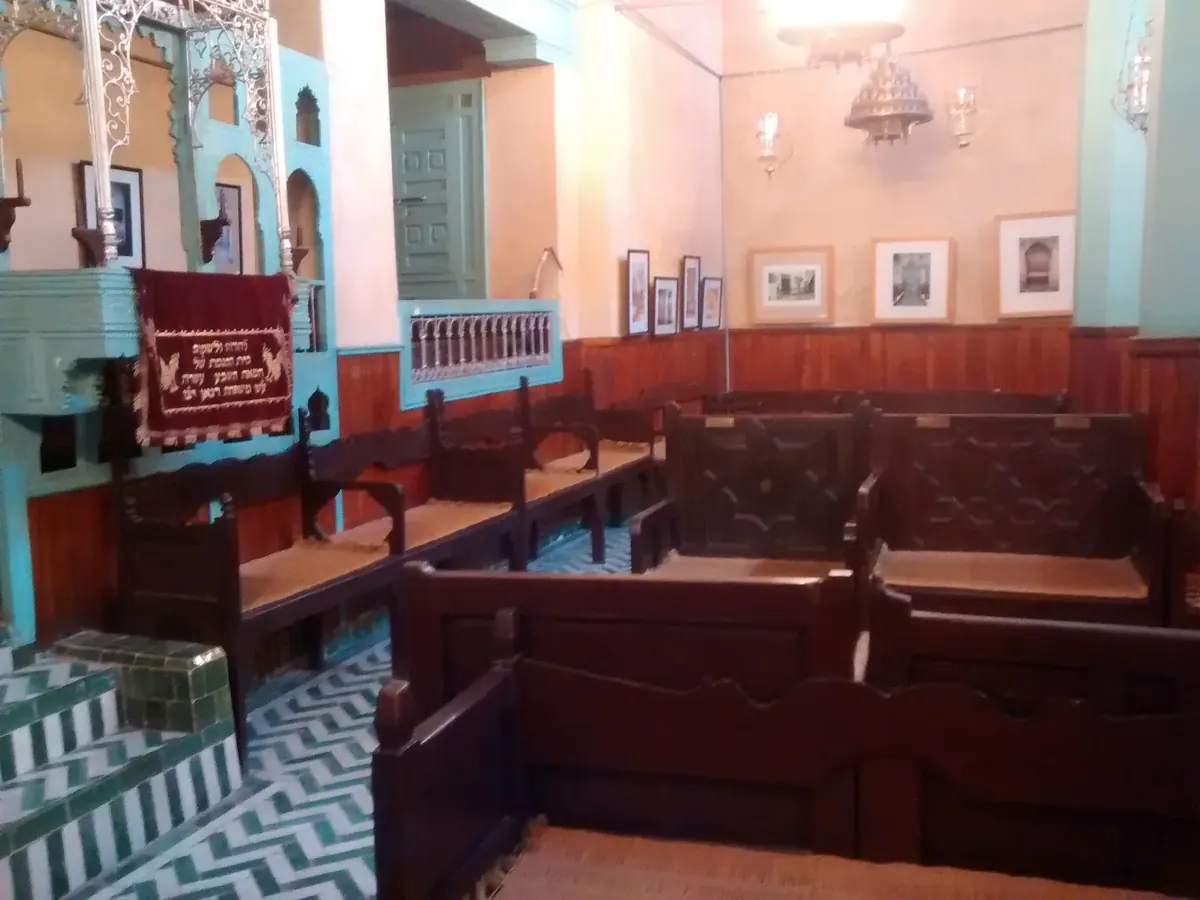
Fez is a compelling choice for architecture and the historic-city setting. The World Monuments Fund documents the conservation of Rabbi Shlomo Ibn Danan Synagogue and its opening to the public after restoration, while noting the synagogue’s place in Fez’s medina. 2 UNESCO describes the Medina of Fez as a historic urban fabric that grew over centuries; pair Jewish sites with a walk through the broader city rather than treating the synagogue as an isolated photo stop. 3
Essaouira is a natural choice for a compact coastal stay. Bayt Dakira, or House of Memory, occupies a restored home and includes a small synagogue, museum, research center and cultural-event space, according to reporting at its 2020 inauguration. 4 The historic mellah and nearby lanes make it possible to explore the Jewish heritage within a walkable medina, but check whether the center is open on your dates and what areas are accessible.
Marrakech can be added for the Lazama Synagogue and mellah, especially if the city is already on your route. Fez, Casablanca, Marrakech and Essaouira appear in heritage itineraries, but packaged examples should be treated as route inspiration, not proof that every named religious site will be open or that a visit is included. 5
Build a route that does not spend the trip in transit
For a short trip, choose a core rather than a grand loop. With roughly four or five full days, Casablanca plus Fez is a sensible museum-and-medina pairing, or Marrakech plus Essaouira can make a more relaxed southern route. These are illustrative planning patterns, not fixed transport schedules. Confirm current rail or road options for your exact dates and account for transfers between stations, hotels and medina entrances.
With about a week, combine Casablanca and Fez with either Rabat or Marrakech, depending on your interests. A longer trip can join Casablanca, Fez, Marrakech and Essaouira, but remember that the coast-to-inland legs consume substantial time. Don’t bolt on Meknes, Sefrou or remote cemeteries simply because they appear on a map; add them when a specific family, religious or historical interest justifies the extra routing and confirmed access.
A useful sample for seven nights is two nights in Casablanca, two in Fez, and three in Marrakech with an overnight in Essaouira only if you can extend the trip or reduce another stop. If you insist on including all four cities, use a longer itinerary and plan an overnight in Essaouira rather than treating it as a rushed excursion from Marrakech. The exact distribution should follow flights and current transport connections, not a promise that one city-to-city leg takes a particular number of hours.
Compare a private heritage tour with independent planning
A private driver and local guide can help when sites require advance coordination, when you have family-history addresses to locate, or when you want to visit several cities without managing luggage and transfers. Ask for a written day-by-day plan showing which visits are confirmed, which are exterior stops, who supplies specialist historical interpretation, and how much time is reserved at each location. A private vehicle does not itself provide access to a synagogue or cemetery.
Independent travel can work well if your priorities are the Casablanca museum, a guided Fez medina walk and Bayt Dakira, with enough flexibility to verify opening status locally. Hire a licensed local guide for complex medina interpretation if that would improve your visit; a driver and a guide are not interchangeable roles. If a tour advertises a synagogue visit, ask whether it has been confirmed for your date, whether an authorized custodian or community contact is involved, and what happens if access changes.
Compare the total itinerary, not the headline tour length. Confirm whether lodging, meals, city guides, entrance charges, airport transfers, tips and intercity transport are included or separate. For tailored help coordinating logistics, see Morocco travel assistance; providers of transport, rooms, meals and experiences confirm and charge independently.
Ask the access questions before paying
Historic synagogues may function as museums, heritage sites or active places of worship, and arrangements can differ. The Ibn Danan Synagogue’s conservation history shows that access has been developed over time rather than being an automatic daily entitlement. 2 Before booking, ask the operator to confirm each site directly and identify the source of that confirmation. Get a fallback plan if a caretaker is unavailable, a service is taking place, or restoration affects entry.
For a cemetery or pilgrimage visit, establish who can arrange access and what conduct is expected. Do not assume every tomb, cemetery or synagogue is open to casual visitors. If visiting for religious reasons, explain any prayer, Sabbath or holiday requirements early so travel timing and meals can be planned around them. A tour’s cultural itinerary does not guarantee a minyan, religious service, kosher kitchen or access to a community.
For food, ask explicitly whether a meal is certified kosher if that is a requirement; vegetarian or fish options are not equivalent to kosher. Confirm kitchen supervision, sealed products and meal availability with the provider or community contact you trust. If keeping kosher is not required, dietary restrictions and allergies still merit advance confirmation, and meal arrangements should be clear in writing.
Visit with care and realistic expectations
Mellahs are historic urban districts, not theme parks. Residents may be going about ordinary routines, and many historic buildings have changed use. Approach homes and religious spaces respectfully, dress in a way that suits a place of worship, follow any posted rules, and ask before photographing interiors, people or ceremonies. A guide can explain architectural details and local context, but avoid treating contemporary Muslim or Jewish residents as props for a historical narrative.
Moroccan Jewish history is both long and internally varied. The Casablanca museum’s collection includes objects from different communities and regions, while the University of Washington’s discussion of the museum also points out that national narratives can emphasize coexistence while leaving migration and conflict less visible. 1 Ask guides how they handle these complex histories, and make room for both cultural continuity and the difficult reasons many Moroccan Jews and their descendants live elsewhere today.
Practical preparation matters. Historic medinas have uneven paving, steps and narrow lanes, so travelers with mobility limitations should ask about the exact walking route, vehicle drop-off points, stairs and rest stops. For families or older travelers, schedule one substantial medina visit at a time rather than stacking several long walks. Carry water and dress for the day’s conditions, but check the season and local forecasts rather than relying on a generic tour description.
A booking checklist
Before confirming a Jewish Morocco tour, get written answers to these questions:
- Which sites will you enter, and which are exterior visits only?
- Who has confirmed access, and when will it be reconfirmed?
- Is the guide knowledgeable about Jewish Moroccan history, or is a specialist guide available?
- How many hours are spent in transit, and are overnight stops placed to avoid backtracking?
- Are cemetery, synagogue, museum and local-guide charges included?
- Can the operator meet religious meal, Sabbath, mobility or family needs, and which parts require separate arrangements?
- What alternatives are offered if a site is closed or access changes?
The strongest heritage itinerary is not necessarily the longest. Pick a few places whose history matters to you, make access the first booking question, and leave enough time to encounter the wider city around them.