Should you drive to Akchour?
Yes—if driving is the part of the day you can do calmly. Akchour is a nature outing in the Talassemtane area near Chefchaouen, where the Moroccan National Tourist Office highlights the park trails and the natural God’s Bridge. 1 A current independent route guide describes the journey from Chefchaouen as about 45 minutes and says transport drops visitors at the car-park area. 5
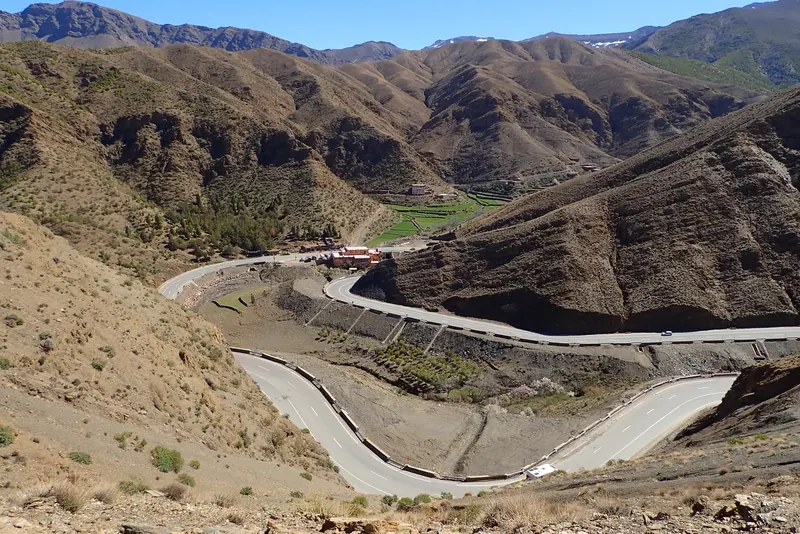
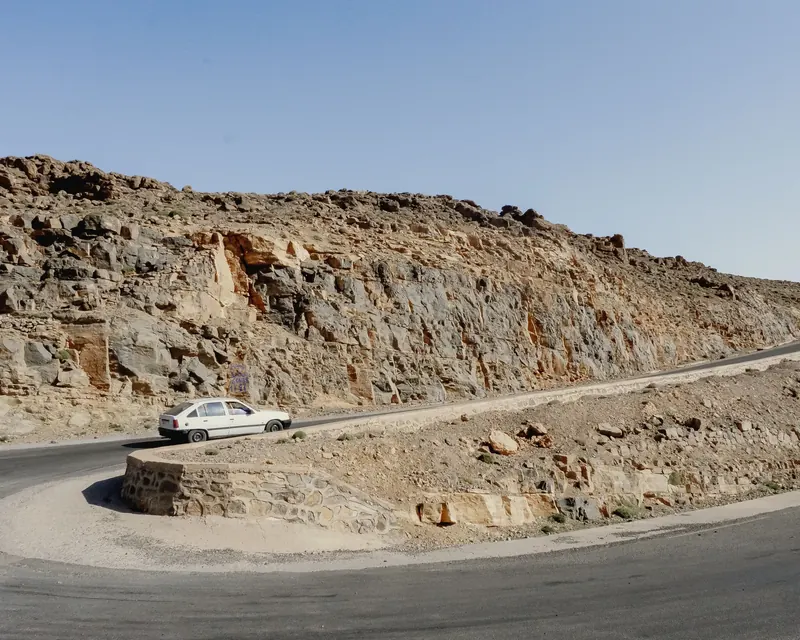
That makes a rental car useful for an early departure, a group carrying hiking kit, or a day that does not depend on a shared-taxi departure. It does not turn Akchour into a quick stop. The U.S. Department of State describes roads through the Rif as steep, narrow and winding, and advises particular caution on rural secondary roads and after dark. 2
Choose a taxi or prearranged driver instead if any of these are true:
- You are not comfortable meeting oncoming traffic or turning around on a narrow mountain road.
- One person would both drive and do the longer walk; fatigue on the return is the issue, not the distance alone.
- Rain, low visibility, a late start or an unfamiliar rental agreement makes the day feel marginal.
- You only want one trail and would rather hand off parking and the return drive.
A taxi is simpler in those cases, not a guarantee of safety: it still travels on the same road and needs a confirmed return plan. The existing Akchour waterfall hike guide covers the separate choice between the waterfall and God’s Bridge routes.
Make the road leg fit the hike, not the map
Use the 45-minute figure as a clear-weather reference, not a promise. From a riad or hotel, add time to leave Chefchaouen, find the correct trailhead parking area and settle the car. Planning about an hour from accommodation to parking is a prudent working assumption; it is a buffer, not a claim about traffic speed. 5
Drive only in daylight. The U.S. guidance warns that poor lighting makes night driving hazardous, while UK travel advice specifically flags secondary and mountain roads as especially hazardous in poor weather. 2 4 If recent rain, fog, a local warning or a poor forecast leaves you unsure, change the transport plan or postpone rather than testing an unfamiliar road after conditions have worsened.
Before leaving, save an offline map and ask your accommodation, taxi contact or the rental provider for the current pin used for the trailhead parking. Do not navigate by a generic waterfall search result alone. No official daily parking tariff or fixed visitor timetable was verified for this article on 30 October 2026, so do not build the day around an old fee, an assumed gate time or a claimed last taxi.
Check the driver and rental before leaving Chefchaouen
There are two different questions here: whether Moroccan rules permit you to drive and whether the supplier’s contract permits this particular rental use. Morocco’s consular guidance says a person of foreign nationality may drive with a valid licence issued abroad for up to one year from the start of a temporary stay; it gives different consequences once that period has passed. 3 The U.S. Department of State likewise says foreign licences are valid in Morocco for up to one year. 2
For British licence holders, current UK government guidance says to carry both the 1968 International Driving Permit and the UK licence in the car; an IDP must be obtained before travel. 4 For every nationality, carry the original licence, not only a phone image. Visitors with Moroccan residency, a long stay, a provisional/temporary licence, a non-Roman-script licence or any uncertainty should seek written confirmation from the rental provider and the relevant authority before collection.
Supplier eligibility is separate from the one-year rule. Hire companies can set a higher minimum age and require a minimum period of driving experience. 4 Before you leave Chefchaouen, check the named driver, original documents, payment-card holder, roadside-assistance contact, accident procedure and any route or surface restrictions in your agreement.
A collision or damage waiver is a contractual product; it is not permission to use a road or surface the agreement excludes. Read the clauses on permitted use, rough or unsealed surfaces, tyres, glass, underbody damage, recovery and accident reporting. For the wider pickup, deposit and cover distinctions, see our Morocco rental-car guide.
Treat the car park as the handoff, not the destination
Park only where vehicles are clearly being directed or accommodated. Do not block access, assume a roadside space is a formal car park or leave the car nearer to water or a path simply to shorten the walk. If an attendant quotes a charge, ask what it covers and keep any receipt; do not treat an old blog’s parking price as a current quote.
Before locking the car:
- Take timestamped photos of the exterior, wheels and fuel gauge.
- Put passports, rental papers, cash and electronics on your person or in a secure place—not visibly in the cabin.
- Keep only the vehicle key you need, protected from water, and leave a contactable phone with power.
- Tell your group which route you chose and the time you will return to the car.
- Set your turnaround time before the walk, not at the waterfall.
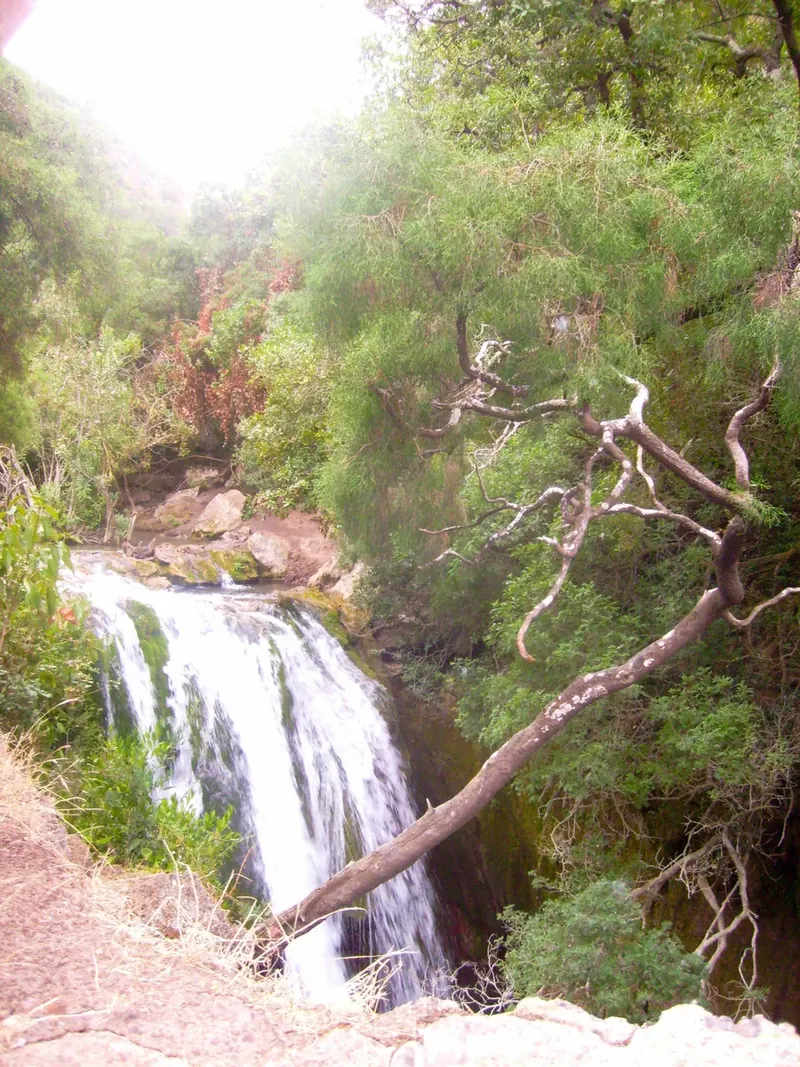
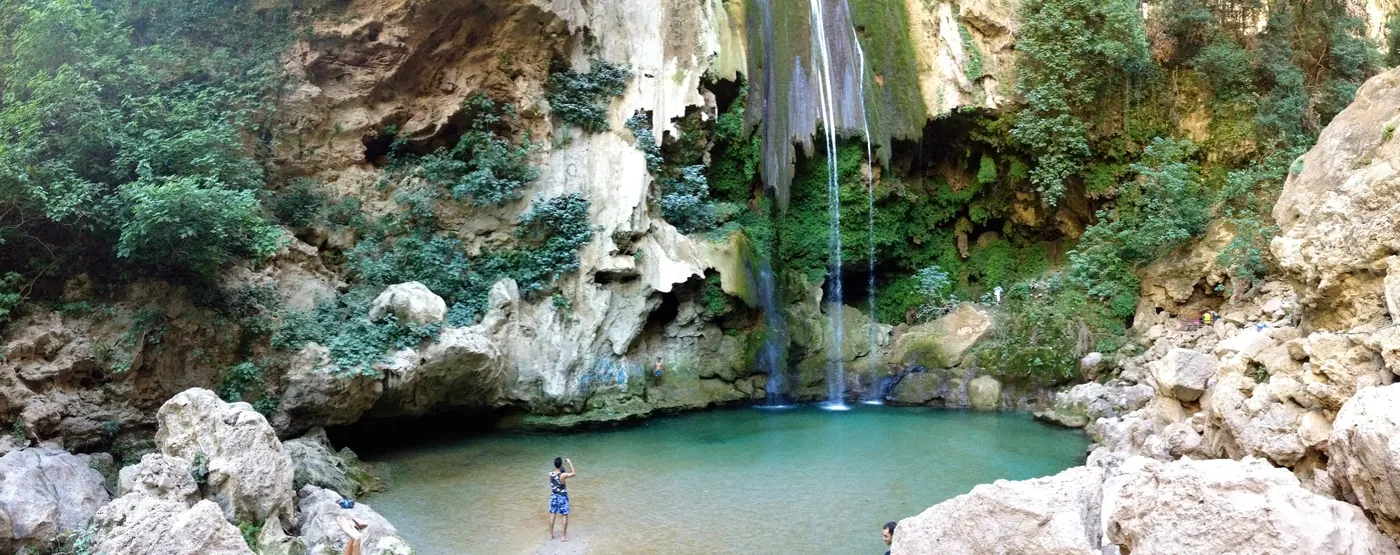
The supporting image below shows why this matters: the vehicle journey ends at the trailhead, while the day continues on uneven terrain beside water. It is not a claim that this exact crossing is on every current route.
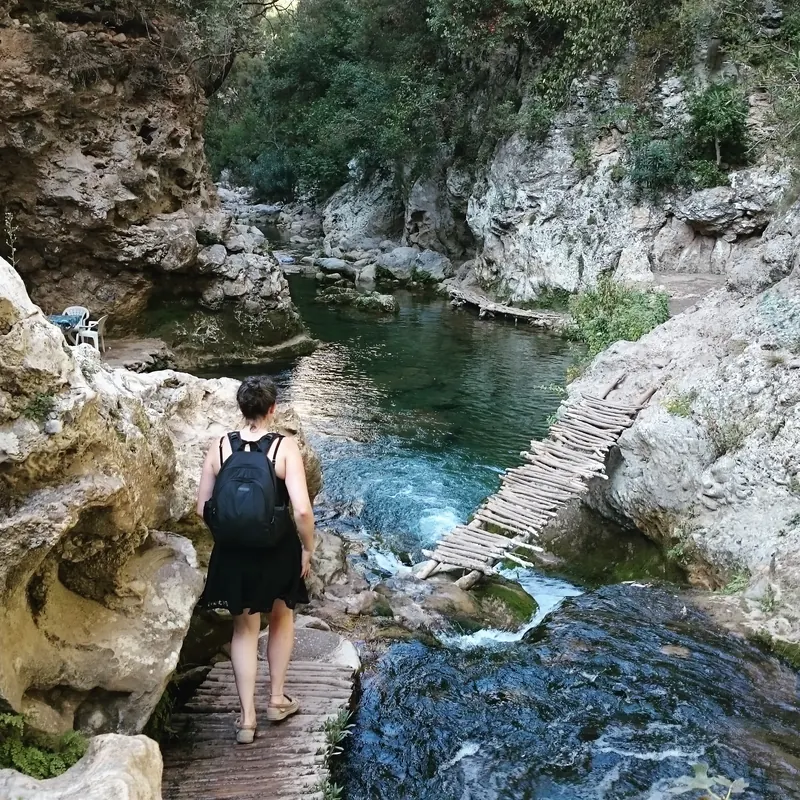
Drive or take a taxi? Choose the stress you can manage
| Self-drive is a good fit when | A taxi or driver is the better fit when |
|---|---|
| You are an eligible named driver, the rental terms allow the intended access and the forecast is stable. | You do not want to manage narrow-road judgement, parking or the return drive after hiking. |
| Your party can start early, return before dark and accept that the map time is only one piece of the day. | There is one driver in the group, a late start, wet conditions or any doubt about licence or contract eligibility. |
| You want flexibility to change the trail or leave when your group is ready. | You have agreed a clear drop-off and pickup location, time window, total fare and a working contact method. |
For a taxi, ask whether the driver waits or returns at a fixed time, whether the fare covers both legs, what happens if the hike runs late and who you should call if the pickup point changes. Use a licensed, insured provider where possible; UK travel advice cautions that some app-booked taxis can be unregulated or uninsured for passengers. 4
A same-day plan with a return margin
The evening before: choose one Akchour route, check the forecast and recent rain, confirm the current parking or pickup pin, and read the rental’s assistance and accident instructions. If driving, refuel before the mountain leg rather than assuming a convenient stop near the trailhead.
On the morning: leave with enough daylight for the road, the walk and an unhurried return. At the parking area, decide a firm time to be back at the car. Work backwards from the time you want to be back in Chefchaouen: reserve the road-and-parking buffer first, then add the return walk and a margin for a slow group.
If conditions change: do not try to recover time by driving faster or starting a longer route late. A shorter walk, an earlier return or a taxi back is the better outcome. For broader road rules and what to do after an incident, use the Morocco driving guide.
If you would value help comparing independent transport options or consolidating the questions to ask, Maroc Mobility’s Personal Travel Assistant can help plan the day; rental and transport are still arranged and charged by their own providers.