Start with the base that serves your first and last hour
Choose the Medina if a walk-first old-town stay is your priority. Choose the beach or seafront if sand time or an ocean-based activity structures the day. Compare newer streets outside the walls if the property’s vehicle access, room layout or longer-stay setup is more important than waking inside the historic core. The decisive detail is almost always the property’s exact pin and access plan, not the area name in a listing.
This is a location guide, not a hotel ranking. It deliberately avoids claiming that every address in one district is quieter, easier, cheaper or more accessible than another. Ask the property about the room and route you will actually use.
| If this is non-negotiable | Start by comparing | Confirm before booking |
|---|---|---|
| You want to wander the old town before and after meals | Medina | Nearest gate, vehicle drop-off point, luggage route and any stairs to the room |
| You plan to put beach time or an ocean activity first | Beach or seafront | Actual route to the sand, equipment storage if needed, and the route back to the Medina |
| You arrive with several bags or need a simple vehicle handover | Newer streets, or a Medina property with a confirmed edge-of-wall arrival plan | Where a driver can stop, how far bags travel, and late-arrival arrangements |
| You are travelling with a pushchair or have reduced mobility | The specific property, in any area | Each step, threshold, lift and route from vehicle to room; do not accept a general “accessible” label as an answer |
| You are driving or collecting a rental car | The specific property, in any area | Whether parking is available, reserved, paid or off-site; those are property terms, not an area-wide promise |
If the stay follows a trip from Marrakech, settle the transport plan first with this Marrakech to Essaouira travel guide. It will make the first-hour questions much easier to ask.
The three bases at a glance
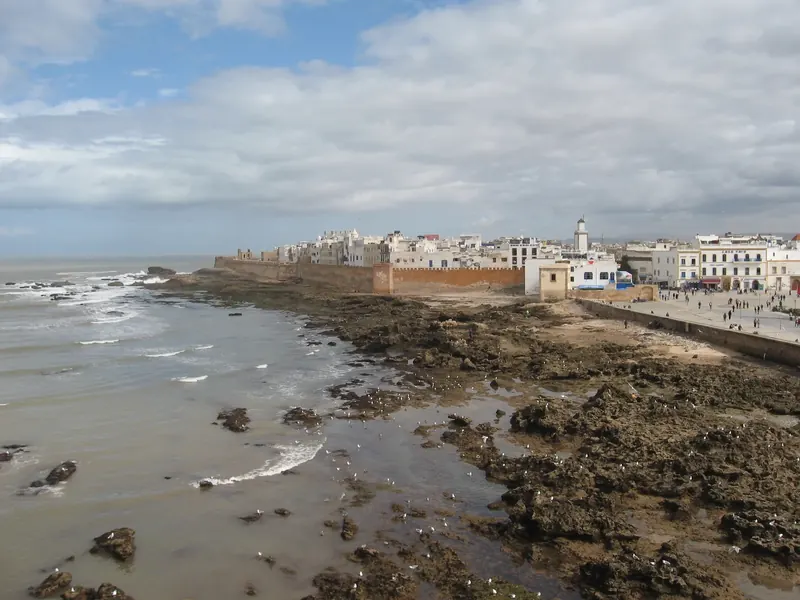
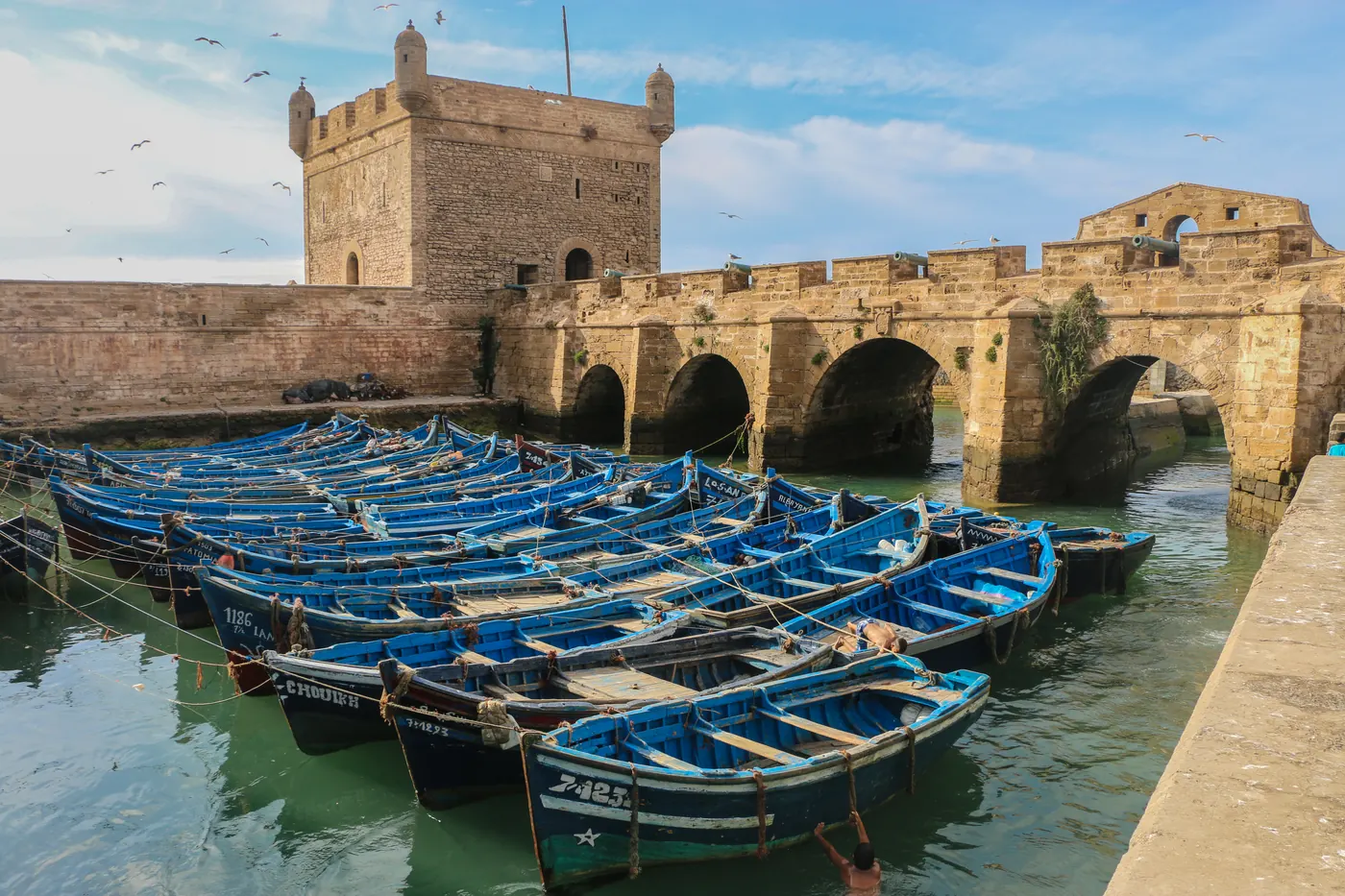
The Medina is the historic core: UNESCO inscribed the Medina of Essaouira on the World Heritage List in 2001 and describes it as a late-18th-century fortified town and trading seaport. 1 Its ramparts, gates and narrow streets are why it feels distinct, but those same physical details mean that an accommodation’s arrival path must be checked address by address. 2
| Base | Choose it when | Do not assume | The useful question |
|---|---|---|---|
| Medina | Your main plan is the old town, port, ramparts, cafés and walking | Every door is equally close to a vehicle, level, quiet or easy with bags | “Which gate or vehicle stop should we use, and what is the route to our room?” |
| Beach or seafront | You want the beach to be part of the daily routine | A sea view means immediate sand access, calm conditions or a short walk to every old-town sight | “Please send the walking route to the beach entrance and to the Medina gate we are most likely to use.” |
| Newer streets outside the walls | You value a particular property layout, street access or a less heritage-centred base | “New Town” is a precise mapped district, or that parking and services are included | “Please share the exact pin and explain vehicle access, parking and the walk to the places we plan to use.” |
Choose the Medina for a short, walk-first stay
The Medina is the natural first comparison for a first visit focused on the historic town. The official tourism office describes the setting through its fortified ramparts, monumental gates and narrow streets. 2 It is the right starting point when you want the atmosphere of the old town to carry the stay—not simply to visit it once.
Make the gate part of the booking
“Inside the Medina” does not tell you where a taxi can stop or how luggage reaches the door. Before paying, send your arrival mode and expected time, then ask for the named gate or vehicle meeting point, the final route with bags, and who to contact if you arrive late. A reply such as “central Medina” is not a route.
If you have a pushchair, limited mobility or bulky luggage, ask for a plain description of every step, slope and threshold from the vehicle stop to the specific room. Ask separately about stairs to breakfast rooms, terraces and bathrooms. A room may be beautiful but still be a poor fit for the way you travel.
Compare room position, not just the address
A property can answer more useful questions than a map can. Ask whether the room faces a lane, courtyard or terrace; whether there are windows that open; and whether the room is reached from a shared roof or stairwell. This is not a promise that one position will be quiet; it is a way to compare like with like before you commit.
For the walking experience once you are settled, use the separate Essaouira Medina guide. It covers the old town itself, while this article stays focused on choosing and reaching a base.
Choose the beach or seafront for sand-first days
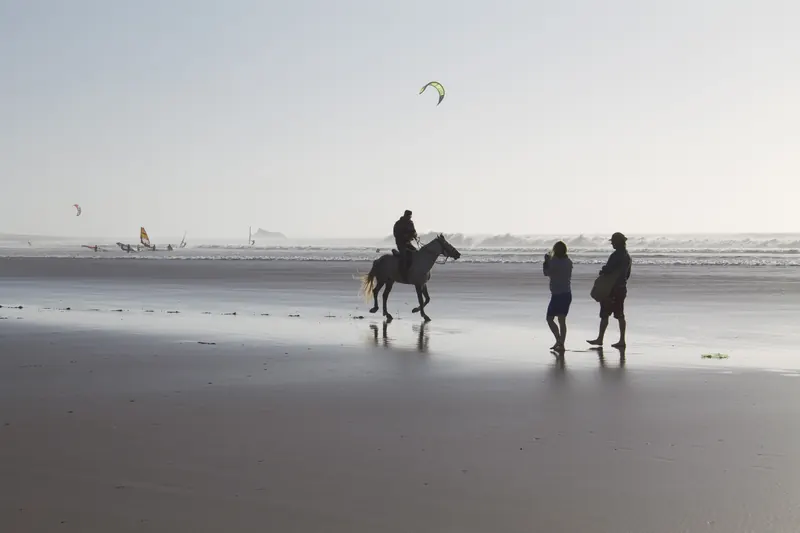
Start on the beach side if being near the sand changes what you can do with the day: an early shoreline walk, a lesson, or a return to the room between beach time and other plans. Morocco’s National Tourist Office presents Essaouira-Mogador as a coastal destination where water activities are part of the appeal. 3 That context is useful; it is not a forecast or a guarantee of swimming conditions, lessons or wind on your dates.
Test the beach claim against a route
Listings use “beach” in different ways. Put the accommodation pin, the entrance to the stretch of beach you expect to use, and one Medina landmark into a map. Look at the walking route, not a straight line. Then ask the property whether that route is the one guests normally use with bags, children or equipment.
If an ocean activity is central to the trip, ask the provider running that activity where it starts and what it expects you to bring or store. Do not book a beach-side room on the assumption that it includes a board room, changing space, a windbreak or an instructor. Those are provider- and date-specific details.
Choose newer streets for a simpler arrival or longer stay
“New Town” is a useful traveller shorthand for streets outside the fortified core, not a reliable promise of a certain boundary or hotel style. Use it as a search starting point, then judge the specific address. This can be the right comparison set when a straightforward vehicle arrival, a particular room layout, self-catering facilities or a longer stay matters more than being inside the walls.
For a car, the important distinction is not Medina versus New Town in the abstract. It is whether the property has explained where you can unload, whether parking needs advance reservation, what it costs, and how far the final walk is. Parking, transfer and late-check-in arrangements are supplier policies that can change; confirmation from the property is stronger than an area-wide generalisation.
For a multi-night stay, place the property pin beside the everyday places you expect to use: the old town, beach, food shopping, a bus or taxi meeting point, and any activity start. This quick comparison prevents an address described as “near Essaouira” from becoming a different daily rhythm than you intended.
Book by micro-location, not by a neighbourhood label
Use this six-step check before comparing room photographs or cancellation terms.
- Write down what must be walkable from the room. Keep it to two or three essentials, such as the Medina, sand, a vehicle stop or a specific activity meeting point.
- Open the property’s exact map pin. If a listing will not share an address or pin before payment, treat its practical location as unconfirmed.
- Check walking routes to those essentials and note anything the map cannot answer: gates, steps, surfacing, lighting, luggage handling and room-floor access.
- Send one concise message with your arrival time, number of bags, vehicle needs and mobility requirements. Ask the property to reply against each point.
- Compare written answers, not optimistic labels. If a host does not answer a question, record it as unknown rather than assuming the answer is favourable.
- Only then compare the total shown for your dates, what is included, and the cancellation terms. Availability, room assignment and property charges belong to the provider’s booking terms.
A useful message is: “We arrive by [mode] at about [time] with [number] bags. Which vehicle stop or parking arrangement should we use? Please list the route to our room, including steps or thresholds, and confirm the room’s position and late-arrival procedure.” Add a question about equipment storage or a cot only if it matters to your trip.
When a fourth option is the better fit
A place outside the town, including Diabat or a rural/coastal property, can suit a deliberately quieter or activity-led stay. It is not automatically a substitute for a central Essaouira base. Book it only when you are comfortable confirming the exact transfer, meal and evening-return arrangements for your dates. Without that, an isolated-looking offer can turn a walk-first trip into a transport-dependent one.
A split stay can also work, but only if changing base solves a real problem—perhaps a late vehicle arrival followed by several walk-first days. Do not move simply because the labels sound different; every move adds a luggage handover and a new check-in.
A final check before you pay
- The exact property pin matches the base you chose.
- The property has stated the vehicle drop-off point or parking arrangement for your dates.
- You know the luggage route and every relevant step or threshold.
- Your room’s likely position and late-arrival procedure are clear.
- Any beach equipment, cot, cooking facility, lift or accessible feature has been confirmed as an actual property or provider arrangement.
- You have read the supplier’s total, inclusions and cancellation terms for the selected room.
If you would like help coordinating an arrival plan and questions for independent providers, the Maroc Mobility Personal Travel Assistant can help with planning and arrangements; accommodation terms and the booking contract remain with the property.