Should you drive from Tangier to Chefchaouen?
Drive if the car gives you useful freedom after Chefchaouen as well as on the way there, you are comfortable adapting to a mountain approach, and your accommodation has confirmed where the car can be left. Do not rent solely to reach a medina stay if the vehicle will sit unused and no one can explain the parking-and-luggage handoff. In that case, compare the coach or a prearranged ride in the Tangier to Chefchaouen transport guide.
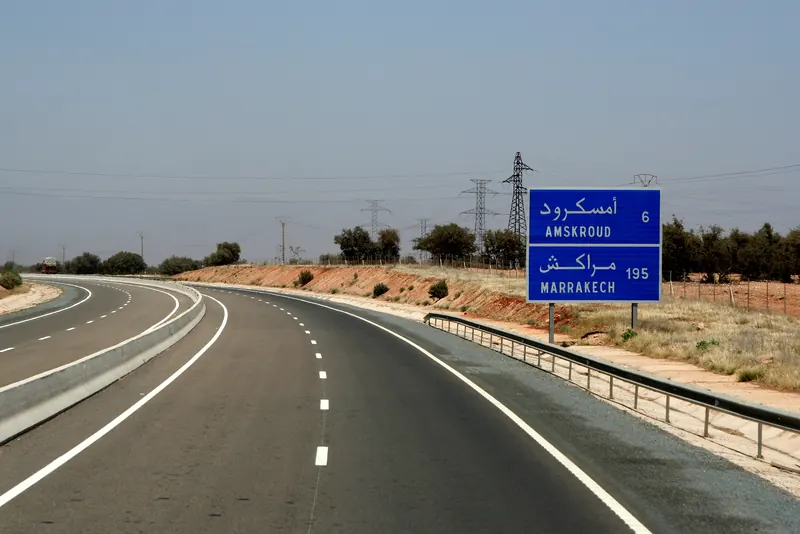
A route-planning page lists the direct drive as 112 km and 2 hours 5 minutes in normal traffic. Treat that as a road-time benchmark, not as a collection-to-check-in promise: it excludes the rental desk, fuel, a rest stop, changing conditions and finding a space at the destination.6
Self-drive is usually the stronger choice when you will continue by car, want control over departure and stops, or have luggage that makes terminal changes awkward. A transfer or coach is usually the lower-friction choice when this is a single point-to-point leg, you arrive late in Tangier, or you would rather not manage a car before a hilly walking stay.
Make the rental decision before you collect the keys
Start with the legal rule, then test the supplier’s rule. Morocco’s consular guidance says a foreign national may drive with a valid foreign licence for up to one year from the start of a temporary stay; the U.S. State Department gives the same one-year validity for foreign licences.1 2 That is a driving-permission baseline. It does not require a rental business to rent to every legally licensed visitor.
Your licence origin and residency still matter. UK government guidance currently tells holders of a UK licence to carry the 1968 International Driving Permit as well as their UK licence, and says Morocco no longer accepts the 1949 version.3 If your licence is not in a Roman alphabet, Avis Morocco says it must be supported by an international driving licence.5 A visitor using a U.S. or other foreign licence should ask the pickup branch what it requires for that exact licence and booking; readers with a U.S. licence can also use the more detailed Morocco rental-requirements guide.
Company rules are not national rules. For example, SIXT Morocco currently states a minimum age of 21 and a licence held for two years, while Avis Morocco states 23 and two years for its primary and additional drivers.4 5 That contrast is the reason to get a written answer for your exact pickup station, vehicle class and every planned driver.
Before you pay, send the supplier these questions:
- Will you accept my physical licence, passport and any IDP I hold at this Tangier pickup station?
- What minimum age and licence-history rule applies to each driver and this vehicle class?
- Must the payment card be in the lead renter’s name, and which debit, credit or prepaid cards are accepted?
- What amount will be authorised as a hold, when is it released, and what protection is already included?
- Are there limits on road types, additional drivers, after-hours return or taking the car outside Morocco?
Keep the reply with the reservation. A booking confirmation alone is not a substitute for an answer to a document or card question.
Treat the map time as a driving benchmark, not a schedule
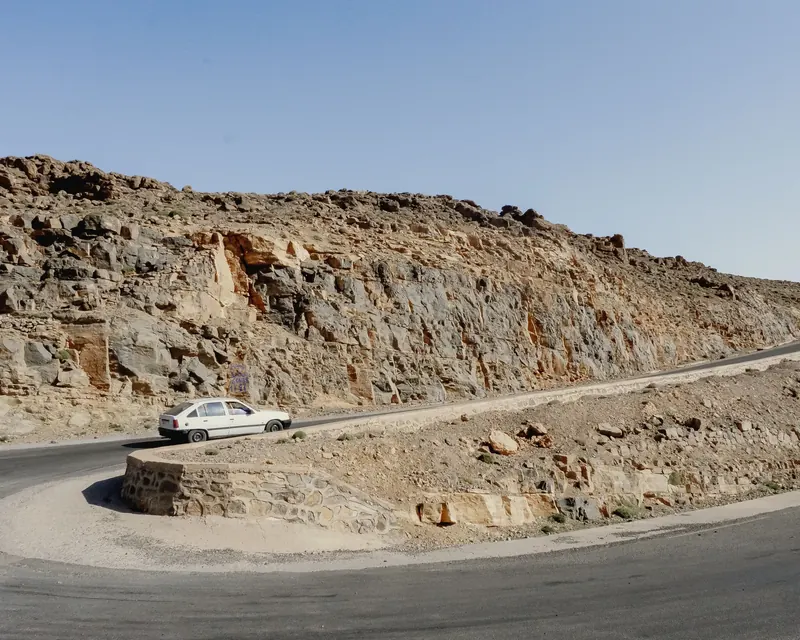
Set a daylight departure and leave the final part of the afternoon for arrival rather than for sightseeing. The U.S. State Department describes roads through the Rif and Atlas as steep, narrow and winding, warns that rainy-season flash flooding can affect rural roads from November through March, and advises extreme caution at night because lighting can be poor.2 The UK government likewise warns that poor weather makes secondary and mountain roads especially hazardous.3
That does not mean this trip requires a special vehicle or that a normal day will be difficult. It means the plan needs a margin. On the morning of travel, check the forecast and current navigation, put the accommodation’s parking pin and contact number into the phone, and download the route for offline use. If road, weather or official advice makes the plan uncertain, postpone, reroute, or use the transport alternative rather than trying to recover time.
Use the map estimate in three pieces: driving, a deliberate safe stop, and the destination handoff. Do not add an optimistic detour simply because the distance looks short. Fill the fuel tank before the mountain approach if the gauge makes you uneasy; retain the receipt if the rental’s fuel policy asks for one.
Drive it as a mountain approach
The useful skill on this leg is restraint, not speed. Keep attention on the road rather than using the final stretch to search for parking, messages or restaurant ideas. The State Department notes that pedestrians, scooters and animal-drawn vehicles can appear on Moroccan roads, including freeways; its road guidance also warns that traffic signals may be hard to see.2
Set navigation before moving and let a passenger handle changes. Keep a comfortable following distance, do not depend on an overtake to stay on schedule, and use only clearly safe places for a stop. If rain, fog, fatigue or an unfamiliar turn has changed your comfort level, reduce the day’s scope. Arriving later than hoped is better than forcing the final approach after dark.
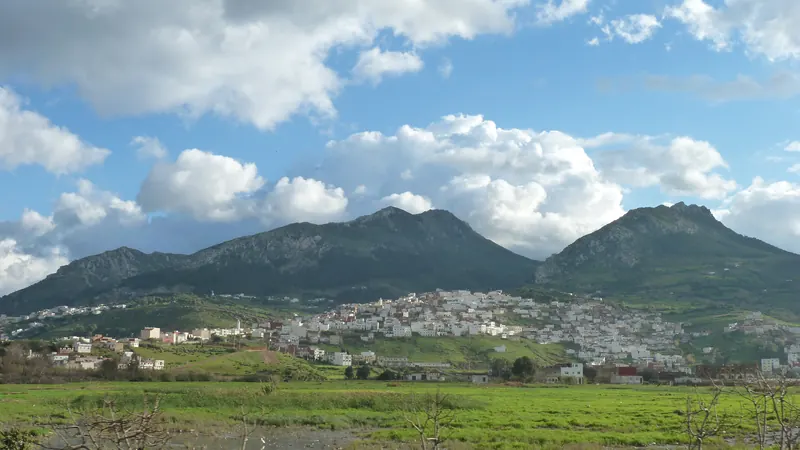
Hand the car off before the medina
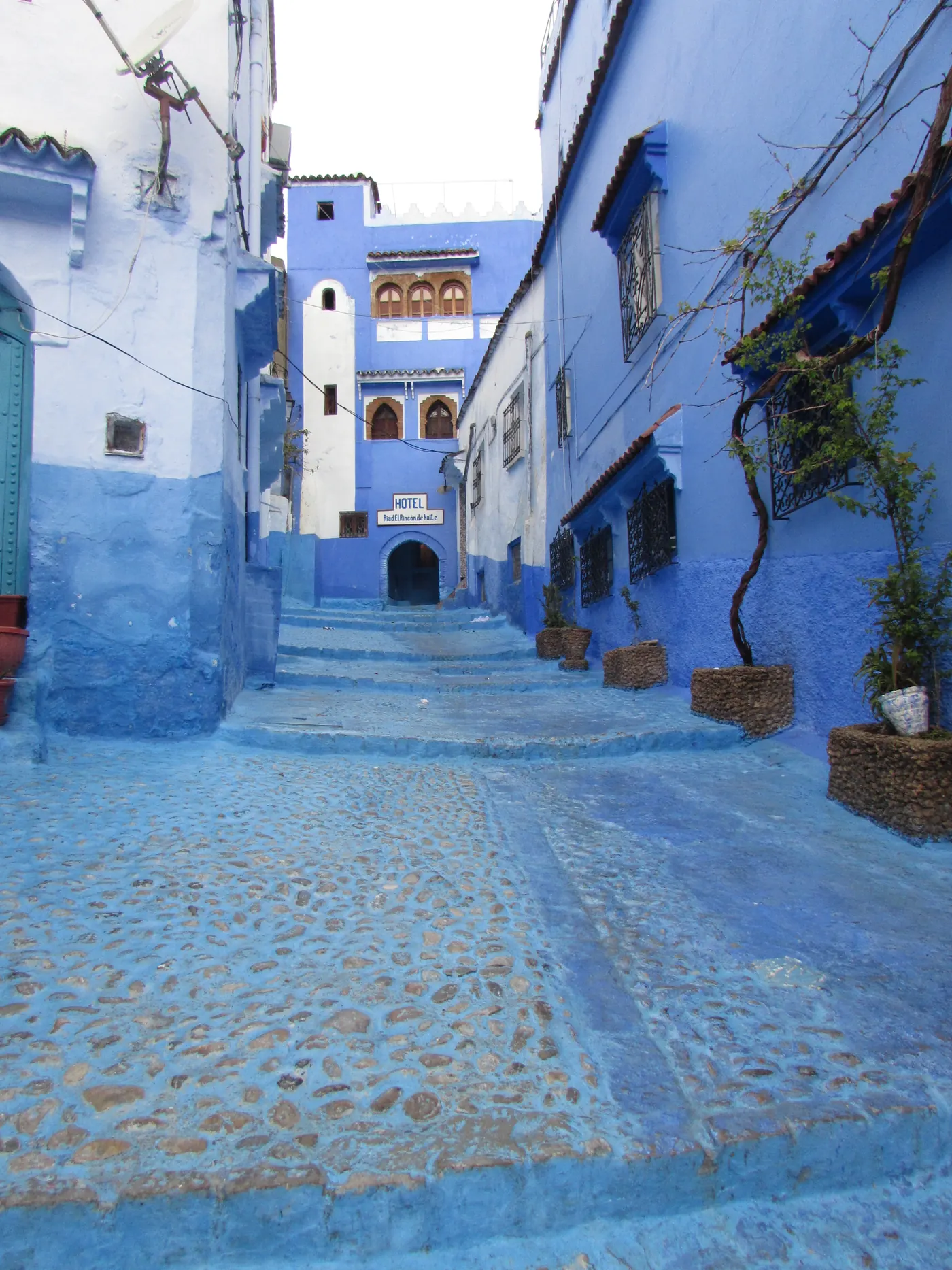
Chefchaouen works best as a walking destination. Make the car plan end at a confirmed parking or drop-off point, then make a separate plan for bags and the route to the room. Do not navigate only to a property name inside the medina and assume the final lane is an appropriate place to stop.
Questions for your accommodation
Ask before reserving, not from the last bend of the drive:
- What is the exact current parking or legal drop-off pin for a guest arriving by car?
- Is it an overnight arrangement, and who confirms availability and payment on the day?
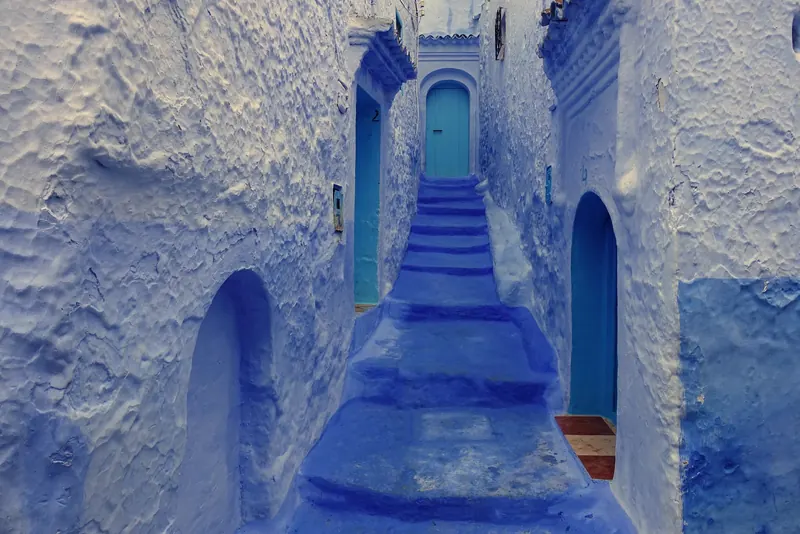
- How far is the walk to the entrance, and are there slopes, steps or uneven paving with bags?
- If I arrive after dark, can someone explain the walking route or meeting point?
- Can a taxi or porter be arranged if I do not want to carry luggage from the car?
The point is not to find a universally “best” car park. Availability, access and fees can change, so the property’s current answer is more useful than an old map pin. If the answer is vague, choose a stay with easier access or switch to a transfer. For the walking side of the visit, see the Chefchaouen practical guide.
A calm arrival sequence
Park only where the accommodation has directed you or where signs and an on-site attendant make the arrangement clear. Before walking away, take a quick photo of the parked car and its surroundings, lock it, remove visible luggage and keep the rental agreement, contact number and return details with you. Then walk the final stretch without trying to drive closer.
If you plan to leave early, ask the night before whether access, gate hours or a payment step affects departure. This is also the moment to confirm the next driving leg rather than relying on the previous day’s route.
Keep insurance, waiver and hold separate
Three terms are easy to blend together at a counter, but they answer different questions:
| Term | What to identify before signing |
|---|---|
| Card hold or deposit | The amount the supplier may authorise on the lead renter’s card and when it releases it. |
| Excess | The contractual amount you could remain liable for after a covered incident. |
| Damage waiver or protection | A contractual product that may reduce the excess, subject to its terms and exclusions. It is not automatically the same as insurance and does not automatically remove a card hold. |
Avis Morocco’s current terms, for example, say its Collision Damage Waiver limits liability to a non-waivable excess and that different protection choices affect the hold. SIXT states that protection packages are optional, while its card rules differ from Avis’s.4 5 These are examples of supplier terms, not a market-wide offer.
Ask the desk to write down the hold, the excess, every exclusion, accident-reporting steps and the emergency number. Photograph the condition report, wheels, glass, fuel gauge and mileage before leaving. For the full collection and return process, use the Morocco rental-car guide.
A short self-drive checklist
Before Tangier pickup: bring the original licence, passport, any required IDP, and the lead renter’s accepted physical payment card. Confirm all named drivers, vehicle class, after-hours terms, emergency contact and return fuel policy.
Before the road leg: save the lodging’s parking pin, a second contact method and offline navigation. Check weather and live route information; start with daylight rather than trying to turn a late arrival into a mountain drive.
At Chefchaouen: complete the car-to-medina handoff first, then begin the town visit. Keep the next-morning departure plan separate from the arrival plan.
When coach or transfer is the better choice
Skip the rental for this leg when the car will not serve a later rural route, you are landing tired or late, the forecast makes you uncomfortable, or your accommodation cannot explain a realistic arrival point. That is not a failure of planning. It is a good match for road transport that ends with someone else handling the vehicle.
If you want help turning supplier replies, a lodging access message and the next leg into one route plan, Maroc Mobility’s Personal Travel Assistant can help you prepare the questions. Rental providers and accommodation providers remain responsible for their own availability, contracts and confirmations.