The short answer: plan payment, proof and a fuel buffer
A motorway is straightforward once three details are clear: how your toll will be paid, whether the rental has an active Jawaz tag, and what fuel level the contract requires at return. Autoroutes du Maroc (ADM) lists Jawaz, bank cards, network cards and cash as accepted payment methods on its toll network.1 Carry dirhams anyway, read the lane signs before committing, and do not assume a device on the windscreen is yours to use or that the rental company will settle its charges. For wider on-road rules and safety preparation, see Driving in Morocco: Rules, Roads and Practical Safety.
Before departure, use ADM’s traffic tools to look up the exact entry and exit, current toll information, service areas and any traffic event or works affecting the trip.3 That is more useful than copying a generic route price into a trip budget.
Before the motorway: a five-minute check
- Read the rental agreement’s fuel line. Note the pickup gauge, the required return level, the fuel type stated for this vehicle, any pre-purchase option and the return location. Those are supplier terms, not Morocco-wide rules. If the language is unclear, get the answer in writing before leaving the counter.
- Ask one Jawaz question. “Is this tag active for my rental, may I use it, and how will tolls be charged or reconciled?” Keep the reply with the agreement. A Jawaz pass is an ADM payment product; whether a rental car has one and how it is billed is a separate supplier arrangement.
- Save a payment fallback. Put small dirham notes where the driver can reach them safely after stopping. ADM also lists bank cards, but the marked lane in front of you determines what can be used there.1
- Take two pickup photos. Capture the fuel gauge and odometer with enough of the dashboard to identify the reading. This is useful for a same-to-same or full-to-full dispute later.
- Check the route shortly before setting off. ADM Traffic reports real-time traffic, incidents, works and points of interest across the motorway network.3
Rental eligibility remains a booking-stage issue. Age, licence origin, residency, card and document rules can vary by supplier, so use this separate guide on renting with a US licence in Morocco before assuming you can collect a car.
Pay a toll without a rental-car surprise
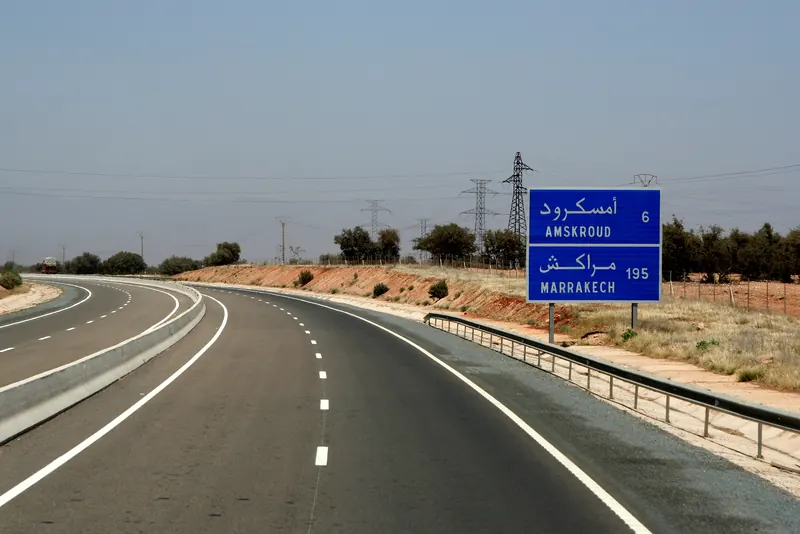
Follow the symbols above the lane rather than the queue that looks shortest. ADM says Jawaz can be used in lanes marked with the orange J; all toll stations have dedicated Jawaz exit lanes. At interchange entries, lanes are mixed: a driver without Jawaz stops to take an entry ticket, while the pass is read for a Jawaz user.3
If the car has a confirmed Jawaz tag
Use the marked Jawaz lane only after the supplier has confirmed that the tag is active and billable for your rental. Do not remove, move or try to top up a tag unless the agreement specifically tells you to. At return, retain the supplier’s written toll-billing explanation alongside your rental paperwork. This is especially important because a toll paid through a vehicle tag may not produce the same paper trail as cash.
If you are paying yourself
At a ticket entry, take the ticket and put it straight in one designated place—such as the rental folder or a wallet pocket. At the exit, present the ticket and pay using the method shown for that lane. Keep the receipt when one is issued, particularly if the cardholder or rental company will later need to reconcile a charge. Do not reverse or change lanes suddenly; if you enter the wrong lane or something is unclear, stop safely and follow the attendant’s direction.
What tolls actually cost
Tolls depend on the specific entry/exit pair and the vehicle class, not a single national per-kilometre rate. For example, the live ADM fare grid accessed on 30 October 2026 lists Casablanca–Rabat at 25 MAD, 36 MAD and 43 MAD for Classes 1, 2 and 3 respectively; Nouaceur–Marrakech Palmeraie is listed at 83 MAD, 124 MAD and 150 MAD.2 Check the class that applies to the vehicle you are driving rather than treating a booking label such as “compact SUV” as a toll classification.
A transparent example: if your car is charged as Class 1, a Casablanca–Rabat return based on that grid is 2 × 25 MAD = 50 MAD. It is an example of toll arithmetic, not a quote for every starting point, exit or rental vehicle.
Use motorway service areas as planned stops
ADM distinguishes a rest area, intended for parking and rest, from a service area, which also has automotive and food services. It reports 60 motorway areas in total—58 service areas and two rest areas—open 24/7 and spaced about 50 km apart on average.4 That makes them useful planned pause points, not a reason to run the tank low or to assume every location stocks a particular fuel grade.
Plan one stop before the return leg rather than waiting until the gauge is near empty. If your return is at an airport or a dense city location, decide in advance whether to refuel on the motorway, near the final exit or near the station. The best choice is the one that leaves time to follow the contract’s return-fuel requirement and keep the receipt.
Fuel and the rental contract: prevent a return dispute
A fuel policy is the agreement between the renter and the rental company about the fuel level at pickup and return. Common patterns include full-to-full, same-to-same and pre-paid fuel, but the terms on your own confirmation and agreement control.5 A refuelling charge is therefore a contract issue; it is not an insurance excess, a damage waiver or an ADM motorway charge. For protection and deposit terms, read our separate guide to rental insurance, deposits and card holds.
For full-to-full, do not aim for a vague “nearly full” return. Refuel close enough to return that the gauge is still full, keep the timestamped receipt and photograph the gauge and odometer before handing over the keys. For same-to-same, compare the pickup photo with the agreement’s marked level rather than relying on memory. If the supplier has sold pre-paid fuel, confirm whether unused fuel is credited and whether the car must still reach a minimum level. Booking.com’s rental guidance recommends keeping final receipts and taking gauge photos at pickup and drop-off for precisely this reason.5
Fuel prices move, so budget from a dated source or the pump display, not from a permanent rule of thumb. As a fuel-only illustration, GlobalPetrolPrices listed 95-octane gasoline in Morocco at 15.60 MAD per litre on 26 October 2026; 30 litres at that snapshot would be 468 MAD.6 This is not a price guarantee, a claim about the grade your rental needs or an estimate of fuel use for any route. Use the vehicle label and current pump price.
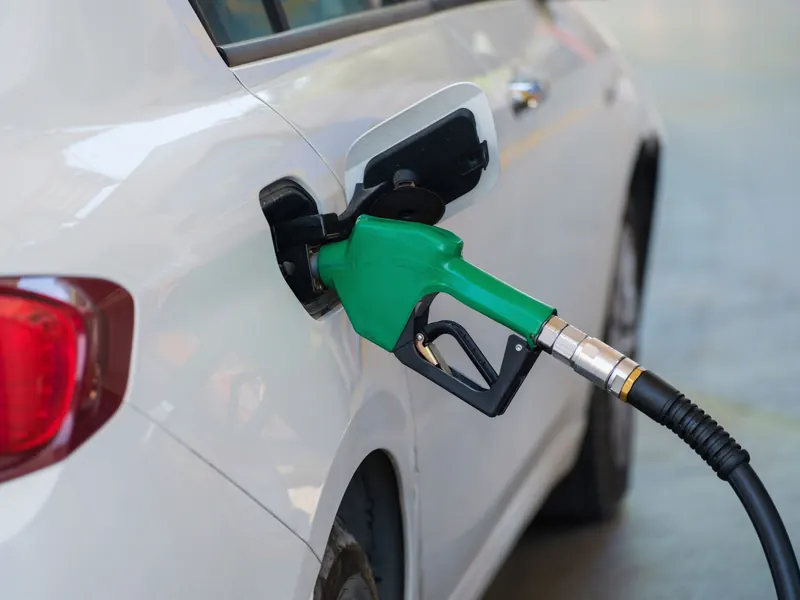
A handover checklist for your last fuel stop
- Confirm the required return level and correct fuel type from the agreement before choosing the pump.
- Keep the final itemised receipt, and make sure its time and location are readable.
- Photograph the fuel gauge and odometer after refuelling, before the return journey.
- Save any toll ticket or receipt separately from the fuel receipt.
- At handover, ask for written confirmation of the return condition when the station procedure allows it.
- If a later charge appears, compare it with the agreement, photos, fuel receipt and any Jawaz billing terms before disputing it.
For help coordinating a practical Morocco itinerary, including the timing around an independent rental collection or return, see Maroc Mobility’s Personal Travel Assistant. Rental, toll and fuel terms remain with the relevant independent supplier.