The realistic answer: make rail the spine, not the whole trip
Yes—you can see a satisfying part of Morocco without renting a car. The low-stress version is not a race around the map. Use the rail-connected cities for the long north–south moves, treat Chefchaouen as a dedicated road day, and reserve the Atlas or Sahara for a separate multi-day road segment rather than squeezing it into a city itinerary.
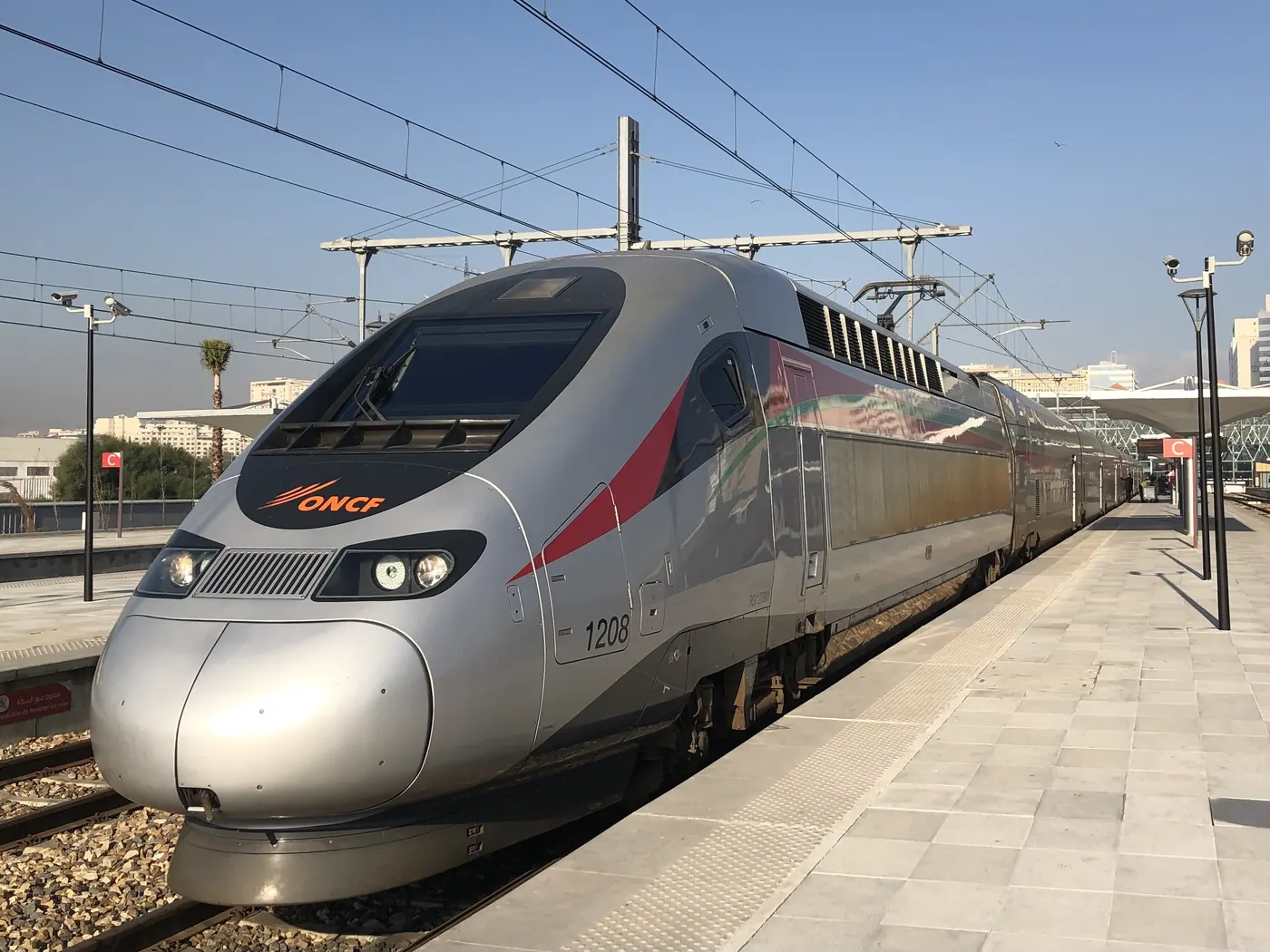
Morocco’s official tourism information describes the high-speed rail corridor as Tangier, Kenitra, Rabat and Casablanca, and says the wider ONCF network links Marrakech with major cities. It also notes that coaches extend the network to remote places. 1 That is the useful planning model: rail for the spine; coach, transfer or a small group for the gaps.
A no-car itinerary works best when each change of city has a single job. A transfer day is for changing base, checking in and getting oriented—not for a full sightseeing list.
A realistic 10-night route from Tangier to Marrakech
This is a shape, not a timetable. It suits an open-jaw flight into Tangier and out of Marrakech. Reverse it if your flights make more sense that way. The key trade-off is deliberate: it keeps two full days in Fez and one in Rabat, but gives Marrakech only a final evening and a departure-day window. Add an eleventh night if Marrakech is a main priority rather than your exit city.
| Day | Base and focus | Transport decision |
|---|---|---|
| 1 | Arrive in Tangier; keep the plan close to your hotel. | Do not book an onward intercity leg that depends on an untested flight arrival. |
| 2 | Tangier. | Stay put. A second night protects the rest of the route from an arrival delay. |
| 3 | Tangier to Chefchaouen. | Use a coach or pre-arranged transfer; this is a road leg, not a rail extension. |
| 4 | Chefchaouen. | Walk the medina and keep the day local. |
| 5 | Chefchaouen to Fez. | Make this another travel-and-check-in day. |
| 6 | Fez. | Stay put; do not turn a medina day into a long excursion day. |
| 7 | Fez. | Use the second full day for the parts of the city you missed on arrival. |
| 8 | Fez to Rabat. | Return to rail for the long city-to-city move; book the exact station pair for your date. |
| 9 | Rabat. | One full day gives the route a calm break before Marrakech. |
| 10 | Rabat to Marrakech. | Travel, check in, and keep the evening flexible. |
| 11 | Marrakech and departure. | Use this only if your flight is late enough; otherwise add a night or leave earlier. |
Do not add Casablanca just because it is on the rail map. Add it only when it is your arrival or departure point, or when you are willing to remove time from another base. Likewise, if you have seven or eight nights, choose either the northern branch (Tangier, Chefchaouen and Fez) or a simpler rail-city route; do not try to keep every stop.
For more detail on the rail segments and station choices, see the Morocco train guide. The road-leg choices are covered separately in the Tangier to Chefchaouen transport guide and the Fez to Chefchaouen transport guide.
Make road-only legs deliberate
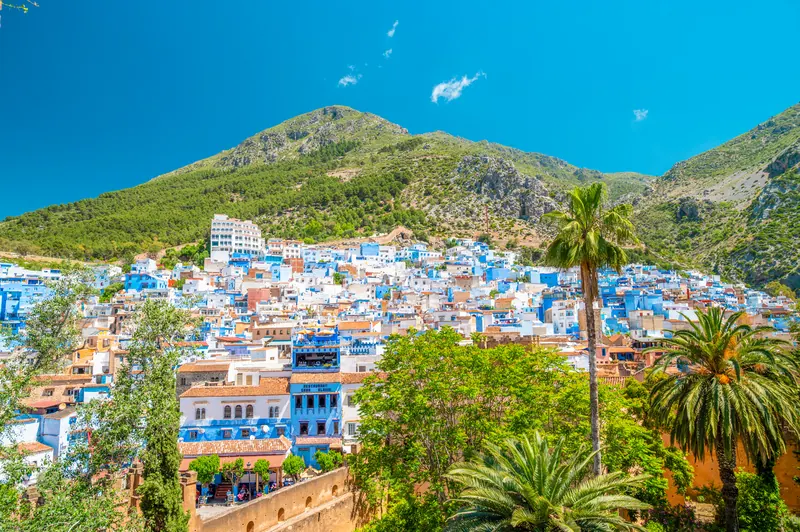
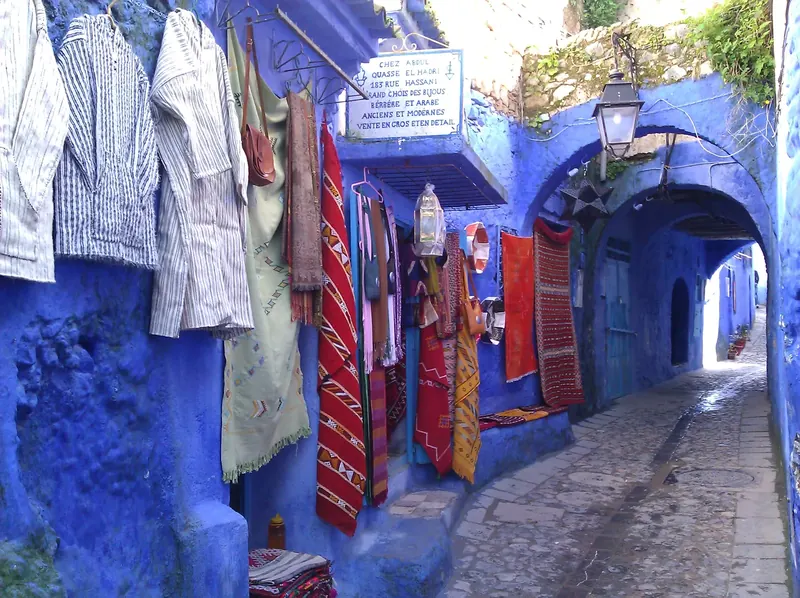
Chefchaouen is the point that changes the plan. The official tourism site lists it as a road connection from Tangier (112.4 km) and Fez (194 km), with indicative travel times shown for each. 4 Treat those figures as orientation only: a coach departure, a private transfer, traffic, weather, luggage loading and your hotel’s final access determine the real day.
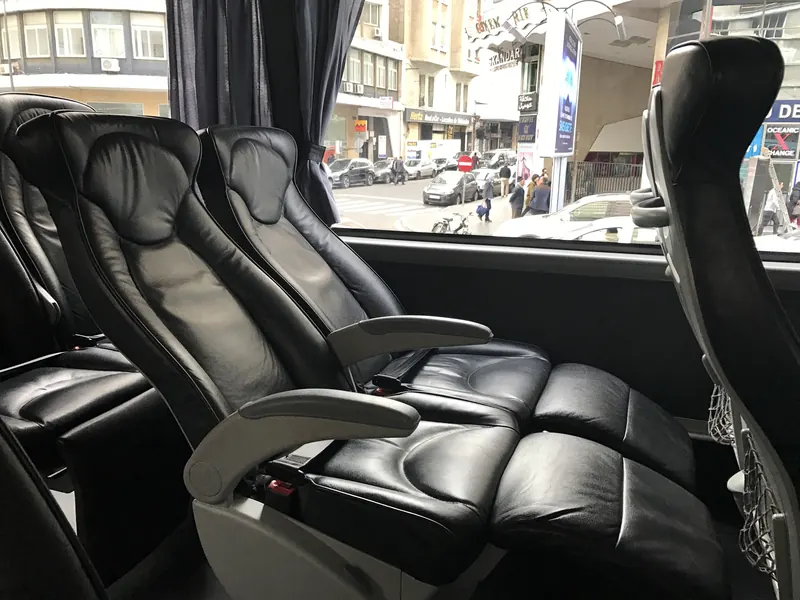
Choose a coach when the live departure suits your hotel check-in and you can manage the station-to-hotel handoff. Choose a private transfer when an awkward arrival, several bags, a young child, limited mobility, or a hard-to-reach lodging makes door-to-door simplicity worth paying for. A shared taxi can be an alternative in some areas, but it is not a timetable-based replacement for a booked coach.
CTM’s official booking flow requires an origin, destination, date and passenger count, so treat availability and fare as date-specific rather than copying an old travel forum’s price or schedule. 2 3 Before paying for either a coach or transfer, confirm the pickup point, luggage rule, final drop-off, cancellation terms, payment method and who to contact if the service is late.
Match the transport to the leg
| Leg type | Usually the better starting point | What to verify before you commit |
|---|---|---|
| Tangier, Rabat, Casablanca or Marrakech on the main corridor | Rail | Exact station name, live departure, fare conditions, hotel-to-station time and last-mile arrival. |
| Tangier or Fez to Chefchaouen | Coach or pre-arranged transfer | Departure point, luggage handling, current availability, arrival stop and how you reach the medina lodging. |
| Mountain, desert or scattered rural stops | Small group, private transfer or a road itinerary | Number of road days, pickup point, overnight location, included meals, luggage transfer, cancellation and accessibility terms. |
| A medina hotel after any intercity arrival | Local taxi or lodging-arranged handoff | The vehicle meeting point, walking distance with bags, steps and the contact method if you cannot find the entrance. |
A small-group trip and a private transfer are supplier services, not an extension of the rail ticket. Their vehicle, guide, accommodation, meals, activity rules and cancellation policy vary by provider. Get those details in writing rather than assuming that a route shown on a map includes them.
Book the junctions before the attractions
- Choose the arrival and departure airports first. An open jaw avoids paying time to retrace a route just to catch a return flight.
- Put the two road-only Chefchaouen legs on the calendar next. If their timing does not work, reverse the route or remove Chefchaouen; do not try to repair it with a same-day rail connection that does not exist.
- Search the live rail itinerary by exact stations and date. The operator’s displayed time, class, availability and fare conditions are the source of truth for that booking.
- Add the final mile for every new base. A rail or coach ticket gets you to a station or stop, not necessarily to a medina door.
- Only then book timed sights, day trips and restaurant reservations. Keep the first evening after every long move light.
Save each confirmation offline with the station or stop name, hotel address, contact number, cancellation deadline and a screenshot of the pickup instructions. This small record is more useful on a no-car route than a long list of attractions.
Decide whether to add the Sahara or Atlas
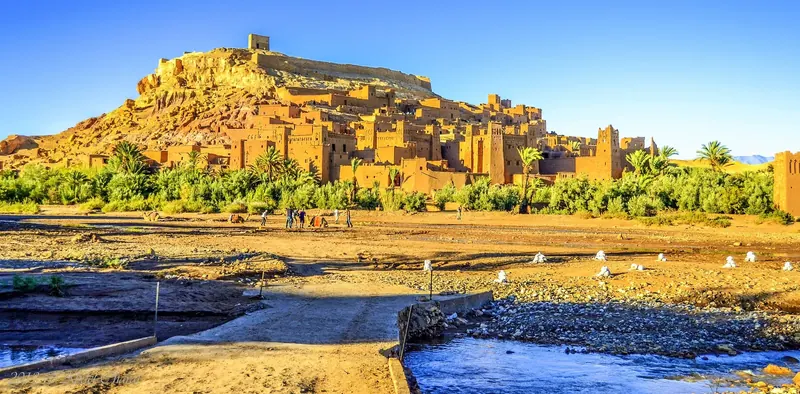
Do not add a Sahara camp or an Atlas circuit to the 10-night route above as a quick detour. It changes the trip from a rail-and-coach city itinerary into a multi-day road itinerary. The clean decision is to replace the northern Chefchaouen branch with a Marrakech-based road segment, or to add several days rather than compressing Fez, Rabat and Marrakech.
Choose the city route if your priority is medinas, museums, food and the ability to travel independently between bases. Choose a supplier-led road segment if the priority is landscapes, a desert camp or mountain stops and you accept a fixed pickup sequence. For a longer first trip that deliberately makes room for Chefchaouen, see the two-week Morocco itinerary including Chefchaouen. For a south-focused alternative, the first-time Morocco itinerary explains why that route needs its own pacing.
Keep the no-car plan flexible where it matters
A simple no-car trip does not mean booking every hour. Book the pieces that can break the route—intercity rail, road legs and the first night in each base. Leave city taxis, un-timed walks and optional meals flexible unless a provider tells you otherwise.
If you would like help turning your confirmed flights, hotel addresses and independent-provider transport bookings into a workable sequence, Maroc Mobility’s Personal Travel Assistant can help arrange the plan. Transport, accommodation, payment and cancellation terms remain with the relevant providers.