The 10-night answer
This route is for couples who want contrast without collecting hotel check-ins: four nights in Marrakech, two in the Atlas foothills, four in Essaouira, then departure on the morning after Day 10. It assumes arrival in Marrakech on Day 1 and an onward flight on Day 11. That is the cleanest way to describe a genuine 10-night trip.
The key decision is not which activity sounds most romantic. It is whether a day belongs to a place or to a road. On this plan, Days 4, 6 and 10 are deliberately light transfer days. That leaves enough time to settle in, absorb a delayed departure or simply stop for a meal without turning the honeymoon into a sequence of missed reservations.
This is a no-Sahara version. A desert circuit can be wonderful, but adding it to Marrakech, mountains and the Atlantic creates more long road days than many couples want in 10 nights. The existing Morocco honeymoon guide helps with the higher-level choice between those route shapes.
Day-by-day: Marrakech, Atlas, coast and an airport night
| Day | Sleep | The useful plan | Keep it realistic |
|---|---|---|---|
| 1 | Marrakech | Arrive, complete the accommodation handoff and have one easy meal nearby. | Do not schedule a city tour, hammam or special dinner with a non-refundable arrival-time commitment. |
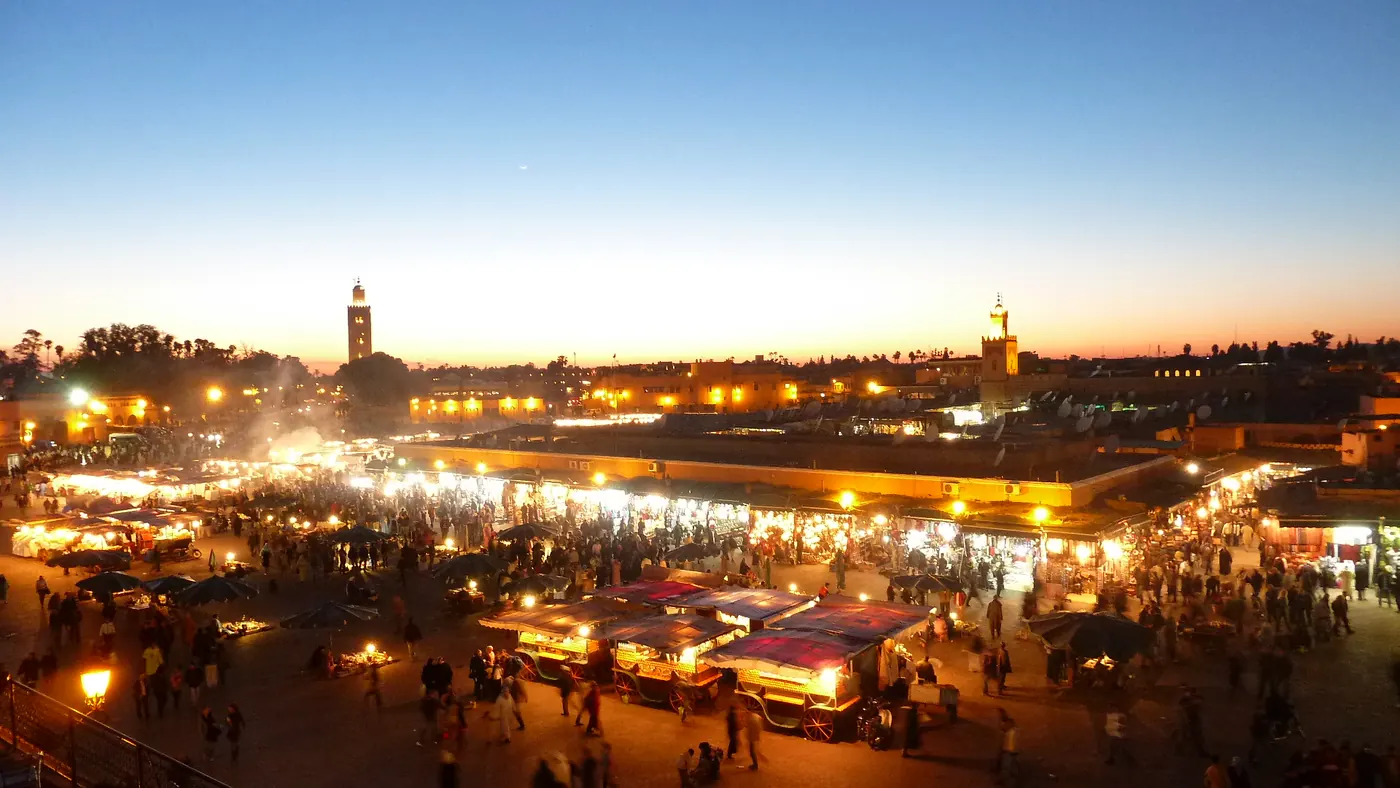
| 2 | Marrakech | Choose one anchor: a guide, a garden, a cooking session or a self-directed medina wander. Leave the other half of the day open. | A single anchor is enough after an international arrival. |
| 3 | Marrakech | Keep a flexible city day. Use it for the experience you skipped, a rest afternoon or a carefully chosen day outing. | Do not use this as a mandatory all-day excursion plus a late dinner reservation. |
| 4 | Atlas foothills | Move to a mountain base after breakfast. Check in, take a short local walk only if everyone still has energy, then eat at or near the property. | The move is the plan; ask the transport provider for the current door-to-door timing and final-access instructions. |
| 5 | Atlas foothills | Choose one slow mountain experience: a gentle walk, a local guide for an appropriate route, or uninterrupted time at the accommodation. | A strenuous hike should be a conscious choice, not a default honeymoon activity. |
| 6 | Essaouira | Travel west to the Atlantic coast, check in, then take only a short orienting walk and a simple dinner. | Avoid booking a sunset activity that depends on a precise arrival time. |
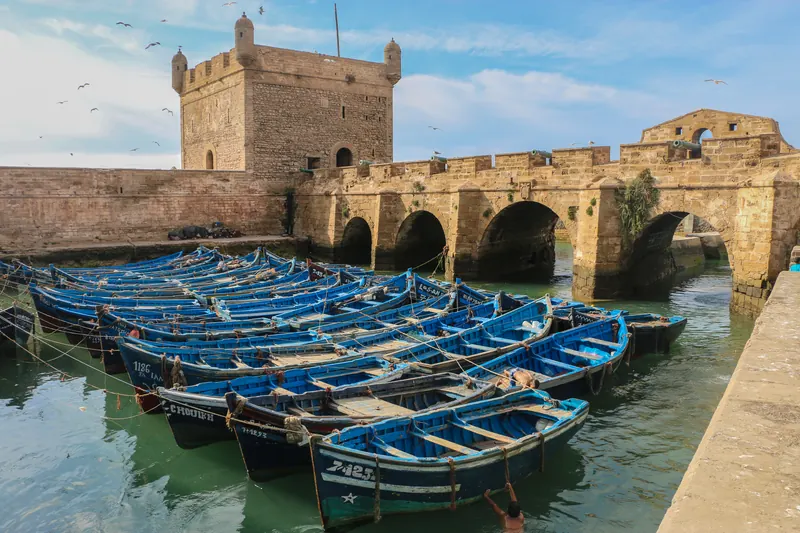
| 7 | Essaouira | Give the medina and harbour area an unhurried half day; leave the other half for a café, terrace, spa or rest. | The historic medina is a destination in its own right, not a gap between transfers. |
| 8 | Essaouira | Make this the weather-flexible coastal day: beach time if conditions suit, or crafts, food and a slower old-town day if they do not. | Wind and water conditions are variables, not inclusions. |
| 9 | Essaouira | Keep one full choice day. Repeat a favourite spot, take an activity only after checking its conditions and cancellation terms, or do almost nothing. | This is the buffer that makes the route feel like a honeymoon rather than a tour. |
| 10 | Marrakech | Return to Marrakech for the final night, confirm the airport transfer and pack without a long final road leg before a flight. | Do not add a major attraction; book dinner only if the arrival plan leaves a comfortable margin. |
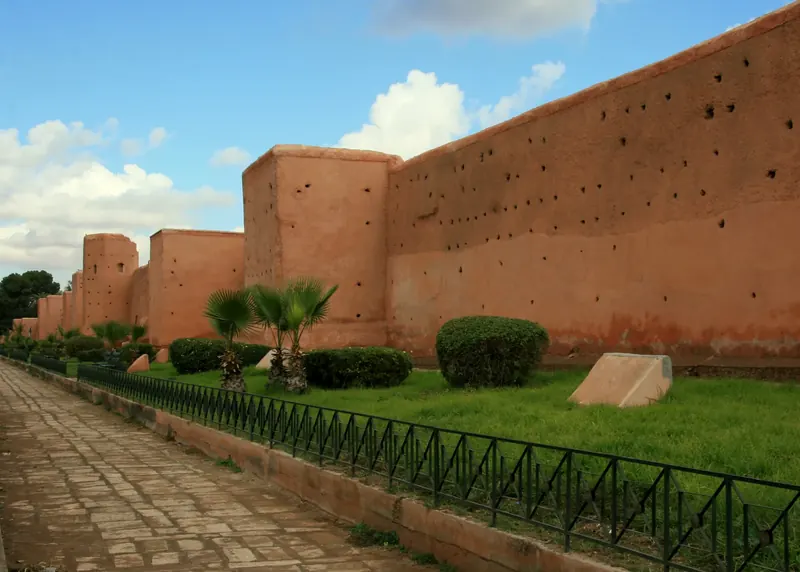
For the first three Marrakech nights, select the stay style before the photo appeal. A medina riad can be atmospheric, but luggage handoff, vehicle access, stairs, late arrival and room layout need written confirmation. A hotel in a more accessible area may be the calmer choice for a late landing or a final airport night. Use the Marrakech stay-area guide to compare those trade-offs.
Keep transfer days as transfer days
Do not plan this itinerary from map pins alone. Get the actual pickup point, luggage arrangement, planned stops, final vehicle access and latest practical departure time from the relevant transport or accommodation provider in writing. If a private transfer, rental car or driver is involved, the route, weather and vehicle plan belong in that confirmation—not in an assumption based on a generic itinerary.
The Atlas segment deserves the largest margin. The UK Foreign, Commonwealth & Development Office notes that poor weather can make secondary and mountain roads especially hazardous, and that night driving is made riskier by poor lighting.1 That is not a promise that a particular route will close; it is a reason to keep the mountain transfer in daylight, watch current local information and retain a lower-key fallback.
Use the same discipline on the return from Essaouira. The final Marrakech night is not wasted time: it separates a changing road journey from an international departure. Only remove it when your own confirmed transport and flight timing leave a margin you are genuinely comfortable with.
Make the coast a real pause
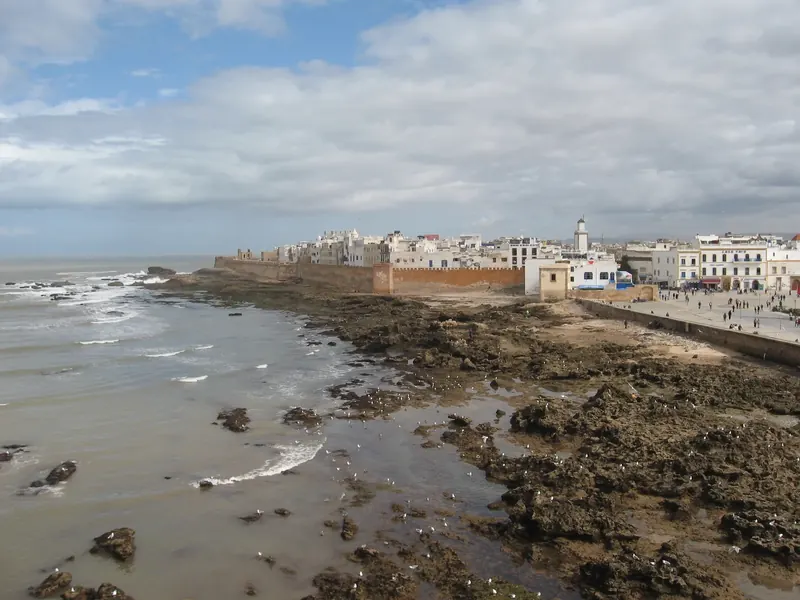
Essaouira earns four nights here because it changes the pace rather than merely changing the background. UNESCO describes its medina as a late-18th-century fortified town and international trading seaport; its walls and port make a satisfying low-pressure half-day on foot.3 For a practical route through the old town, use this Essaouira medina guide rather than trying to fit every rampart, souk and harbour stop into one arrival evening.
The Moroccan National Tourism Office highlights the city’s Atlantic wind, seafront ramparts and port.2 That makes one simple planning rule useful: decide the kind of coastal day in advance, but choose the exact activity after checking that day’s conditions. A sheltered café, museum or longer medina lunch is a better backup than forcing a water activity or exposed beach time. Beaches may have limited or no lifeguard cover, and currents can be strong, so swimming should never be treated as a guaranteed itinerary item.1
A useful couple-level conversation for Day 9 is: “Do we want a shared activity, or do we want a beautiful place with nothing required?” Book only the choice that both people prefer. The latter is a valid use of a honeymoon day.
Book in a sequence that protects flexibility
- Set the flight framework first. Confirm the arrival airport, the departure airport and the final-night city before paying deposits elsewhere.
- Reserve the four bases next. Ask each accommodation about exact vehicle access, room type, stairs or lift, climate control, dining availability, cancellation terms and any special-request cost. A romantic label does not answer those questions.
- Secure only the three intercity movements. Ask each provider who meets you, where, with how much luggage, what happens after a flight or weather delay, and whether the quote includes all expected stops. These are supplier terms, not national rules.
- Add one high-priority experience per location. Keep at least one Marrakech and one Essaouira period unscheduled. Check current opening days and times directly with any attraction or venue before purchasing a timed ticket.
- Reconfirm close to travel. Recheck weather, road conditions, pickup contacts and accommodation access. For mountain walks or water activities, ask the actual provider about conditions, safety equipment, supervision and what your insurance covers; do not assume a booking includes them.1
Choose the 9-night version or a different route
If your holiday is 10 calendar days and 9 nights, do not pretend it is this 10-night plan. Keep the arrival and final Marrakech nights, keep two nights in the Atlas foothills, and reduce Essaouira from four nights to three. That retains the route’s rhythm while making Day 10 a departure day rather than another long transfer.
If sand dunes are the non-negotiable part of the honeymoon, replace the Atlantic section with a Sahara-focused route and give it the extra road days it needs. Do not append Merzouga to this itinerary simply because a ten-day tour page does. The result usually sacrifices the coast’s recovery time and turns multiple days into transit.
If the mountains feel like another move rather than a pleasure, stay longer in Marrakech and Essaouira instead. This is a honeymoon itinerary, not a completeness test.
Pre-departure handover checklist
- Arrival transfer: flight number, delay-contact method, exact vehicle drop-off point and host contact.
- Each stay: the reserved room category, bed arrangement, bathroom, air conditioning or heating availability, steps/lift and late-check-in procedure.
- Mountain transfer: daylight target, current route check, luggage plan, meal stop and a bad-weather fallback.
- Essaouira: accommodation gate or drop-off point, an exposed-weather backup, and no assumption that swimming or a water activity will operate.
- Final night: airport transfer time, airline terminal guidance and a shared offline copy of every booking.
- Special occasions: what is included, what costs extra, cancellation terms and the provider’s written confirmation—rather than a request noted only verbally.
If you would like help coordinating this pace around independently booked stays, transfers and activities, see Maroc Mobility’s Personal Travel Assistant. Providers remain responsible for their own availability, terms, bills and confirmations.