The useful short answer
The Kasbah of the Udayas suits a visitor who wants a short, self-guided heritage walk with an optional museum visit, rather than a tightly programmed attraction. It is part of the historic fabric of Rabat's World Heritage property, which UNESCO inscribed in 2012; the Moroccan National Tourist Office also presents the Kasbah and its gardens as one of the capital's essential sights.1 2
The practical choice is whether to make a short outdoor walk or add the National Museum of Adornment. Keep the outdoor part flexible: it is a residential historic quarter, and no dependable official timetable or admission policy for every lane and garden area was published in the official visitor material checked for this guide. Go in daylight, respect any barrier or local instruction, and do not plan a connection around unverified directory hours.
Decide whether it fits your Rabat day
Choose the Kasbah when you want atmosphere, fortifications, lanes and a pause by the Bou Regreg rather than a large collection or a long formal tour. UNESCO specifically notes the significance of the view from the Kasbah toward the river, while Rabat's inscription is for the broader modern-and-historic urban ensemble—not a standalone listing for this one quarter.1
It is a good first or last stop in a Rabat day if you can leave the timing loose. It is a weaker choice when your main priority is guaranteed indoor time, step-free sightseeing, or a visit that depends on a published closing time. In those cases, make the museum your primary destination only after checking its official page, or choose another sight with a clearer current-access policy.
Plan a daylight route, not a fixed circuit
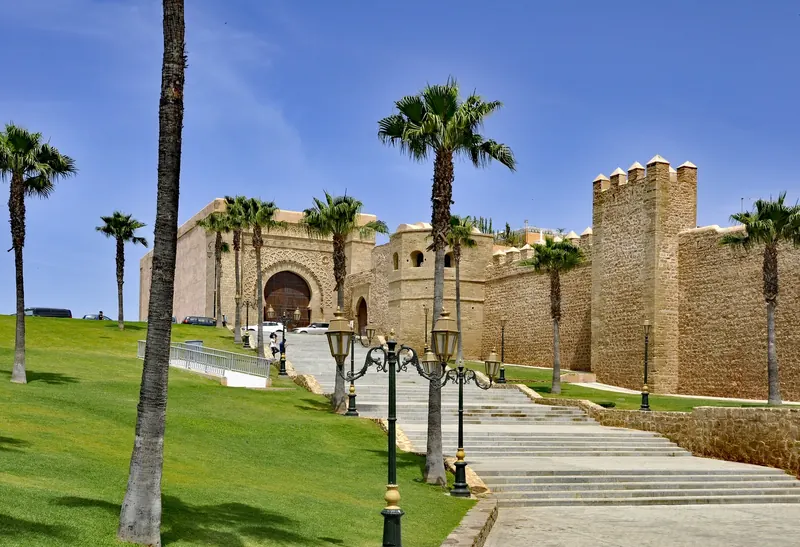
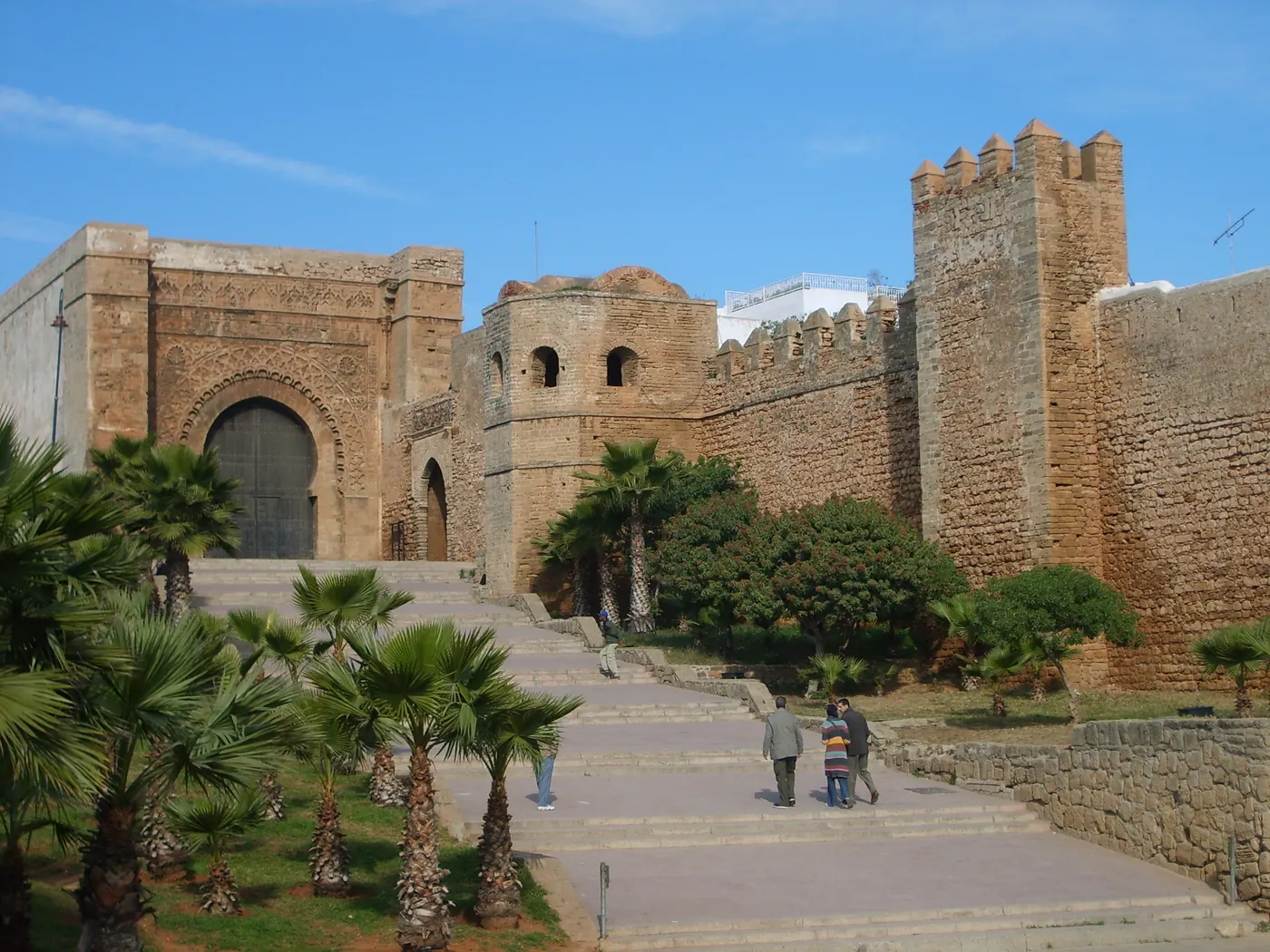
Start outside at Bab Oudaia, the monumental entrance shown in the hero image. Pause there to decide whether the conditions, heat and walking surface suit the whole group. This is the moment to take the shorter option: view the gateway, walk only the most comfortable stretch, and leave the interior for another time if the route does not feel right.
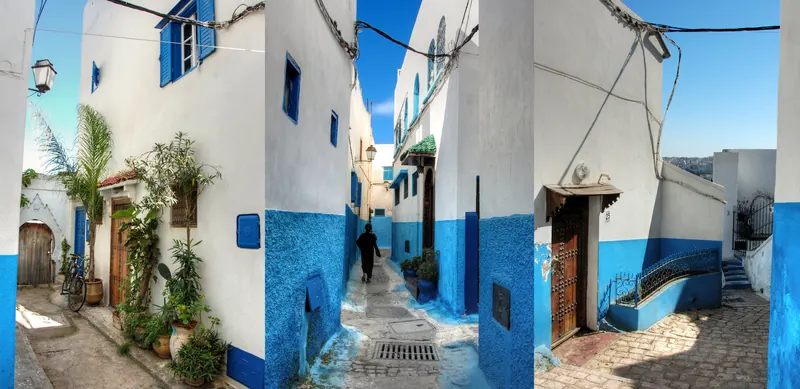
Then use the blue-and-white lanes as the experience, not a checklist. Move slowly, keep doorways clear, and remember that homes and everyday movement come before a photo. Ask before making a close portrait of a resident, and avoid setting up equipment or blocking a narrow passage. The Kasbah has visual appeal, but it is not a theme set.
If public access is open, the Andalusian Garden is a natural quiet pause rather than something to schedule to a minute. ONMT identifies the gardens as part of the Kasbah visit, but does not publish a garden timetable or fare on its Rabat page.2 Treat a closure, maintenance work or a changed route as a cue to continue the walk elsewhere, not as a reason to press through a restricted area.
Use any open river or Atlantic-facing viewing area as a final stop, then exit by the route that feels most manageable. Do not climb walls, cross barriers or assume every terrace, stair or rampart edge is meant for visitor access.
Museum, garden and outdoor lanes have different rules
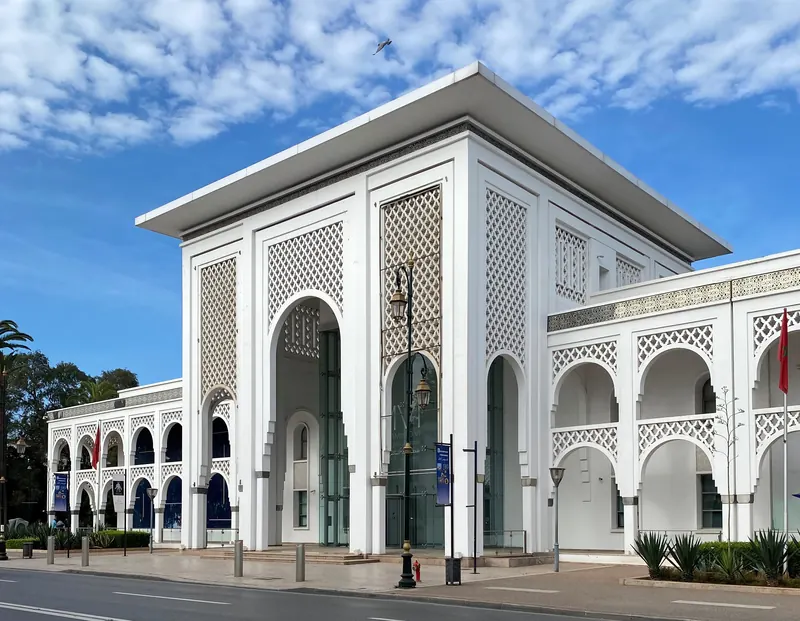
The National Museum of Adornment is inside the Kasbah but should be planned as its own visit. The Fondation Nationale des Musées currently lists the museum at Kasbah des Oudayas, Rabat. Its page displays hours of 10:00–18:00 and says it is closed on Tuesday; it also lists 60 DH for foreign visitors, 30 DH for Moroccan adults and 15 DH for Moroccans under 18.3
Those details are useful for a budget, but they are not a promise. The same FNM line also contains an internally inconsistent “Monday to Sunday” phrase. Before travelling specifically for the museum, check the official page or call the listed museum number for the date's opening, ticket category, last-entry practice, photography rules and any holiday or event closure. The FNM page identifies the museum as a collection-focused addition, so it is most worthwhile when Moroccan adornment and material culture interest you; it need not be part of every short Kasbah walk.3
For the garden and the outdoor quarter, do not transfer the museum's ticket or hours to the wider Kasbah. No current official all-area access policy was found for this guide. Follow the information posted on site.
Match the walk to your group's mobility and comfort
There is no authoritative accessibility map or step-free route published for the wider Kasbah in the sources checked. Historic lanes can be narrow and vary in surface and level, so do not describe the area as wheelchair- or stroller-accessible without a same-day assessment. If step-free movement is essential, ask the museum directly about its own entrance, and treat the outer gateway or any straightforward public viewpoint as the safer fallback rather than committing to the interior.
For families, no official outdoor age restriction or child policy was found. The useful question is practical: can each child manage a slow walk, changes in level and supervision around edges without turning the visit into a rush? Keep children close, take breaks before anyone is tired, and be ready to shorten the route.
No attraction-specific dress code was found for the outdoor quarter. Wear comfortable, grippy walking shoes and clothing suited to a residential historic setting. For a museum visit, confirm any bag, food, photography or event-specific rule directly with FNM rather than assuming that the outdoor environment and gallery rules are the same.
Build a small Rabat circuit around the Kasbah
Avoid trying to turn the Kasbah into every part of Rabat in one stop. Pair it with a short medina walk or use it as one anchor in the city's broader sightseeing plan. For choosing the other main districts without overloading the day, see this practical guide to things to do in Rabat.
If the Kasbah visit is tied to a train arrival, a museum opening window, mobility needs or a same-day onward journey, leave room to change the order of your day. A Maroc Mobility Personal Travel Assistant can help organize independent-provider questions on purchased travel dates; museum access, transport availability, prices and final terms remain the responsibility of the relevant operator.
For a distinct indoor cultural stop, the Mohammed VI Museum visit guide covers its own ticket and arrival questions. Use it to compare a museum visit with the Kasbah walk, rather than assuming a fixed order or timetable for both.
A short pre-visit checklist
- Plan the outdoor walk in daylight and check the weather, especially if heat, rain or strong wind would affect your group.
- Decide whether the museum is optional or essential. If essential, confirm the official FNM listing before you travel.
- Carry water and wear shoes that suit uneven historic paving; leave the plan flexible enough to turn back.
- Do not drive the route into the Kasbah on the assumption that visitor parking or vehicle access is available. Arrange your Rabat arrival separately and approach on foot.
- Photograph architecture thoughtfully, ask before close photographs of people, and never bypass a barrier for a viewpoint.
Frequently asked questions
Is the Kasbah of the Udayas a separate UNESCO World Heritage Site?
No. Rabat is the property inscribed by UNESCO in 2012, and the Kasbah forms part of its historic urban fabric. Describe it as a component of Rabat's World Heritage ensemble rather than as a separately inscribed site.1
Is there a ticket for the Kasbah?
Do not assume one rule covers the entire area. The official FNM page lists a 60 DH fare for foreign visitors to the National Museum of Adornment, alongside separate Moroccan adult and under-18 prices. That is museum information, not a published price for every outdoor lane or garden area.3
Can I take a stroller or wheelchair into the Kasbah?
There is no published official step-free route for the wider quarter in the sources checked. Assess the entrance and surface on arrival, ask the museum about its own access if it is part of your plan, and be ready to choose a shorter exterior visit.