The short answer
For a spontaneous, informal seafood lunch, the port format can be the more engaging choice—provided you are willing to settle the practical details in person. For a planned meal, a table-service restaurant is usually the lower-uncertainty option: you can see a menu, make a request and ask about payment before you leave your accommodation. Neither format is automatically cheaper, fresher or better.
The deciding question is simple: do you want to select and verify the meal on the spot, or do you want more of the arrangement set before you arrive? Treat the harbour as a working setting rather than a promise that every counter is serving, every species is available or every price is comparable.
Port grill and restaurant: the deciding differences
| What matters | Port-style grill or counter | Table-service restaurant |
|---|---|---|
| Best fit | A flexible daytime stop where the informal setting is part of the appeal | A meal with a chosen time, seated service and more predictable ordering |
| Seafood choice | Ask what is actually available, how it is sold and how it will be cooked | Read the menu, then ask which fish dishes or daily specials are available |
| Price clarity | Get one total in dirhams before preparation, including any sides, bread, salads and cooking | Check the current menu, service charge and any specials before ordering |
| Timing | Confirm that food is being cooked now and how long it will take | Confirm opening hours and whether a reservation request has been accepted |
| Payment | Ask before choosing; do not assume cards or change will be available | Check the restaurant’s stated payment options and bring a backup method |
| Comfort and access | Inspect seating, wind, pavement, queues and washroom access for yourself | Ask the venue about the table, stairs, toilet route and child arrangements if these matter |
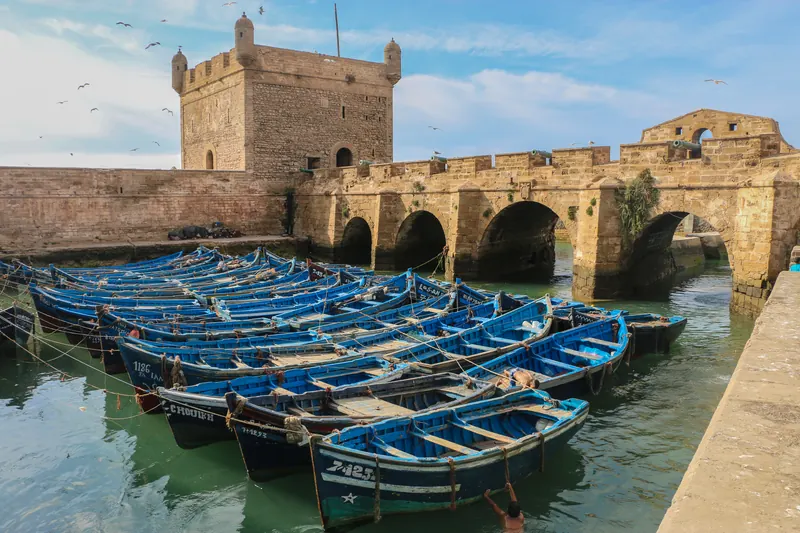
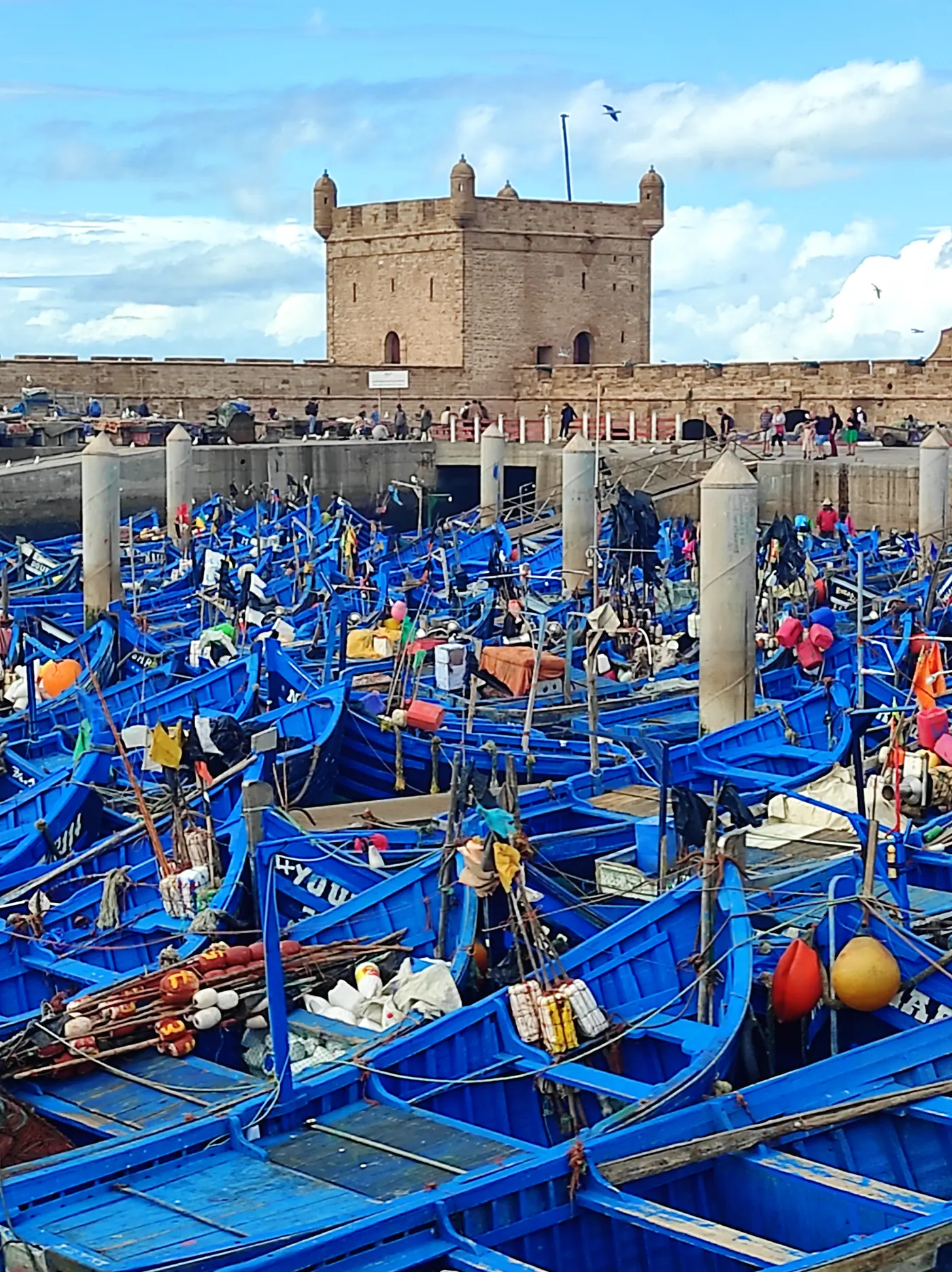
The port option: an informal, variable meal
A port meal suits travelers who can be flexible about the exact fish and who value the setting more than a fixed menu. It is not a shortcut around basic food and budget questions. Before a grill is lit or a selection is handed over, ask the seller to identify what you are buying and make the calculation explicit.
Use this short sequence:
- Ask which fish or shellfish is available now, and whether the displayed price is per kilogram, per item, or for a prepared portion.
- Ask what the quoted amount covers: selection, weighing, cleaning, grilling, bread, salads, drinks and service can be separate decisions.
- Confirm the total in Moroccan dirhams before cooking starts. If it is priced by weight, ask to see the weight and the arithmetic first.
- State the cooking preference and any ingredient concern plainly. A seafood option is not an allergy-safe meal by default, and a reassuring answer should never replace a clear discussion with the person preparing it.
- Look at the actual seating and queue before committing. If wind, crowding, uneven ground or waiting would spoil the meal, move to a restaurant instead.
This format can work well for adults who are content to stand, wait or eat simply. It can be a poor fit for a group that needs a high chair, a reliable toilet route, a calm seated meal or a tightly timed onward plan. Those are practical constraints, not a judgment on the food.
A table-service restaurant: defined details, not a guarantee
A restaurant is the sensible default when a meal needs to fit a particular time, group or payment preference. It is still worth checking the details instead of relying on a map listing or an old review.
For a concrete, currently published example, Butterfly Space in the Medina lists fish and seafood, a direct booking request, daily hours of 11 a.m. to 11 p.m., and Visa and Mastercard acceptance. Its request is not confirmed until the restaurant approves the accompanying WhatsApp message. The same site says fish and seafood follow the day’s market and seasonal arrivals. 1
Its published menu gives a useful illustration of why a restaurant menu can make budget planning easier: a grilled-fish parillada is listed at 190 MAD with service included, while the page warns that market-fresh items can vary. That is a menu example, not a citywide seafood price benchmark. 2
La Table Madada is a second, differently timed option to verify directly: its own page describes fish specialties, says dinner is by reservation from 6 p.m. to 9 p.m., and lists a Tuesday closure. It also describes a bar and cocktails, which is relevant only for diners who want an alcohol-serving restaurant; it does not describe the policy at other seafood venues. 3
These examples are not a ranking. They show the useful checks: an official menu, a location, a reservation route, stated service hours and a way to ask the operator about the day’s seafood. Confirm those details again when making the booking, especially if the meal is on an arrival day, a holiday or a date with a fixed departure.
Build your budget from a written total
A low-looking seafood price is not meaningful until you know its unit and what is included. For a port meal, ask for the final number before the fish is prepared. For a restaurant, read the current menu and ask whether the suggested fish, cover, service or drinks change the total.
Keep the comparison like-for-like. A simple grilled portion eaten at a port counter and a seated restaurant plate may differ in preparation, side dishes, service and payment convenience. Comparing only the first number can create the wrong expectation. If a price or calculation is not clear, choose another seller or a menu-based restaurant rather than arguing after the meal.
Questions that protect the meal
Ask these before committing, whichever format you choose:
- What seafood is available today, and how is this particular item priced?
- What exactly is included in the total?
- How will it be cooked, and what ingredients or sauces are used?
- How long will the meal take from order to table?
- Is card payment accepted, or is cash needed?
- Can the kitchen accommodate the specific dietary request you have? If the answer is uncertain, choose a simpler order or another venue.
For a restaurant, add: “Is my booking confirmed?” An enquiry, message or online form is not the same as an accepted table unless the restaurant says so.
Family, access and alcohol
Do not infer family suitability, step-free access, dress requirements or age rules from a seafood listing. At the port, inspect the route and seating in person. At a restaurant, ask about a pushchair or wheelchair route, high chairs, a quieter table and the bathroom route before booking if any of those are essential. The sampled restaurant pages do not provide a complete, comparable accessibility or child-policy standard, so a direct answer from the venue is more useful than an assumption.
Dress requirements are likewise venue-specific. Practical layers and secure footwear make sense around a windy harbour, but a dinner restaurant may set its own expectations. Alcohol should be treated as a restaurant-by-restaurant question; La Table Madada’s published bar and cocktail information is not evidence that the port or another restaurant serves alcohol. 3
Plan the meal around the rest of your day
If the meal follows a walk through the old town, use the Essaouira Medina guide to keep the port and your next stop in the same part of the day. If you are staying outside the walls or near the beach, build in the actual return route rather than assuming a quick walk back; the choice of base changes that trade-off, as covered in where to stay in Essaouira.
A port lunch is often easier to keep flexible. A dinner reservation can be better when you need a fixed finish, a table or a published payment option. In either case, leave enough margin for the question that actually matters: whether the venue can serve the group, seafood and timing you want on that date.
If coordinating restaurant questions, accommodation access and transport timing across several Morocco days feels like unnecessary work, Maroc Mobility’s Personal Travel Assistant service can help organize your itinerary support while each restaurant remains responsible for its own availability, prices and terms.
If seafood dinner is only one part of the plan, keep the later choice separate rather than assuming the meal decides the night. The Essaouira evenings guide helps distinguish a music-led plan, a quiet medina finish and the return arrangements each needs.
Frequently asked questions
Is a port grill always cheaper than a restaurant?
No. The total depends on the seafood, pricing unit, preparation and what is included. Agree a final total before cooking at a port counter, and compare it with a current restaurant menu rather than a remembered price.
Do I need a reservation for seafood in Essaouira?
Not for every format, but make one when the meal has a fixed time or group size. Butterfly Space says its booking request is confirmed only after the team approves the WhatsApp message, and La Table Madada says dinner is by reservation. 1 3
Can I rely on a displayed fish to be available?
No. Supply and restaurant dishes can change. Ask what is being served that day before choosing; Butterfly Space explicitly says its fish and fresh produce vary with market and season. 2
What should I do if I have an allergy?
Explain the specific allergy and ask how the chosen dish is prepared. Do not treat a seafood restaurant, a vegetable side or an informal grill as allergy-safe without a clear answer from the person responsible for the meal.