Decide before you go
Chellah is a strong choice for travelers who want one outdoor heritage visit with both ancient and medieval layers, rather than another quick city viewpoint. Give it a dedicated block in a Rabat day: use the standard ticket if you are happy to follow the site panels at your own pace; add the audio guide if the Roman and Marinid context is the point of the visit; and reserve a mediator-led visit only when your group wants a fixed, more interpretive format. The official site describes the place as the ancient city of Sala Colonia, later partly occupied by a Marinid necropolis, within a walled archaeological setting on the Bouregreg’s left bank.5
Do not build a tight schedule around an old blog’s price or opening time. Chellah now has its own live ticketing channel, seasonal timetable and time-slot conditions. Its current pages also contain a few internal differences, so the safest plan is to use the official checkout and the opening information shown for your date rather than treating any third-party listing as final.1 3
What makes Chellah different from a general Rabat sight
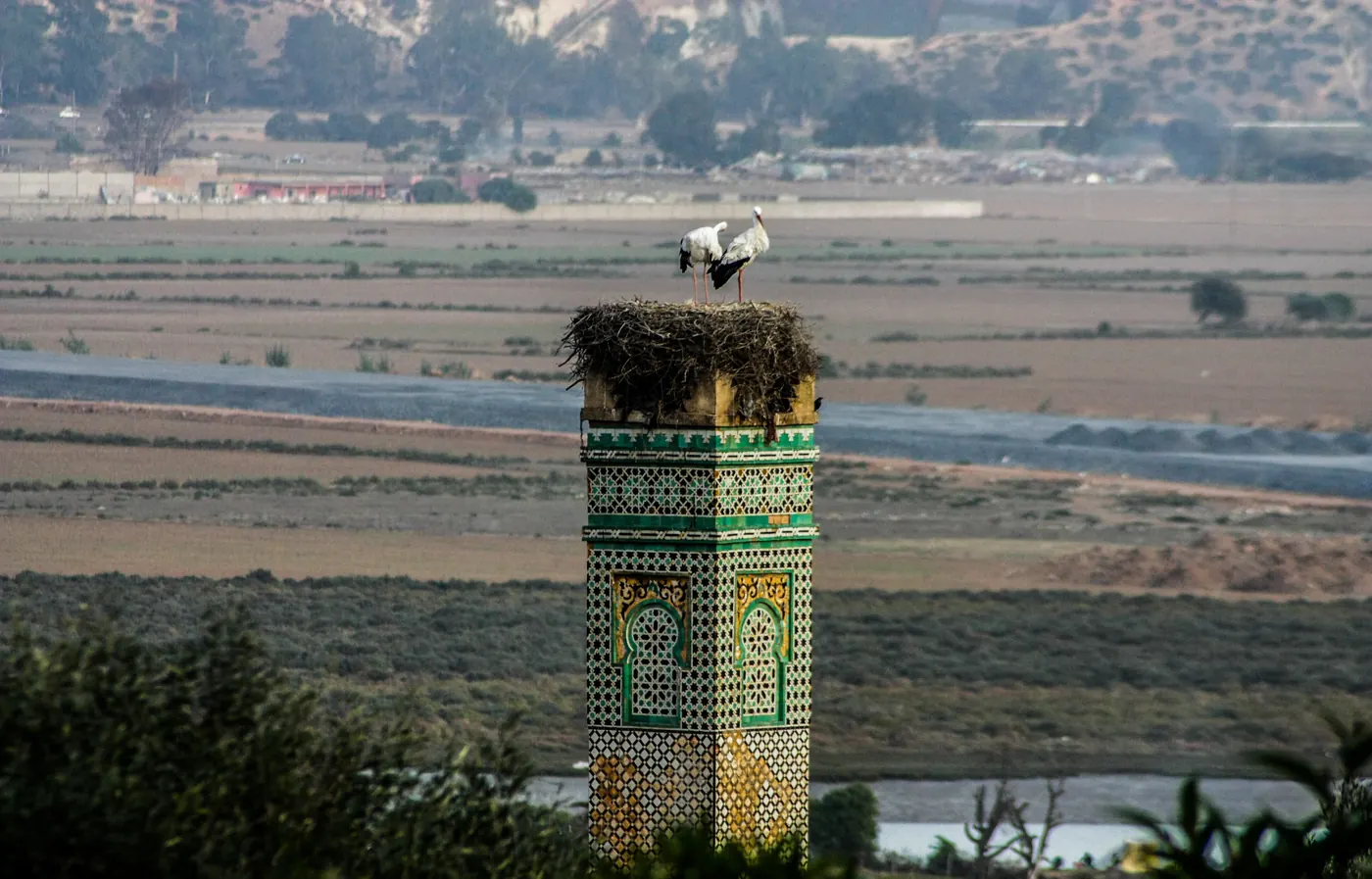
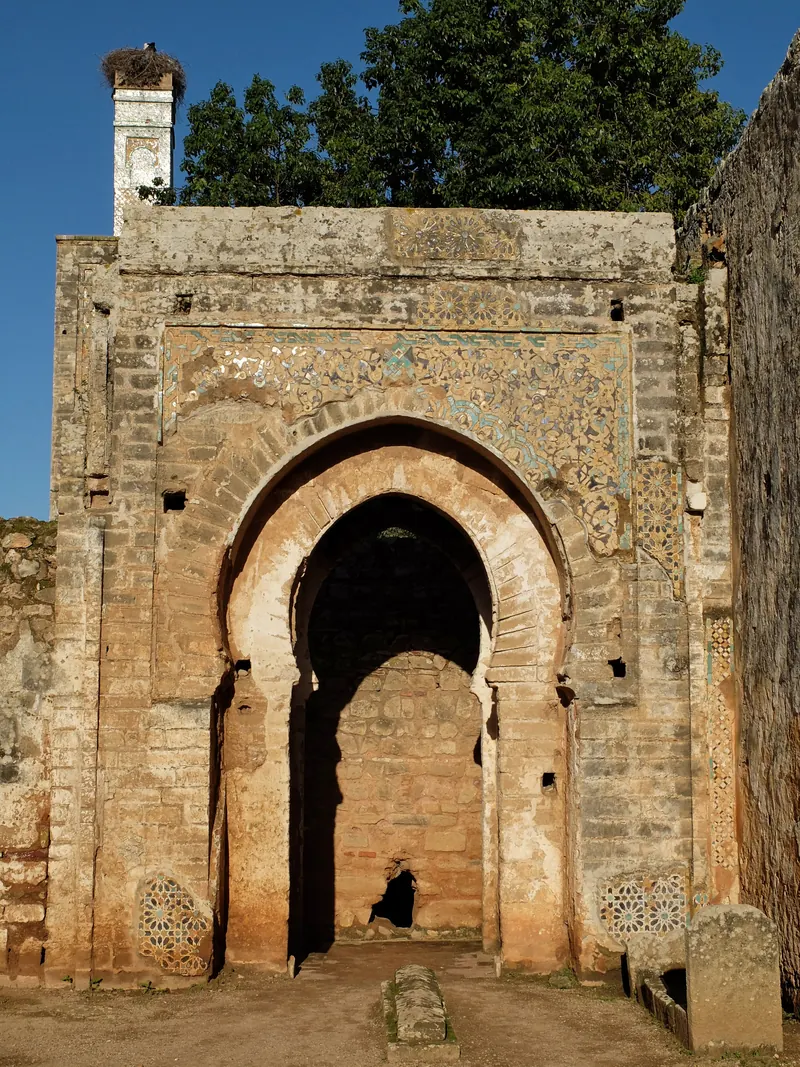
Chellah is not a single intact palace or a small indoor museum. The visit connects archaeological remains with the later Marinid religious complex, walls, gardens and a distinctive minaret. That layered setting is the reason to choose it over simply adding another photo stop. It also sits within Rabat’s UNESCO-listed historic-city property, inscribed in 2012; UNESCO frames the wider city as an ensemble in which archaeological, Islamic and modern urban layers coexist.6
For a first Rabat itinerary, Chellah deserves its own visit rather than being squeezed between the medina and the Hassan Tower area. Use the broader Rabat sightseeing guide to choose your other districts, then keep Chellah as the heritage-focused part of the day.
Choose the ticket and interpretation level
At the time checked, the official practical-information page lists these self-entry prices in Moroccan dirhams: 70 for an adult over 25, 50 for a youth or student aged 15–25, 30 for a child aged 7–14, and free entry for children under 7. It says Moroccan citizens and foreign residents in Morocco receive a 50% reduction on applicable rates. Reduced and free tickets require the requested proof of eligibility, so carry it rather than assuming the online selection alone settles the fare.1
| Choice | Best fit | What to confirm |
|---|---|---|
| Standard entry | You want to explore independently and can read the site panels. | The time slot, the current price and any online booking fee. |
| Individual audio guide or mobile app | You want more historical interpretation without a fixed group tour. | Availability: the official site says individual and group audio equipment is limited each day. |
| Mediator-led accompaniment | A group wants a scheduled explanation rather than self-guiding. | The reservation time, language, group size and whether admission and audio are extra. |
The official rate card shows an adult audio-guide entry at 120 MAD, against 70 MAD for adult self-entry. It also advertises a two-hour accompaniment service at 300 MAD per group, explicitly excluding admission and audio-guide rental. This makes the trade-off simple: an individual who mainly needs context can price the audio option first; a party that wants a professional mediator should obtain the full total, not assume the 300 MAD covers entry.1
There are two availability details worth checking before you pay. The practical-information page says the Heritage Interpretation Centre option is not available at the moment, while the ticketing site still displays an HIC option. The official pages also use different group thresholds: practical information describes group entry from 25 people, the audio-guide page describes a group audio tour from 10, and the ticketing page describes that audio tour as 25–40 people. Confirm the exact product at checkout or ask the site directly instead of relying on a label alone.1 2 3
Use the timetable as a planning constraint
The main practical-information page currently lists 9:00–18:00 from 1 October to 31 March and 9:00–20:00 from 1 April to 30 September. Its main timetable lists Ramadan hours as 9:00–15:00. The same official page’s footer gives Ramadan as 9:00–16:00, and the ticketing footer gives summer as 8:00–20:00 rather than 9:00–20:00. Those conflicts are a reason to verify the date-specific time in the booking flow or with Chellah before you set out, especially during Ramadan or on the season-change dates.1 3
The rules state that access is limited to one hour before closing. A slot booked online admits the holder within 30 minutes of the selected time, and each ticket is for one person, one date and the booked service. Aim to arrive with more than an hour to spare. That protects a self-guided visit from feeling rushed and leaves room for a slow route through the site rather than a dash to the exit.3 4
A sensible allowance is about 90 minutes to two hours for an unhurried independent visit; reserve more if you are using an audio guide, moving slowly on historic surfaces or taking a mediator-led two-hour tour. This is a planning allowance, not an official minimum or a promise about queues.
Get there without adding avoidable friction
Chellah’s official visitor page identifies Rabat Ville as the nearest train station, says taxis are a common way to reach the site, and notes a parking lot immediately outside. It does not publish a fixed transfer time, fare or parking capacity. If you have a timed ticket or an evening train, treat the final taxi or parking step as a separate allowance and confirm the return plan rather than counting on a vehicle being immediately available.1
Travelers arriving from Casablanca can first choose the right intercity mode and station in the Casablanca-to-Rabat travel guide. Once in Rabat, avoid trying to turn a site visit into a precise walking-distance promise from your hotel: luggage, heat, mobility needs and the time of day can make a short-looking map route a poor choice. A taxi drop-off and a pre-agreed return point are often the lower-friction option when timing matters.
Your overnight base can remove some of the moving parts before a timed heritage visit, especially when bags or a next-day departure are involved. Where to stay in Rabat compares Medina, Hassan and Agdal stays through those practical choices.
Plan honestly for mobility and families
The official site welcomes people with reduced mobility but warns that, because of conservation requirements, some areas remain inaccessible. It says special arrangements exist within those limits, but it does not publish a route map, gradient data, a stroller policy or a blanket step-free claim. Contact Chellah before booking if a wheelchair, walking aid or stroller is central to the decision; ask specifically about the entrance, surface, accessible toilets, companion access and which parts of the route can realistically be used that day.1
For families, the posted age bands make the cost transparent, but they do not make the archaeological route a playground. Build in water, shade and a turnaround option, and choose an adult-to-child pace that works for uneven historic ground. The Morocco with kids guide can help place this stop within a less rushed city day. The current English pages do not publish an age restriction for visiting or a separate dress code; follow staff directions and choose practical, respectful clothing and secure footwear. For broader attire planning, see what to wear in Morocco.
Follow the site rules, not assumptions
Chellah’s rules prohibit picnics and food consumption inside; bottled water is allowed. Animals, smoking, climbing and leaving rubbish are also prohibited. Non-professional visitor photography and video are permitted, but professional shoots, filming, broadcasts and events need prior written consent from site management.4
These rules make a small day bag more useful than a picnic plan: water, sun protection, a charged phone for the mobile ticket and footwear with grip are enough for most visitors. The current rules do not set out an alcohol policy, so do not treat the site as a food-and-drink stop; use the written food and water rule and any instruction from staff as the operative guidance.4
Book with the right level of commitment
Buying online is optional: the site says visitors may buy online or at the Chellah ticket office. Online booking is useful when you need a defined entry window or an audio guide, but paid online tickets have a real downside. The official FAQ and sales terms say they are non-changeable and non-refundable once payment is confirmed; the terms also state that a booking fee is added to each paid ticket. Check the date, time, ticket category and traveler name before paying.1 3
A phone ticket can be shown for verification, so printing is optional according to the FAQ. Keep the confirmation email and ticket available through entry. If a service, access arrangement or group threshold is important to you, use the official contact route before purchase rather than expecting a ticket desk to amend an online order.1 3
A simple Chellah visit plan
- Before leaving Rabat: Check the live Chellah timetable and ticket page for your date, then choose standard, audio or a pre-arranged group format.
- At booking: Match every traveler to the correct age or eligibility category. If using a reduced or free category, pack the required proof.
- On arrival: Give yourself a buffer before the one-hour-before-closing entry cutoff. Keep water separate from any food.
- Inside: Follow the panels or audio route at a pace that suits the uneven heritage setting. Stay within open, signed areas and respect staff directions.
- Afterward: Decide your next Rabat district only after you know how much daylight and energy remain. Do not make an unconfirmed return transfer the weak link in the day.
If you would like help keeping ticket questions, arrival logistics and a wider Morocco itinerary in one place, Maroc Mobility’s Personal Travel Assistant service can help coordinate your planning on purchased dates. Chellah itself sets its own tickets, access, availability and visitor terms.