The short answer
Aït Benhaddou works well for a film fan if you treat it as a heritage place first, not an open-air set tour. Go to understand the broad earthen skyline and its relationship with the valley; do not expect labelled scene markers, a fixed “movie route,” or permission to reproduce every frame. The ksar is a World Heritage property with real conservation needs, and the route that is sensible to walk is the one that is open and locally indicated on the day. 1 2
If a film or series is your reason for coming, make the screen connection a way to look more closely at the landscape and architecture—not a reason to enter closed structures, block a doorway, or demand a particular shot. For general route and walking logistics, pair this guide with our Aït Benhaddou visit guide.
Why a film-location checklist can mislead
Film credits are often reported at several scales. A production may use the wider Ouarzazate region, an active studio, nearby roads, and Aït Benhaddou itself; one screen sequence can also combine more than one place, constructed scenery and post-production. Morocco’s national tourist office presents Ouarzazate–Zagora–Tinghir as a film-making region and names productions including Lawrence of Arabia and Gladiator, but that regional claim is not evidence that every remembered image was shot in the ksar. 4
That is why a long online list of titles is not a self-guided itinerary. Treat any title attached to Aït Benhaddou as a research lead. Before travelling, find a reliable production, broadcaster or location source that identifies the exact scene; save a still and the episode or film reference. On site, accept that restoration, weather, access changes, camera angle and later screen work may mean the view no longer matches.
The useful question is not “Where is the set?” It is “Which visible relationship—hill, grouped earthen homes, towers, valley or approach—made this a convincing screen landscape?” That question keeps attention on the place rather than on a risky or intrusive reenactment.
Choose the experience you actually want
| Your priority | Best fit | Set a realistic expectation |
|---|---|---|
| Recognising the skyline and earthen architecture | Spend unhurried time at Aït Benhaddou, including a wider outside view and the open lanes. | There may be no plaque for your chosen title or exact camera position. |
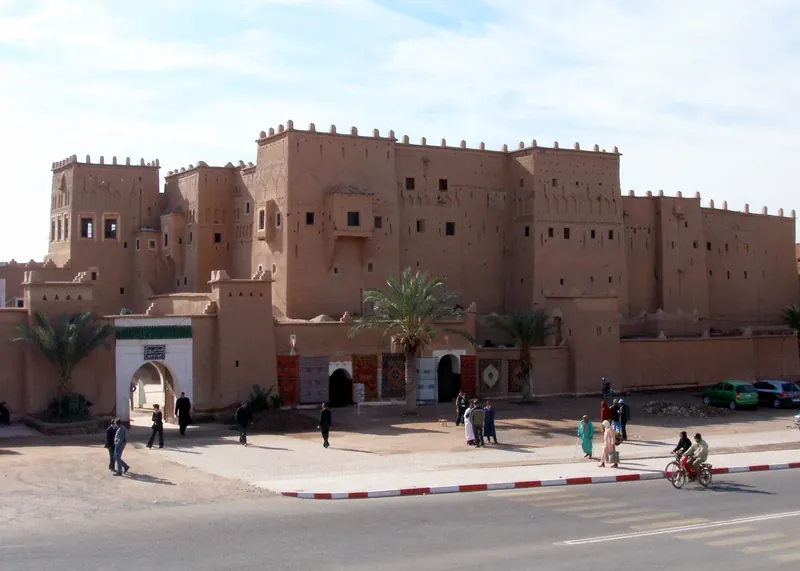
| Seeing constructed scenery and backstage methods | Add a separate visit to Atlas Studios near Ouarzazate. | It is not inside the ksar, and an active-production visitor route can change. 3 |
| Recreating a precise frame | Research the scene before the trip, then compare only from safe public space. | A shot may have used multiple locations, altered sets or later visual effects. Do not plan the day around access that is not confirmed. |
| A single half-day in the area | Choose the ksar for heritage and landscape, or the studio for a guided set-focused experience. | Trying to do both can turn two different experiences into a rushed checklist. |
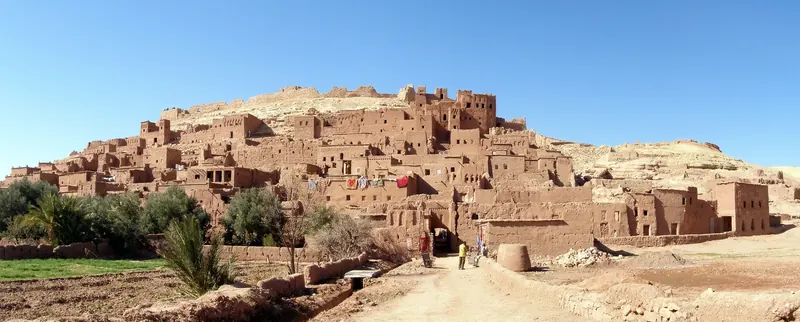
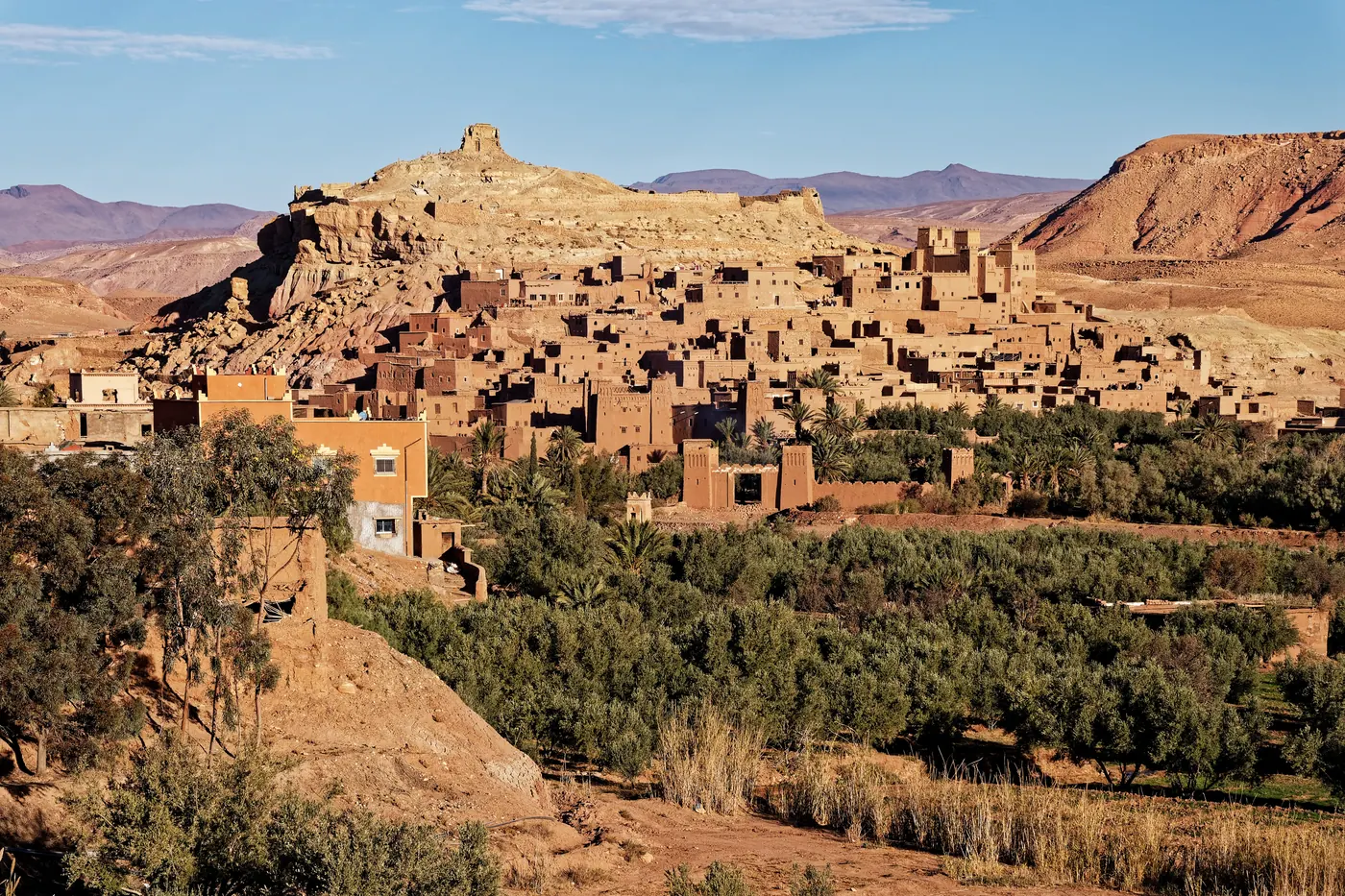
Aït Benhaddou is a ksar: UNESCO describes it as a group of earthen buildings within high defensive walls, with closely grouped houses and community areas. It was inscribed in 1987 for its architecture and as a vulnerable traditional habitat. 2 Calling it a “film set” erases the reason it matters even when cinema is what first brought it to your attention.
Make a screen-aware plan before you arrive
Use a short preparation list instead of downloading dozens of generic “film locations” pins:
- Pick one or two titles, not a catalogue. Record the title, scene or episode, and the source that connects it to the place. If you cannot verify the connection, label it as unconfirmed in your own notes.
- Save a visual clue, not just a claim. A still showing a ridge line, gateway, tower pattern or valley relationship is more useful than a title list. Do not assume a close-up tells you where the camera stood.
- Separate the ksar from studios. A listing that says “Ouarzazate” may refer to a studio tour or the wider region. Decide which experience you want before arranging a driver or reserving time.
- Leave slack. Film interest does not change the walking surface, heat, steep sections or temporary restrictions. A flexible visit is better than arriving with a rigid shot list.
- Choose a respectful fallback. If a lane, interior or viewpoint is closed, use the view available from the established route. The visit is still successful if you understand why a director might have been drawn to the overall form.
Travel without a rental car? Our Ouarzazate-to-Aït Benhaddou transport plan explains the separate final-leg decision. It is more useful than treating a screen-location pin as a transport plan.
How to look for film context without disrupting the place
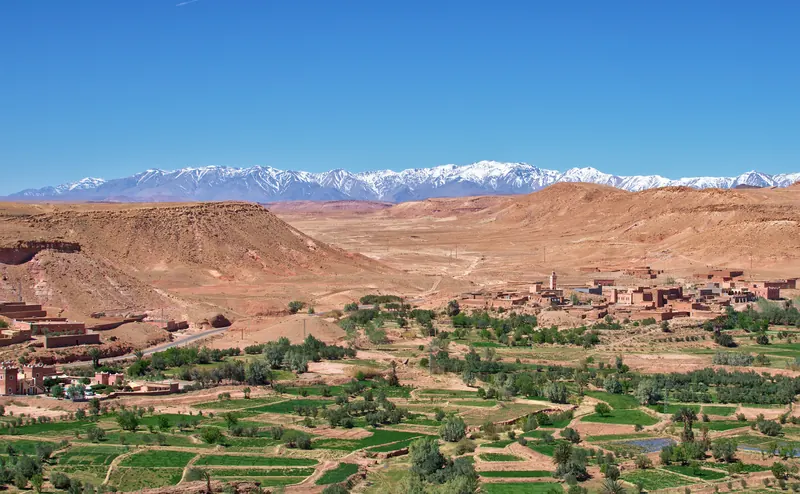
Start outside or at a broad public view. The whole mass of buildings against the slope and valley supplies the scale that a close crop usually loses. Then walk only along the route that is available, looking for architectural features rather than trying to match a frame step for step.
Use this small on-site checklist:
- Check access first. A rope, sign, closed doorway, local instruction or unstable-looking surface ends the search for that angle.
- Keep doorways and lanes clear. Stop at an edge, take the photograph, then move on. A narrow lane is someone else’s route home or work as well as a visitor passage.
- Ask before making people part of the image. Residents, workers and children are not background actors. A person who offers a photograph or a guide may expect a fee; agree any terms before taking the image or starting the tour.
- Do not touch, climb or rearrange the fabric. Do not lean on earthen walls, enter a private-looking space, move items, or use a fragile edge to improve a camera angle.
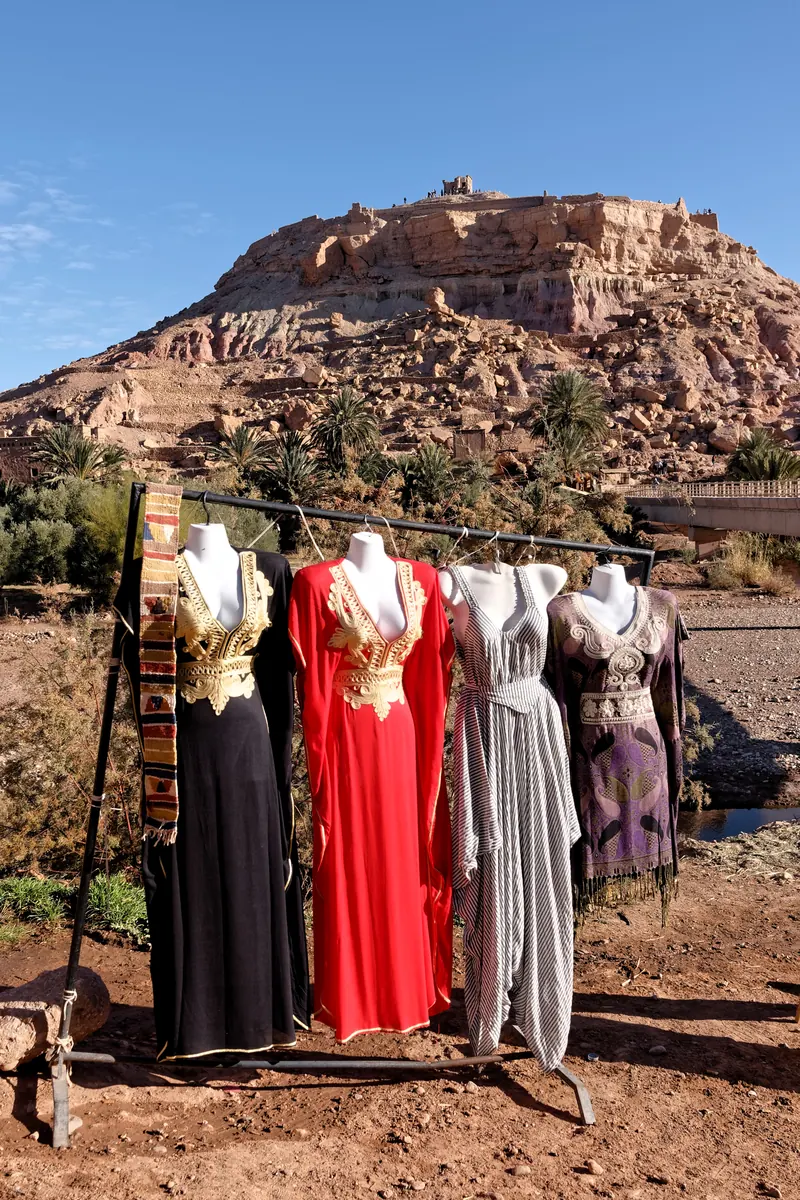
- Treat merchandise honestly. A shop display, costume-like garment or souvenir is not proof of an official film location, production connection or authorised tour. Ask what an offer includes before paying.
These are not theatrical rules; they are a practical response to a fragile site. UNESCO’s 2026 conservation record says that post-earthquake assessments identified some structural instability, restoration work has been ongoing since February 2025, and a visitor-management plan is still being prepared. Conditions can therefore be different from an old photo or blog post. 1
Read the place beyond the screen
A film frame is selective. On a real visit, notice the construction system it simplifies: tightly clustered buildings, towers, earth-and-wood materials and community spaces in a pre-Saharan settlement. UNESCO notes that the property’s earthen buildings are vulnerable where maintenance and regular repair are lacking. 2
That context gives a film-focused trip an extra layer. Instead of looking only for a fictional city, look for the physical decisions that make the ksar legible on camera: the compact skyline, defensive profile, changing scale between lanes and open valley, and the way an earthen structure responds to its setting. Those observations are available from respectful public viewpoints; they do not require access to every house.
The image below is deliberately not a movie still or a staged visitor scene. It shows garments displayed in front of the ksar, a reminder that contemporary commercial activity exists alongside heritage. The current UNESCO report specifically notes concern about increasing commercial activity and says solutions are under evaluation. 1
When Atlas Studios is the better addition
Add Atlas Studios when your priority is a guided look at constructed sets, backstage areas and set-building methods. The operator describes all tours as guided and says the itinerary can be modified to avoid interrupting filming. At the time this guide was checked, it listed a ticket at 130 Moroccan dirhams per person and opening from 8:30 a.m. to sunset; treat both as operator-published details to confirm directly before you go, not as a guaranteed price or access promise. 3
This is a meaningful complement, not a substitute. A studio tour can explain production craft; Aït Benhaddou offers the living cultural landscape and earthen architecture that made the location visually powerful. If you have time for both, avoid presenting a studio ticket as admission to the ksar, or a ksar visit as access to an active set. See our Ouarzazate travel guide for the wider choice between studios, town sights and the ksar.
Four questions that prevent a disappointing film-focused visit
- Which place does this claim actually mean? Ask whether it refers to Aït Benhaddou, Ouarzazate, Atlas Studios or the wider region.
- What is open today? Ask locally about the current visitor route rather than expecting a past photograph to define access.
- What does a guide or ticket cover? Confirm whether it is a heritage walk, a private interior, a transfer or a studio tour before you pay.
- What is the respectful alternative? If the scene angle is unavailable, choose an outside view, an open lane or a studio visit rather than pressing for access.
For help coordinating independently supplied transport, lodging or visits around this part of a longer route, the Personal Travel Assistant can assist with planning and in-trip support. Providers set their own availability, confirmations and charges.