Choose the base that serves the whole trip
For a culture-led first visit, stay in or immediately beside the Medina. For a city break where arrival, luggage and a more conventional street layout matter most, choose Ville Nouvelle. For a beach break with only occasional city sightseeing, choose Martil. The mistake is to treat all three as versions of the same neighbourhood.
The historic Medina is a UNESCO World Heritage property with a walled urban fabric, gates, principal streets and smaller lanes leading to residential areas. 1 Beyond it, Tétouan has a distinct city-side architecture shaped during the Spanish Protectorate period. 2 Morocco’s tourism authority presents the destination through both its Medina and its Mediterranean coast, while listing Martil along that coast. 3 4 That is why the accommodation decision starts with the shape of the days you want, not a filter labelled “Tétouan”.
| If your priority is | Start with | The trade-off to accept | First question to send the property |
|---|---|---|---|
| Historic streets, crafts and a walking-focused stay | Medina | A vehicle may not reach the door; the final approach can include narrow lanes or steps | “Which gate or vehicle stop should we use, and how far is the room from it with luggage?” |
| A city base that has to work around arrival, bags or a rental car | Ville Nouvelle | The exact address still determines noise, parking and the walk to the old town | “What is the exact entrance, parking arrangement and step-free route from drop-off to the room?” |
| Beach time as the main event | Martil | Tétouan’s Medina becomes a separate outing with a return journey | “Is this address in Martil, and what is the confirmed plan to reach Tétouan and return on our dates?” |
Choose the Medina for heritage first
The Medina is the strongest base when you want the old city to set the pace: a short stay focused on its streets, crafts and architecture, with time to walk rather than commute. UNESCO describes an urban layout in which main streets link gates and open spaces, while smaller lanes lead toward semi-private residential areas. 1 That makes an accommodation pin less informative than it may look on a booking map. A property can truthfully be “in the Medina” and still have a final approach that matters greatly with suitcases, a pushchair, limited mobility or a late arrival.
Before paying, ask for the practical sequence in writing: the gate or vehicle-accessible stop, the route to reception, the number and type of steps, and whether the host can meet you if you arrive after dark. Do not infer a lift, heating, air conditioning, luggage assistance, quiet rooms or accessible bathrooms from photos of a courtyard. These are room- and property-specific details.
A current official property page is useful as a contact check, not as a rule for the whole area. For example, Riad Amelia currently publishes a Rue Ghersa address, direct booking contact, room information and a stated 24-hour reception; those facts apply to that property alone. 6 Use the same standard with every Medina stay: a working direct channel and a written answer to the arrival question.
Choose another area if your group needs a vehicle at the door, has a tight arrival window, or would find an uneven or stair-heavy final approach stressful. The Medina can still be the day’s focus without being the bed for the night.
Choose Ville Nouvelle for an easier city base
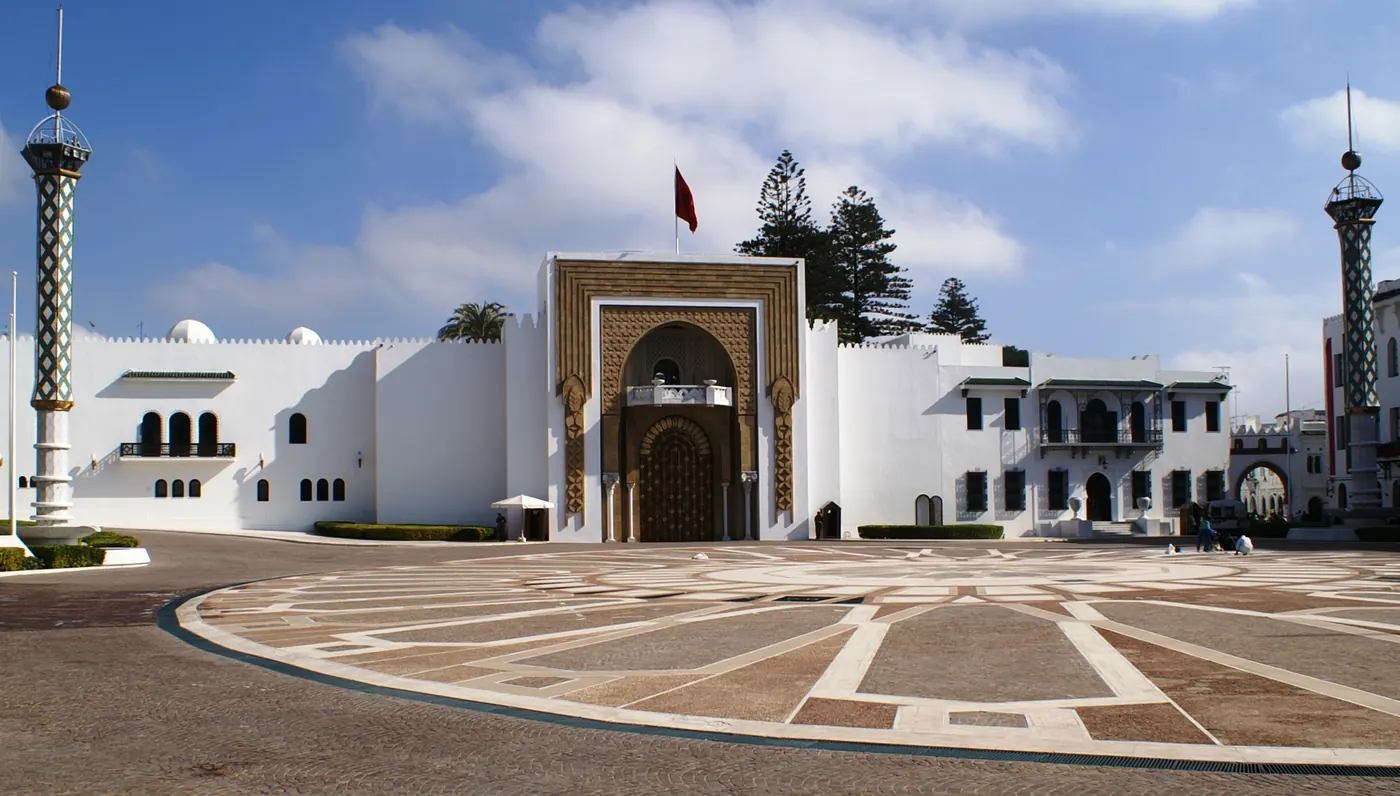
In this guide, Ville Nouvelle means the newer city-side streets outside the historic core; listings may also use “centre” or “Ensanche”, so the map pin matters more than the label. Morocco’s tourism authority notes the contrast between the Medina and the European-style buildings that appeared outside the old town during the Spanish Protectorate. 2
This is the sensible default when the overnight has to do practical work: you arrive with several bags, are travelling with a child, expect to use taxis often, are driving, or want to keep the historic walk optional rather than compulsory. It is not an accessibility guarantee. A newer-looking façade can still have stairs at the entrance, a small lift, no private parking or rooms facing a busy street.
Ask the property to describe the route from the pavement or parking point to the exact room. Drivers should confirm whether parking is on-site, nearby, reserved or paid separately, and whether a height restriction or handover is involved. If quiet is important, ask which side of the building the offered room faces rather than relying on a general “central” description.
Choose Ville Nouvelle over the Medina when a dependable arrival and departure matter more than waking inside the heritage core. It is also the lower-friction option for a short Tétouan stop in a wider northern Morocco route.
Choose Martil for coast-first days
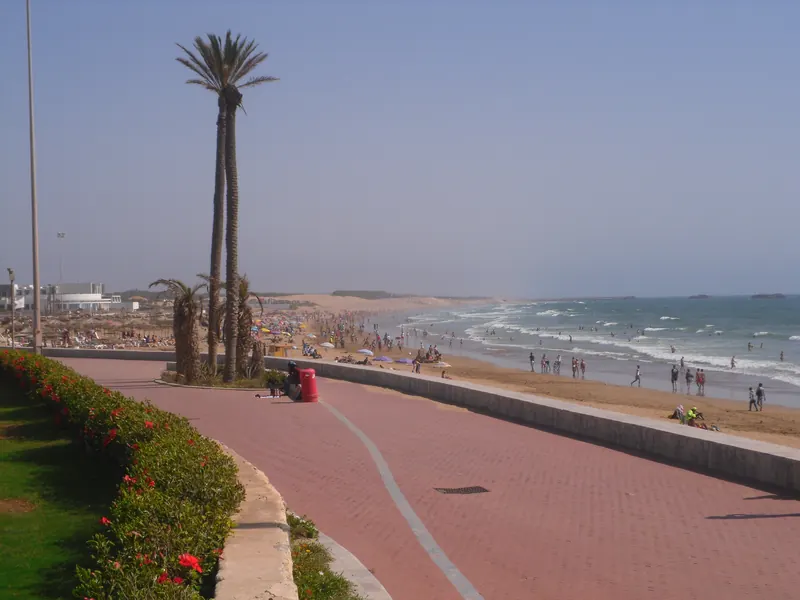
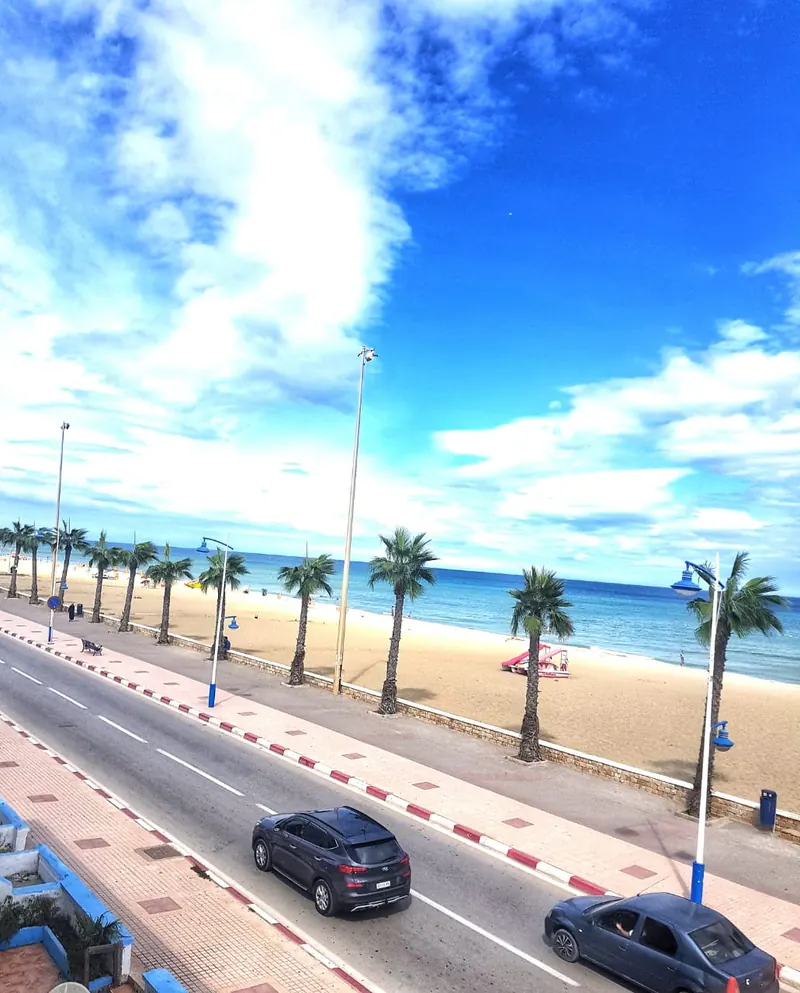
Martil works when the beach is the trip’s centre of gravity, not as a substitute for a city-centre stay. The Moroccan National Tourist Office places Martil on the Tétouan coastline. 4 A current area guide also warns that Martil properties can surface in a Tétouan search even though the city visit still requires a journey; use that as a prompt to verify geography and transport directly rather than accepting a search result’s destination label. 5
Stay in Martil if most full days are intended for the shore, a seaside promenade or a slower coastal rhythm, and you are comfortable treating the Medina as a planned outing. Do not choose it just because a listing calls itself “Tétouan beach” or because the map looks close. This guide does not rely on a current public-transport timetable or promise late taxis, shuttles, swimming conditions or seasonal beach services. Confirm the actual outward and return arrangement for your dates with the accommodation or transport provider, especially if your return would be after dinner.
A beach-facing image does not confirm a beach-facing room, private beach access, a pool, lifeguards, water sports or an open restaurant. Ask about the exact building, walking route to the shore, beach equipment, seasonal facilities, heating or air conditioning, and how luggage moves from vehicle to accommodation. Families should also ask about sleeping arrangements, balconies, pool barriers where relevant, and the real route with a pushchair.
Avoid a false compromise
For one or two nights, pick one base and make the other setting an outing. Changing accommodation adds a checkout, bags, a fixed check-in and one more chance for a vague handover to disrupt the trip. A city base is usually calmer when the Medina is the main reason to visit; a Martil base is usually clearer when beach days outnumber city visits.
A split stay can be worthwhile only when it removes repeated back-and-forth. For example, two coastal nights followed by a city night can make sense if the final day is built around the Medina or an onward city departure. Reverse it when the cultural visit comes first and the coast is a deliberate second stage. Keep the change only if both properties have confirmed their arrival details and luggage plan.
Booking checks that actually decide the stay
Use this checklist before choosing between similarly priced options:
- Exact location: Request the map pin, municipality and nearest vehicle-accessible point. “Tétouan”, “Martil”, “centre” and “Medina” are not interchangeable address descriptions.
- Last metres: For the Medina, ask for the gate, lane, steps and luggage route. For Ville Nouvelle or Martil, ask about kerbs, entrance steps, lift size and the route from parking or taxi drop-off.
- Arrival and return: Confirm check-in procedure, late-arrival contact, local transfer or taxi plan where needed, and the next morning’s pickup point. Do not turn a general claim that transport is available into a reservation.
- Room fit: Confirm the bed configuration, extra-bed or child policy, bathroom arrangement, heating or air conditioning, and any mobility feature that your group needs. “Family-friendly” and “accessible” are not standard room specifications.
- Money and terms: Check the total price, taxes or fees, payment method, deposit, cancellation deadline and what changes if you arrive late. These variables can change by date, room and booking channel.
- Evening facilities: If a terrace, restaurant or bar influences the choice, confirm whether it operates on your date, its access rules, current hours, dress or age requirements where applicable, and alcohol policy. Do not assume alcohol service or non-guest access from a hotel photo.
- Coastal extras: Treat pools, beach equipment, entertainment, shuttles and water activities as date-specific services. Ask the actual provider whether they are operating and whether use is included.
The best place to stay in Tétouan is therefore a logistics decision as much as an atmosphere decision: heritage at the door, a city base that reduces friction, or a coastal base that makes beach time easy. Choose the one that simplifies your next morning, then have the accommodation confirm the last details in writing.
If you want help turning independent accommodation, arrival and route questions into one workable plan, Maroc Mobility’s Personal Travel Assistant can support the itinerary. Hotels and transport providers set and confirm their own availability, terms and services.
If your northern route continues west, the Tangier visitor guide helps you plan the next city base without confusing a Tetouan city stay with a separate coastal stop.