The practical answer for a CTM travel day
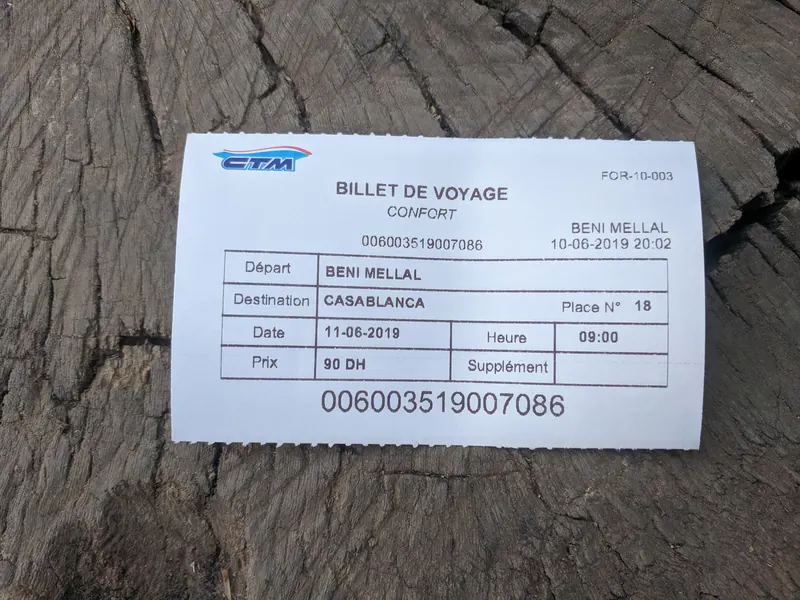
Use CTM’s own journey search or a CTM sales point to find the exact departure and arrival before committing. A CTM ticket is valid only for the route, date and time printed on it, so the city name alone is not enough. CTM says it sells tickets online, through its agencies and CTM bus stations, and through named partners. Its booking flow also shows the route’s stops when a departure is selected. 1 2
The practical sequence is simple: save the ticket, locate the actual departure point, plan the final ride or walk from the arrival point, and treat checked bags as a separately paid task. CTM’s published rules below are its supplier terms, not Morocco-wide coach law; another operator may use different limits, fees and boarding procedures. 1
Book the journey, then protect the details
- Search the live CTM result for the actual date. Check the departure and arrival as shown by the operator, the time, any listed stops and the seat before payment. Do not assume that a similarly named city terminal is interchangeable with the one on the booking.
- Keep a usable copy of the ticket. CTM says an e-ticket does not need to be printed; a traveler may present it at the agency on the day. Save it offline as well as in email, then keep it available through boarding and arrival. 2
- Read the change terms before you need them. CTM’s conditions say a date, time or coach-category change must be requested at least 12 hours before departure and remains subject to availability. That makes a fixed connection or an airport handoff a poor place to rely on a last-minute change. 1
- Book children by the operator’s current rule. CTM’s published terms say a child under four travels free only on an accompanying adult’s lap, at one child per adult. From age four, CTM says a full-fare ticket and seat are required. This is a CTM policy, not an immigration or national age rule. 1
The helpful decision is not “online or counter?” but “can I verify every journey detail now?” Use a CTM agency or station sale if you need help resolving a station name, luggage question or payment issue before travel. If a fare condition matters, rely on the terms displayed for that purchase rather than an old screenshot or a third-party listing.
Luggage is a paid, labelled service
CTM’s current published limits are specific, but they do not make excess luggage automatic. The operator says hold luggage is paid; a traveler may take up to two hold bags, each no heavier than 20 kg and with height + width + depth no greater than 170 cm. An oversized or overweight item may be accepted only with a supplement and available hold capacity. 1
| Item | CTM’s published rule | Best practical response |
|---|---|---|
| Hold luggage | Up to two paid bags; each up to 20 kg and 170 cm total dimensions. 1 | Weigh and measure before leaving the hotel. Treat excess acceptance as a question to ask, not a right. |
| Cabin bag | Maximum 40 × 50 × 16 cm. 1 | Keep passport, payment cards, medication, electronics and the ticket with you. |
| Luggage purchase | CTM says the luggage service can be bought at an agency with the ticket or up to 30 minutes before departure; it issues a payment ticket and labels. 1 | Build the bag transaction into your station buffer and keep the label or receipt until you have the bag. |
| Published starting price | The CTM FAQ says a bag starts from 5 DH, while an over-20-kg price is calculated at the agency. 2 | Do not budget a fixed current bag fee without checking the live purchase or agency quote. |
CTM requires its identification labels on hold bags and says checked bags are released against the luggage ticket. It also tells travelers to collect a checked bag as soon as it is made available and to report loss, theft or damage on arrival before leaving the disembarkation area. 1
A hold-bag receipt is not travel insurance. CTM’s terms describe a value-declaration and a claims process with stated limits; they also advise against placing cash, passports, jewelry, electronics or other valuables in the hold. Keep those items in the cabin bag, which CTM says remains under the traveler’s own supervision. 1
For a connection or coach change, assume the bag needs your attention. CTM’s terms say not to leave anything on board and make the traveler responsible for baggage and its transfer to another coach. 1
Plan the station and final mile before travel day
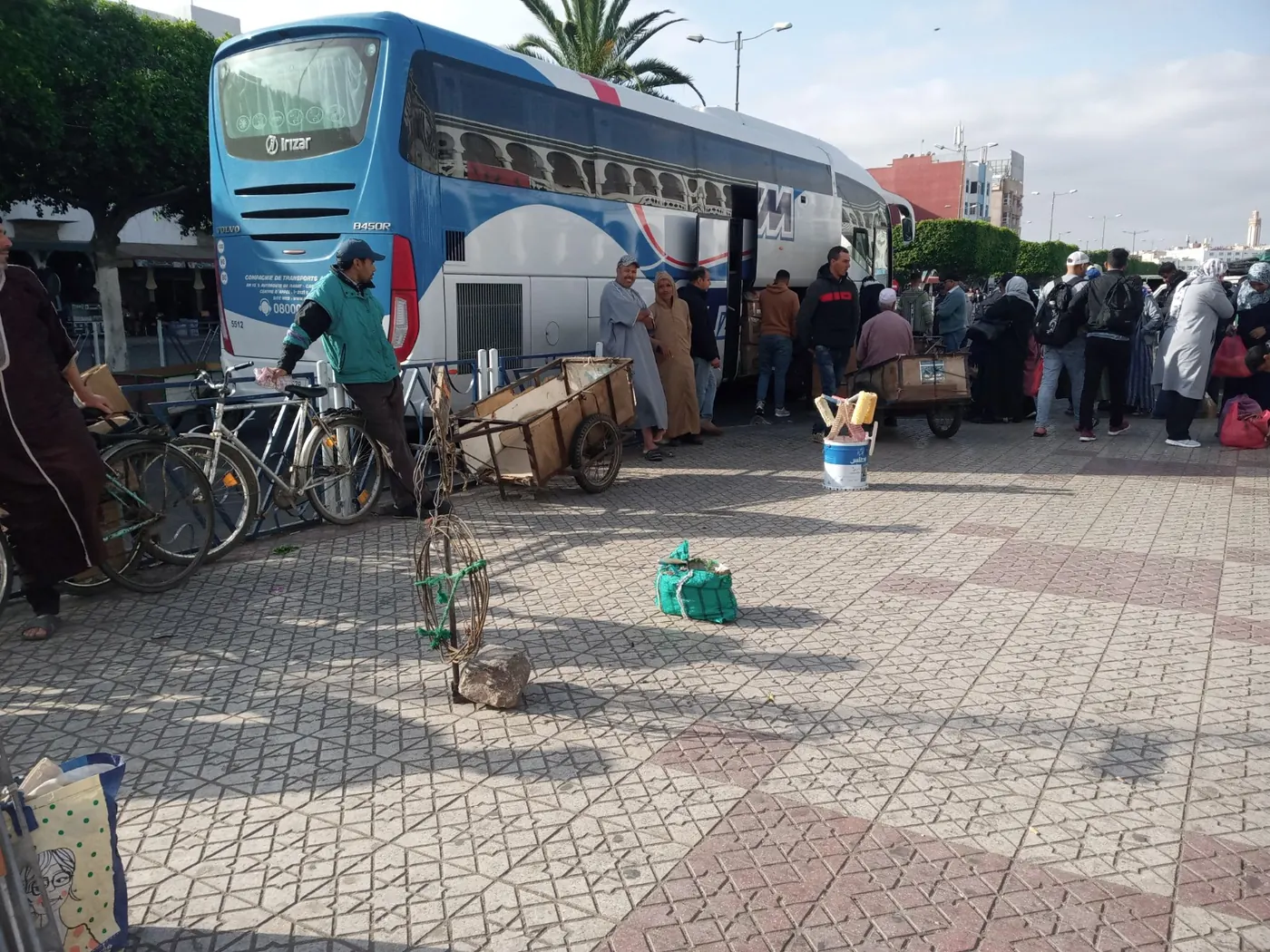
“CTM station” does not always mean one uniform type of building. CTM’s own agency directory lists a mix of named agencies and municipal bus stations by city. Use the exact departure point on the ticket, then cross-check it against CTM’s directory and a map pin before deciding when to leave your accommodation. 3
Make three small decisions in advance:
- The route to the departure point: save the address and identify whether a taxi can leave you at the entrance you need. Do this while you have reliable data rather than outside with luggage.
- The final mile at arrival: save the accommodation’s vehicle-accessible meeting point, not only its medina or neighbourhood name. If the final approach is on foot, decide whether your bags are manageable.
- The missed-connection fallback: if your CTM leg feeds a train, flight, tour or accommodation check-in, leave a margin and know whom to contact. CTM says delays or cancellations outside its control may lead to a later service without reimbursement for consequential taxi, hotel or meal costs. 1
This station-first method is more useful than memorising old terminal advice. Addresses, operating points and timetable patterns can change; the CTM directory and the booked journey are the sources to re-check close to departure. 2 3
At the station: use the correct arrival buffer
CTM’s conditions set a minimum arrival of 15 minutes before departure for a traveler with no hold luggage and 30 minutes for a traveler checking baggage. Its FAQ adds that bags cannot be deposited in advance at an agency; they are handed over at boarding for loading into the hold. 1 2
Use the buffer for a short sequence:
- Open the e-ticket and compare its departure, destination, date and time with the journey you intend to board.
- If checking a bag, arrange the paid luggage service and attach or retain the CTM labels and luggage ticket as instructed.
- Keep the travel ticket and luggage receipt in different secure places, but both accessible. CTM requires passengers to keep the travel ticket during the trip. 1
- Before the coach leaves, keep the cabin bag with valuables under your control. At a rest stop, return by the time announced: CTM’s terms warn that a coach may leave if a passenger does not respect the stated stop duration. 1
- On arrival, collect the checked bag immediately, inspect it before leaving and keep the ticket until the handoff is complete. 1
When a CTM coach is not the easy fit
A CTM coach is one tool, not the default for every Morocco journey. When both ends of the trip align with rail stations, compare the door-to-door effort with the guidance in our Morocco train guide. For a Fez–Chefchaouen trip, the choice between a CTM coach, a private transfer and a rental car has its own route-specific trade-offs in our Fez to Chefchaouen transport guide.
If you want help joining a coach leg to accommodation access or other independently booked transport, our Personal Travel Assistant can help coordinate the plan; CTM tickets, luggage terms and any provider confirmations remain separate from that service.
A 2-minute pre-departure check
- Does the ticket show the exact date, time, origin and destination you intend to use?
- Have you saved the exact CTM departure point and the arrival-side accommodation pin?
- Are any hold bags within the published count, weight and dimension limits?
- Do you have time for the paid luggage step, or only a cabin bag?
- Are passport, money, medication, electronics, ticket and luggage receipt in your hand luggage?
- If there is a connection, do you know the fallback if the coach arrives later than hoped?